Publishing
How to Maintain a Guide Library After Publication
Review changing sources, repair links, keep tools and policies accurate, and record meaningful updates instead of changing dates alone.
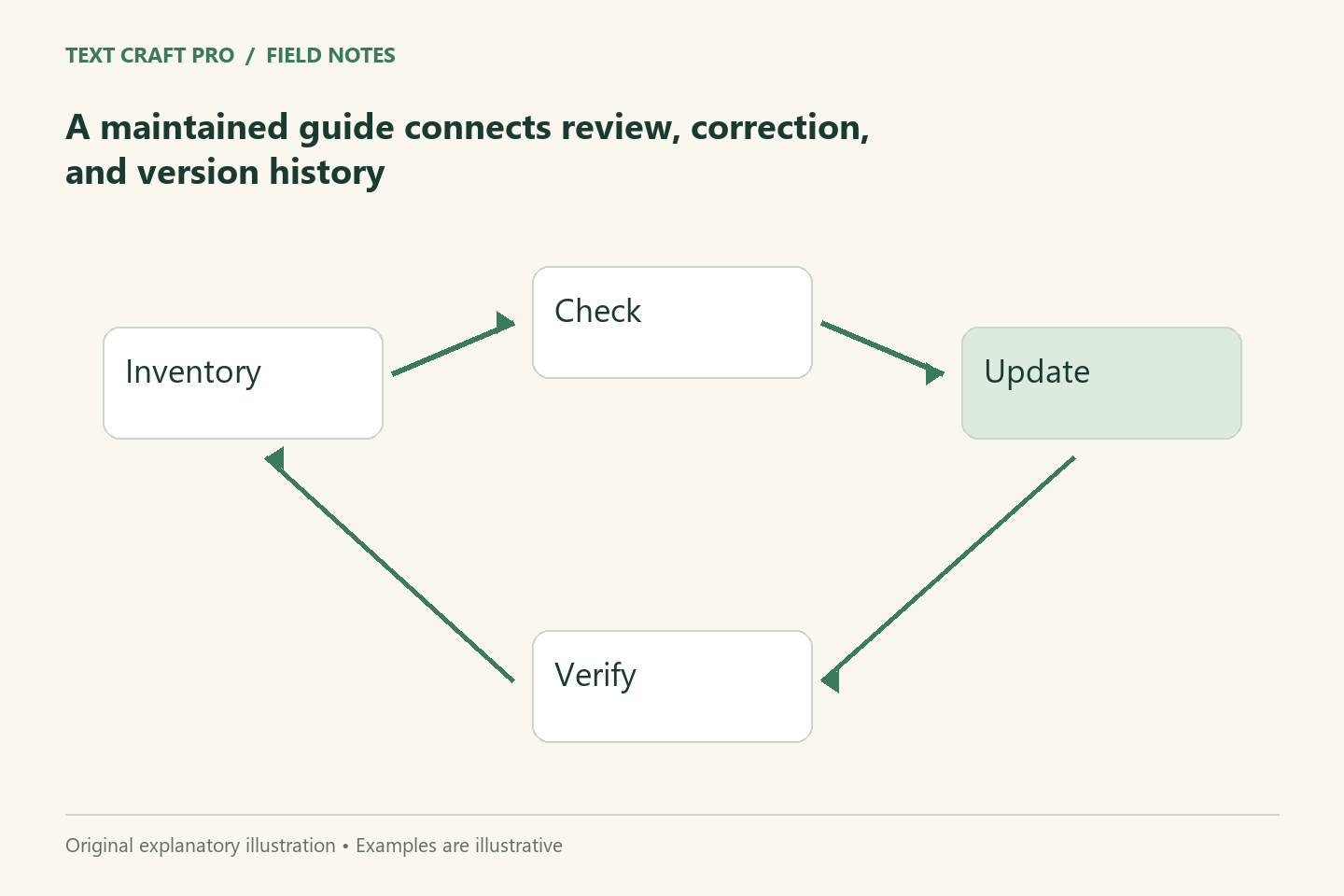
Publishing is the start of maintenance, not the end of responsibility. Links can break, product interfaces can change, and a guide can become less useful as its audience develops new questions. A manageable review process identifies which parts are likely to change and who will act on a reported problem. It also keeps edit dates tied to actual work.
Create a small content inventory
Record each guide’s URL, main task, owner, key sources, related tools, and last meaningful review. Identify pages that depend on current interfaces, policies, or product facts. Those need different attention from stable writing examples. Keep the inventory simple enough to update when adding a page. A list that nobody maintains will not help locate affected content when a source changes.
Review by risk and usefulness
Prioritize pages with changing instructions, important broken links, or reported misunderstandings. Read the article as a new visitor and check whether its answer still serves the stated task. Do not change dates solely to make a page appear fresh. A review date should reflect an actual review, and an update note can explain a substantive change where that helps the reader.
Maintain the connections
When a guide moves or changes scope, update directory cards, internal links, and tool references. Check section anchors after changing headings. If a correction affects several adaptations, identify and update each relevant version. A site map helps discovery, but normal navigation should also let readers reach the important pages. Maintenance includes the relationship between pages, not just the wording inside one article.
Keep tools and policies aligned
Test interactive tools after relevant script or theme changes. Check ordinary inputs, empty fields, and limits that matter to the calculation. If analytics, advertising, forms, or embeds change, revisit consent behavior and policy disclosures. Do not leave a privacy page describing a configuration the site no longer uses. Keep publisher contact and correction routes working so readers can report problems.
Use a practical review record
For a fictional title guide, a review record might say that the official documentation was checked, the preview remains illustrative, and a broken related link was repaired. It should not claim that search rankings were tested if they were not. For a calculator, record the input cases and expected results. Specific notes help another maintainer understand what the review established and what remains unknown.
Decide whether to improve or retire a page
A weak guide may need a better example, a narrower question, or a clearer structure. If it duplicates another page without a distinct purpose, consolidate thoughtfully and update the reading paths. Preserve appropriate backups and use the site’s normal recovery process for changes. The goal is a useful library that stays coherent, not an increasing article count that hides outdated or repetitive material.
Frequently asked questions
How often should every article be reviewed?
Choose a schedule based on how quickly its facts change and how readers use it. There is no universal interval that fits every page.
Should I refresh dates automatically?
No. Keep publication and modification information accurate and connect review dates to actual editorial work.
Continue your workflow
- How to Check Sources and Claims in a Draft Article
- A Pre-Publication Checklist for a Useful, Trustworthy Article
Was this guide helpful?
Tell us what needs improving →
Your selection stays on this page. To send feedback to the publication, use our contact form.
Published 10 October 2026 · Text Craft Pro · AI-assisted educational writing. Editorial policy · Suggest a correction