A thoughtful place to improve your writing
Make every
word earn
its place.
Write a clearer brief. Build a useful draft. Edit with purpose. Find practical guides and simple tools for the work between a blank page and a finished piece.
Your next draft
A little structure.
A clearer message.
Know who is reading and what they need.
Choose evidence, examples, and useful details.
Check the facts, flow, and final next step.
Start with a useful question.
From a first brief to a final review, these guides help you make one writing decision at a time.
Editing
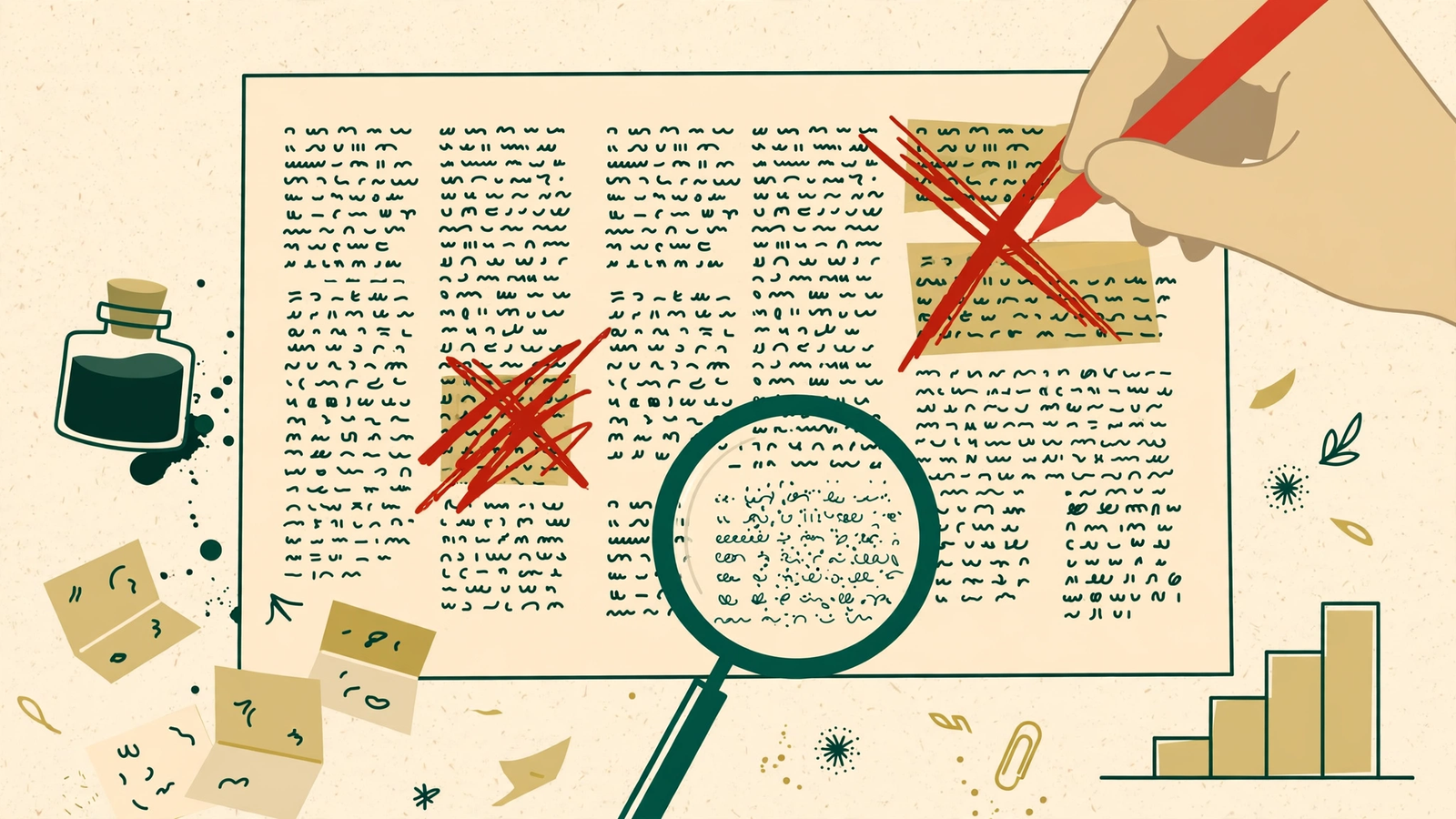
How to Edit AI Content for SEO Without Keyword Stuffing
AI drafts wedge your keyword into every paragraph. Here’s the editing pass I use to keep the ranking signals and lose the soup.
Read the guide →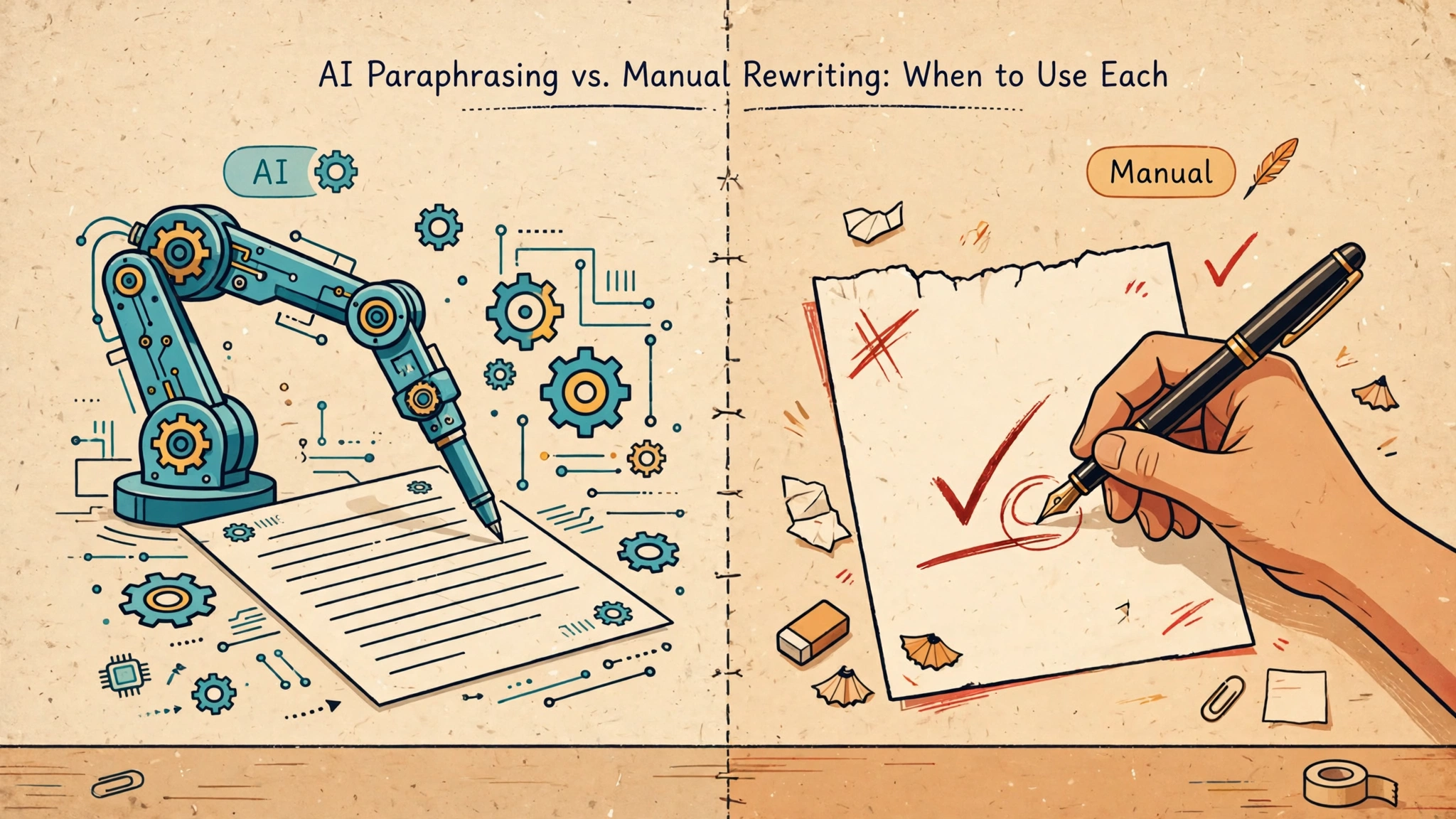
Editing
AI Paraphrasing vs. Manual Rewriting: When to Use Each
AI paraphrasing tools are genuinely good at what they do — and what they do is surface-level. Here’s my honest rule for when to click the button and when to rewrite by hand.
Read the guide →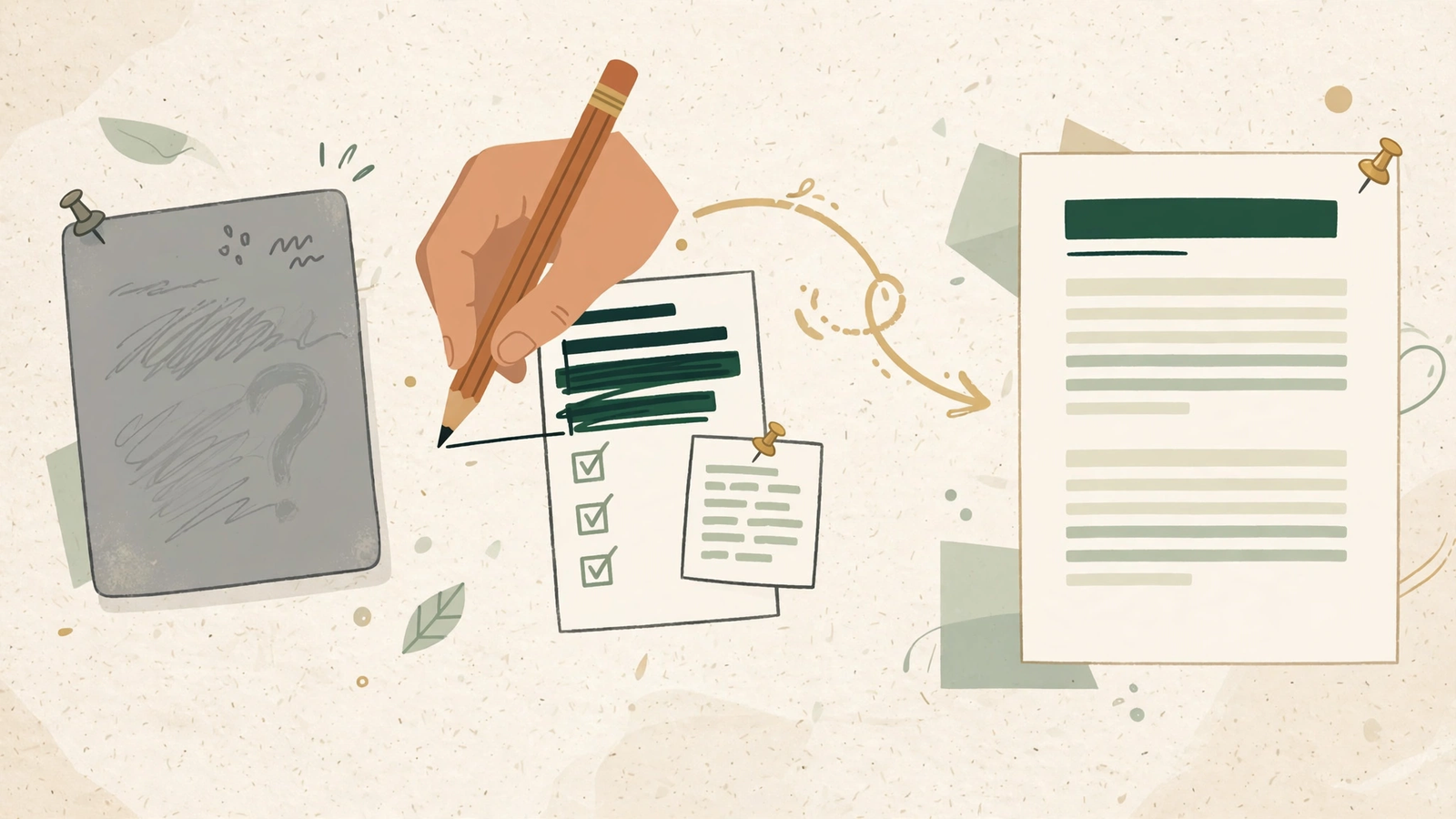
Planning
How to Write Better Prompts for AI Writing Tools
The difference between a useless AI draft and a useful one is almost never the tool. It’s the prompt.
Read the guide →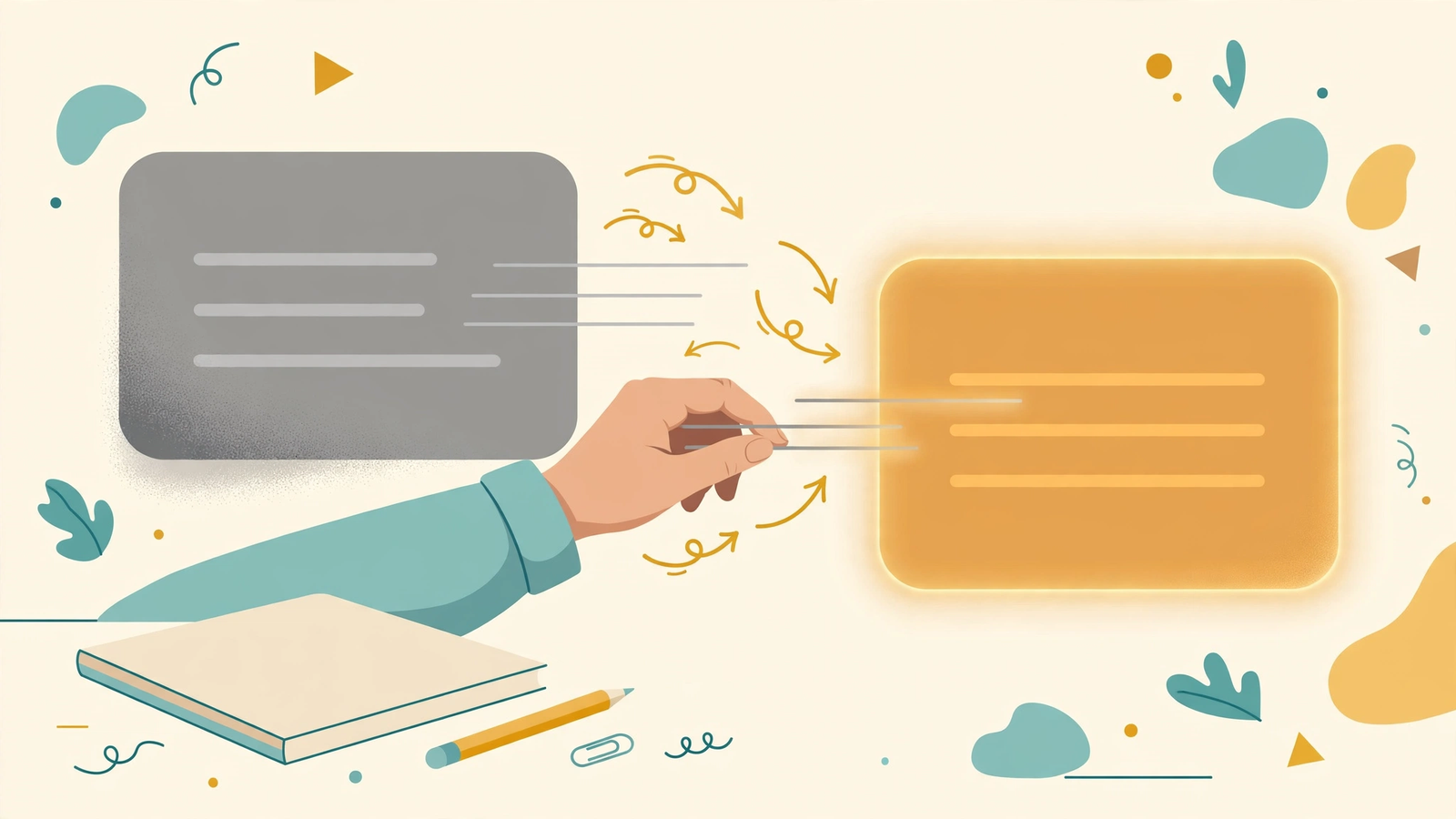
Editing
I Tested 4 Free AI Paraphrasing Tools — Here’s What Actually Helped
I ran the same three paragraphs through four free paraphrasing tools and judged them by one question: would I keep the rewrite, or rewrite the rewrite?
Read the guide →
Editing
How to Keep Your Voice When Editing AI Drafts
AI drafts are useful liars. Here’s the routine I use to put the human back in.
Read the guide →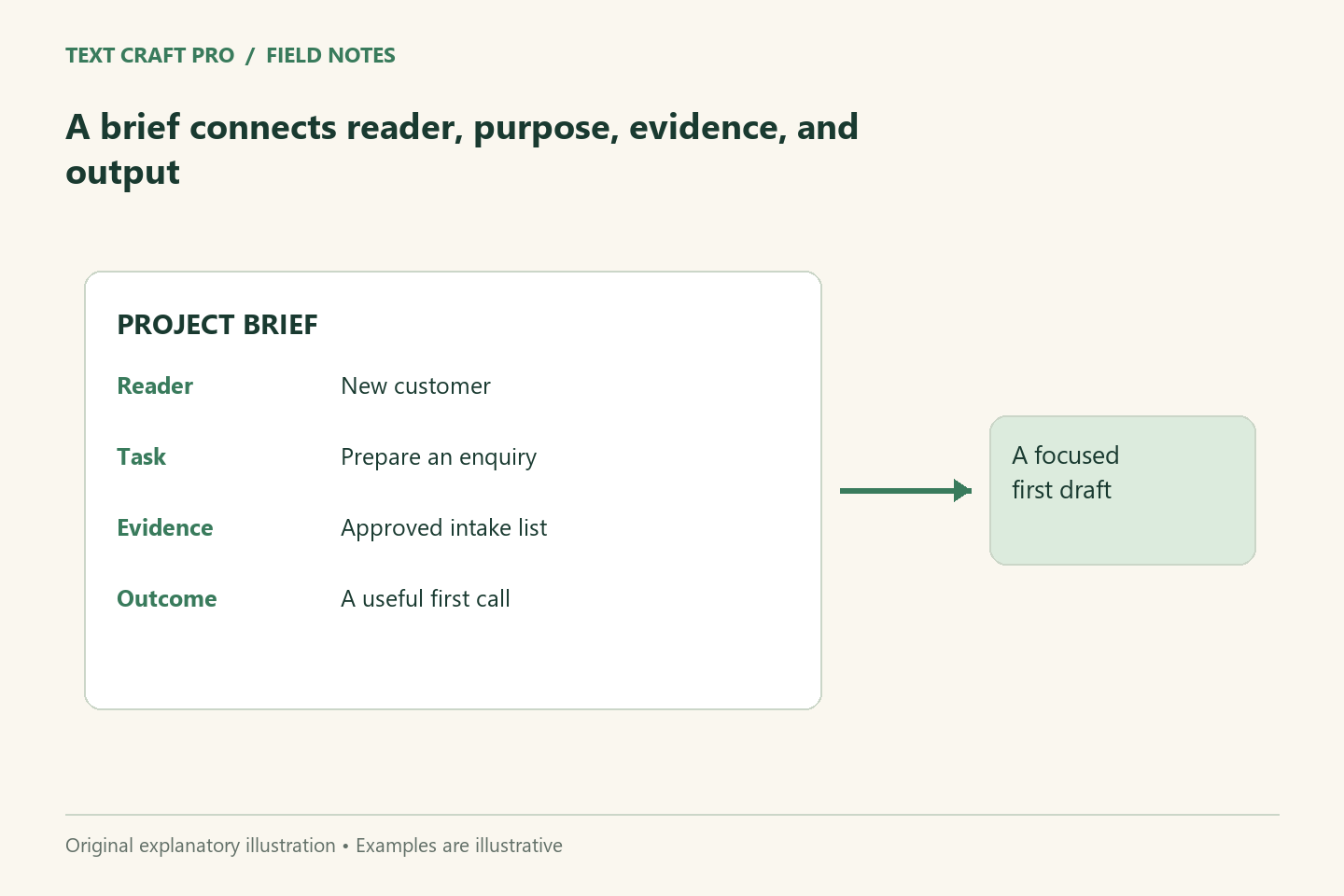
Planning
How to Write a Content Brief That Gives a Writer a Clear Starting Point
Define the reader, purpose, scope, evidence, and approval process before drafting. Includes an original content-brief example.
Read the guide →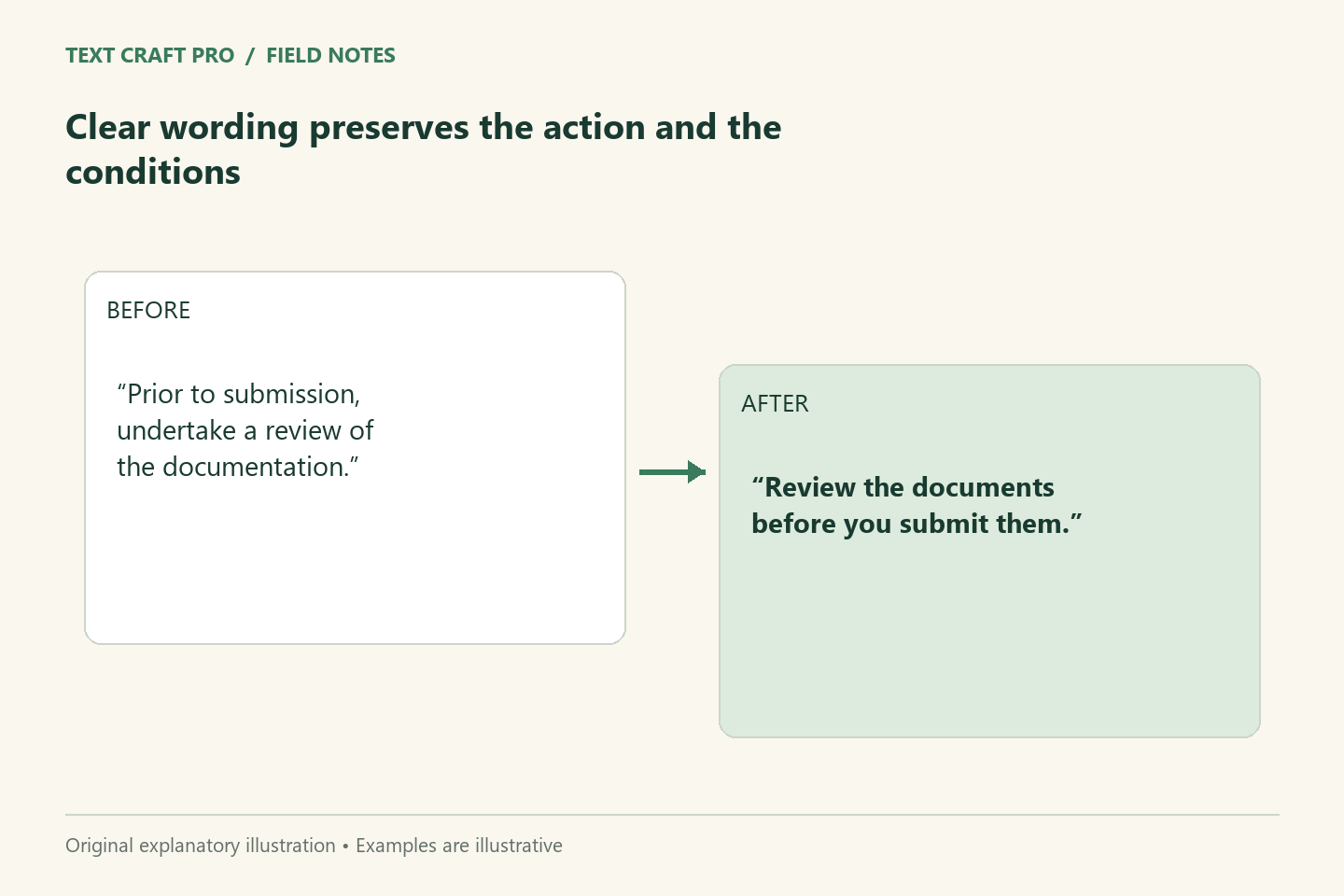
Editing
A Plain-Language Editing Pass That Preserves the Meaning
Replace vague phrases, reveal the action, and explain necessary terms without oversimplifying the message.
Read the guide →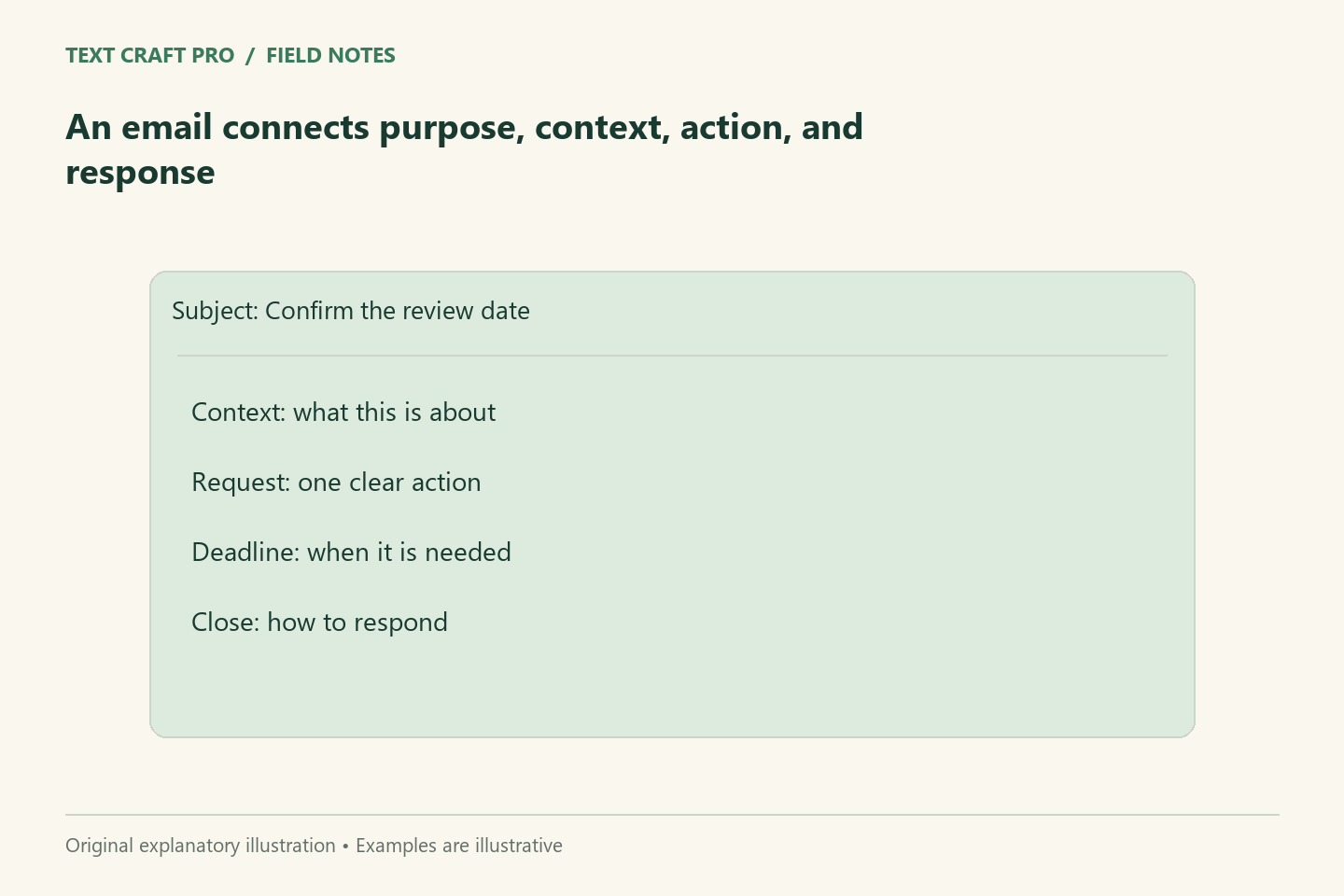
Business Writing
How to Write a Business Email With a Clear Purpose and Next Step
Organize context, action, and an approved deadline so the recipient can respond without guessing.
Read the guide →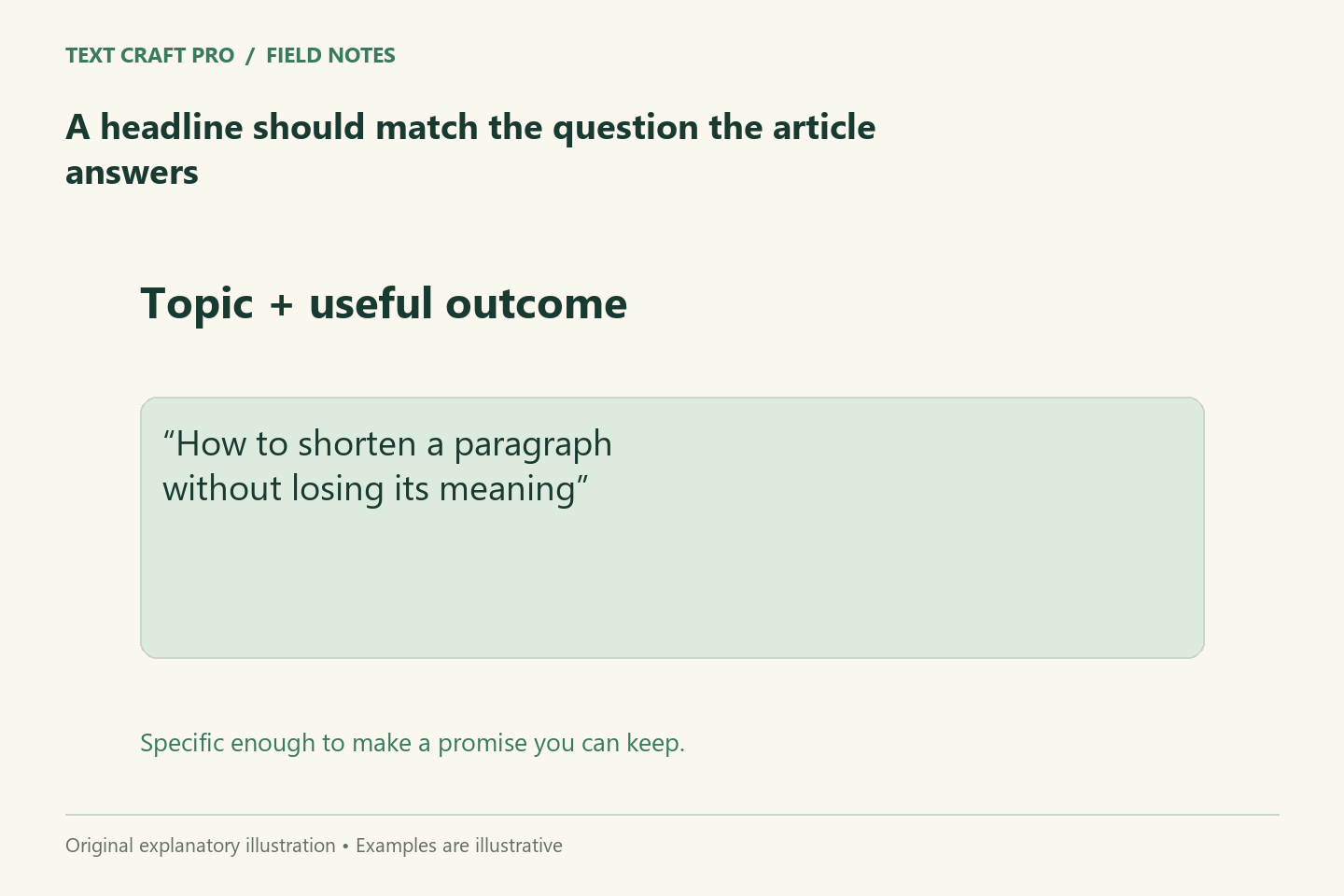
Web Content
How to Write a Headline That Makes an Accurate Promise
Match the headline to the reader’s question, the article’s evidence, and the actual answer rather than relying on exaggerated claims.
Read the guide →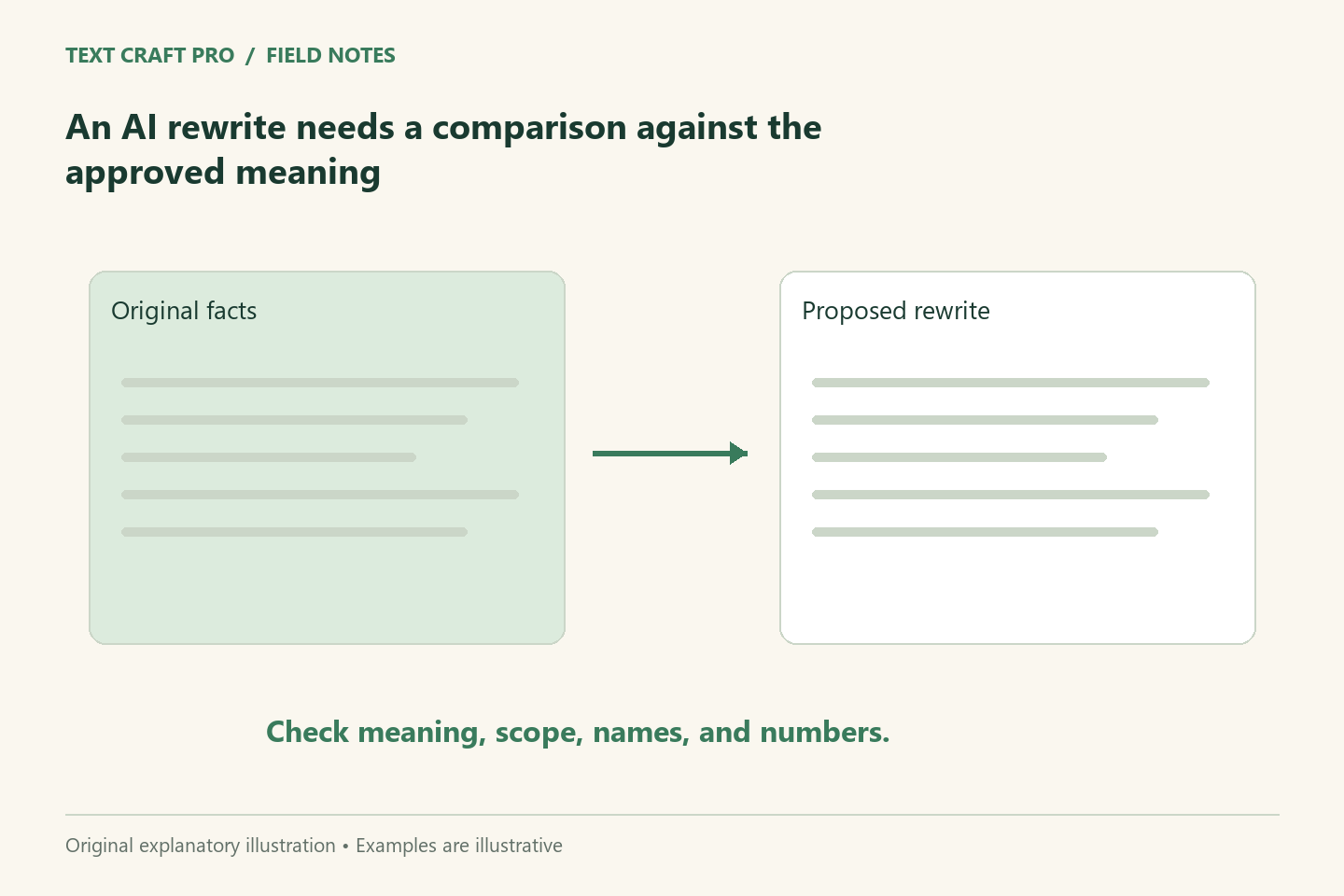
Publishing
How to Review an AI Rewrite Before Using It
Compare facts, scope, tone, and commitments so a fluent rewrite does not silently change the message.
Read the guide →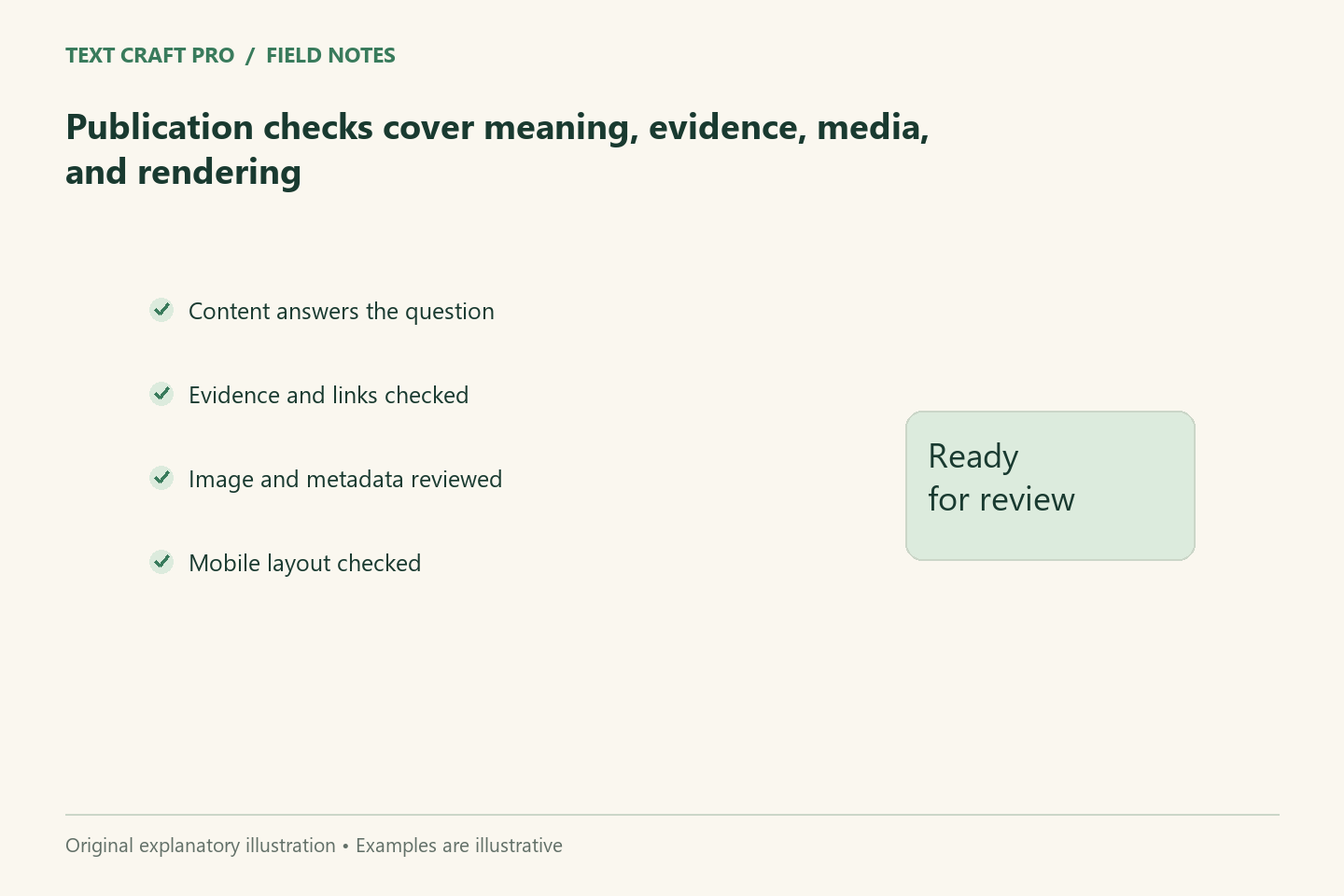
Publishing
A Pre-Publication Checklist for a Useful, Trustworthy Article
Review reader value, facts, original examples, images, links, metadata, and the actual saved page before publishing.
Read the guide →Small tools. Useful answers.
No sign-up and no uploads. Your text stays in this browser while you work.
Text analyzer
Count words, characters, paragraphs, and approximate reading time.
Open the tool →Repetition finder
Spot recurring words and short phrases before you revise.
Open the tool →Content brief builder
Organize the reader, outcome, scope, and evidence for a draft.
Open the tool →Title & description preview
Review your wording in an illustrative search-result layout.
Open the tool →A better way to approach a draft
Clarity begins before the first sentence.
Work out the reader’s task, choose the evidence, then build the explanation around what matters. Our starting guide connects the whole process.
Build your writing workflow →