Planning
How to Write a Content Brief That Gives a Writer a Clear Starting Point
Define the reader, purpose, scope, evidence, and approval process before drafting. Includes an original content-brief example.
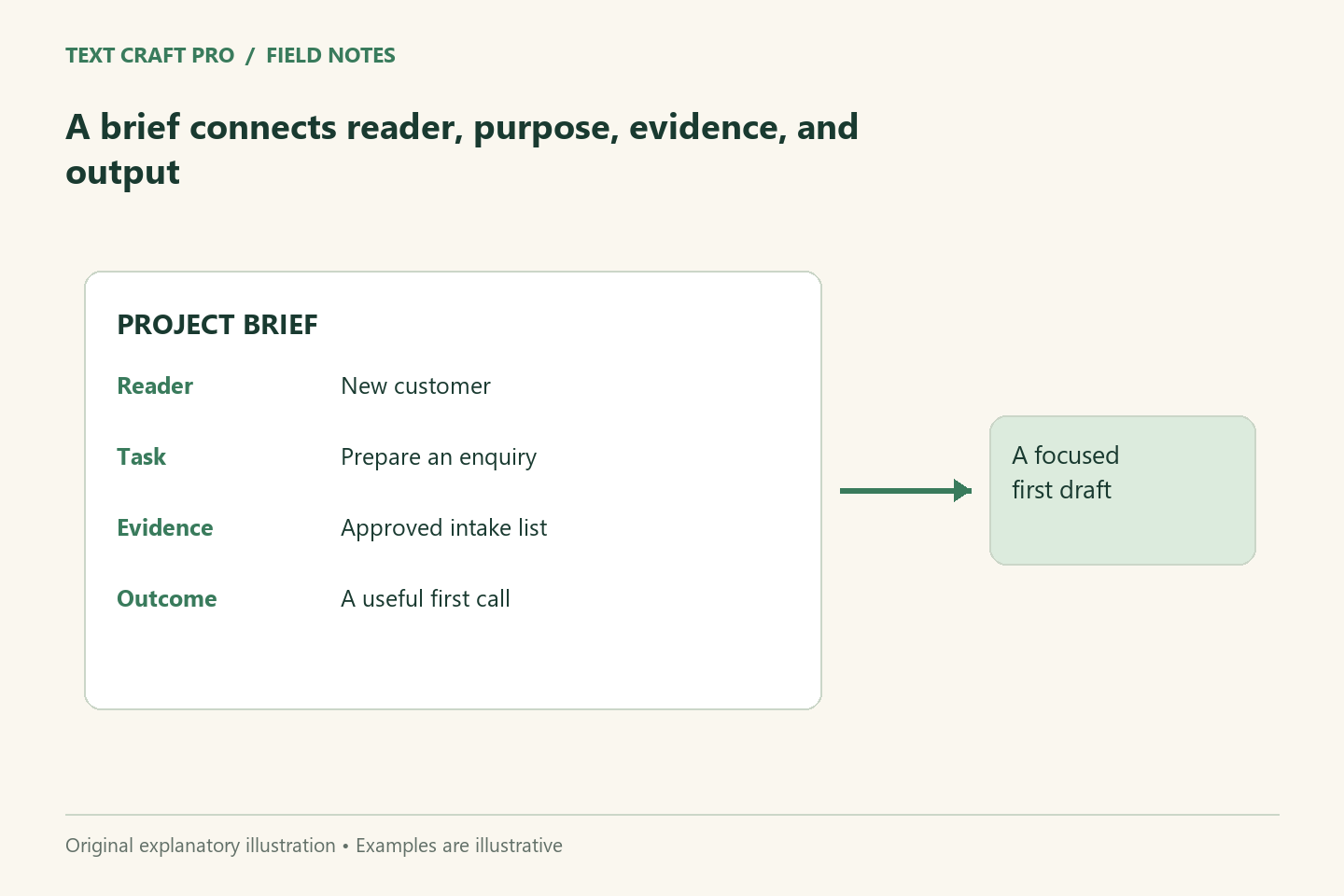
A content brief is a small agreement about what a piece of writing must do. It gives the writer enough direction to make sensible choices without prescribing every sentence. A useful brief also reveals what is missing before a polished draft makes those gaps harder to notice. This guide uses a fictional service business to show how to prepare one.
Describe the reader’s immediate problem
Start with a situation rather than a broad audience label. “Small business owners” could describe people comparing software, preparing a contract, or answering their first customer enquiry. A writer needs to know which of those moments the article serves. State what the reader already understands and what they need to decide next. If you have customer questions or approved research, link them. Otherwise label your audience assumptions so an editor can question them.
Choose one main outcome
Complete the sentence: after reading, the reader should be able to do what? A practical outcome might be preparing the questions needed for a project enquiry. That is narrower than learning everything about consulting. Keep secondary outcomes subordinate to the main one. When stakeholders request more topics, ask whether each helps the central task. This gives you a reason to decline unrelated additions without treating the brief as an inflexible word-count contract.
Define scope and available evidence
List the questions the piece must answer and the topics it will leave for another guide. Supply facts that can be verified, with their sources and dates where relevant. Distinguish approved statements from proposed claims. Do not ask a writer to invent customer results, staff credentials, or product testing. If the source material is incomplete, identify who can resolve it. A clear missing-facts list is more useful than the instruction to make the draft sound authoritative.
Specify the deliverable and review
Name the format, intended location, and tone. An email needs a subject and an action; a tutorial needs steps and exceptions; a comparison needs criteria. Explain who reviews facts and who approves publication. State whether images, captions, links, and metadata are included. A flexible length range can help planning, but explain the reader need behind it. A writer should not pad an answer merely to satisfy a number.
Use a compact example
For a fictional bookkeeping service, the brief might say: reader: a new customer preparing an introductory call; outcome: gather the records needed to discuss scope; required questions: business type, current process, deadline, and missing documents; exclusions: individual tax advice; sources: the service’s approved intake checklist; format: a short preparation guide with an example. The reviewer must confirm the document list. Notice how this brief specifies a useful task without making promises the business has not approved.
Check the brief before handing it over
Ask a colleague to summarize the assignment in one sentence. If their summary describes a different outcome, revise the brief before drafting. Check whether every required claim has a source or an owner. Then use the free brief builder to organize the task, context, constraints, and output. The tool formats your instructions; it does not research the topic or verify the supplied facts. Keep private client records out of example briefs.
Frequently asked questions
How long should a brief be?
Long enough to define the task and resolve the important ambiguity. A one-page brief can work for a focused article; complex assignments may need linked references.
Should a brief include every heading?
A suggested outline can help, but leave room for the writer to improve the order when the draft reveals a clearer explanation.
Continue your workflow
- How to Build an Article Outline Around the Reader’s Questions
- How to Identify Reader Intent Before Choosing an Article Angle
Was this guide helpful?
Tell us what needs improving →
Your selection stays on this page. To send feedback to the publication, use our contact form.
Published 13 August 2026 · Text Craft Pro · AI-assisted educational writing. Editorial policy · Suggest a correction