Writing, made practical
Writing & Editing Guides
Find the question that fits your next draft. Search the library or choose a topic.
30 guides shown
Planning
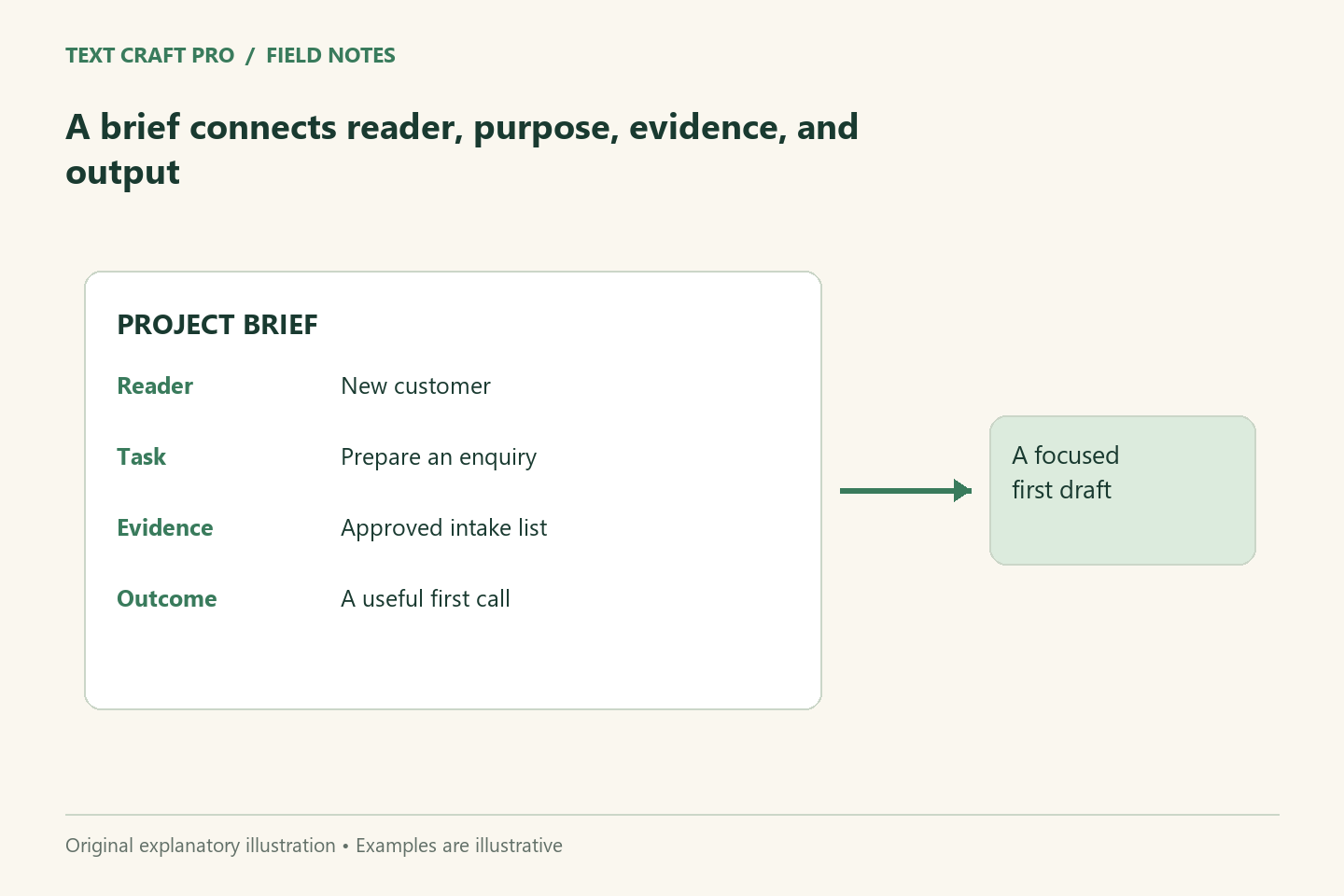
How to Write a Content Brief That Gives a Writer a Clear Starting Point
Define the reader, purpose, scope, evidence, and approval process before drafting. Includes an original content-brief example.
Read the guide →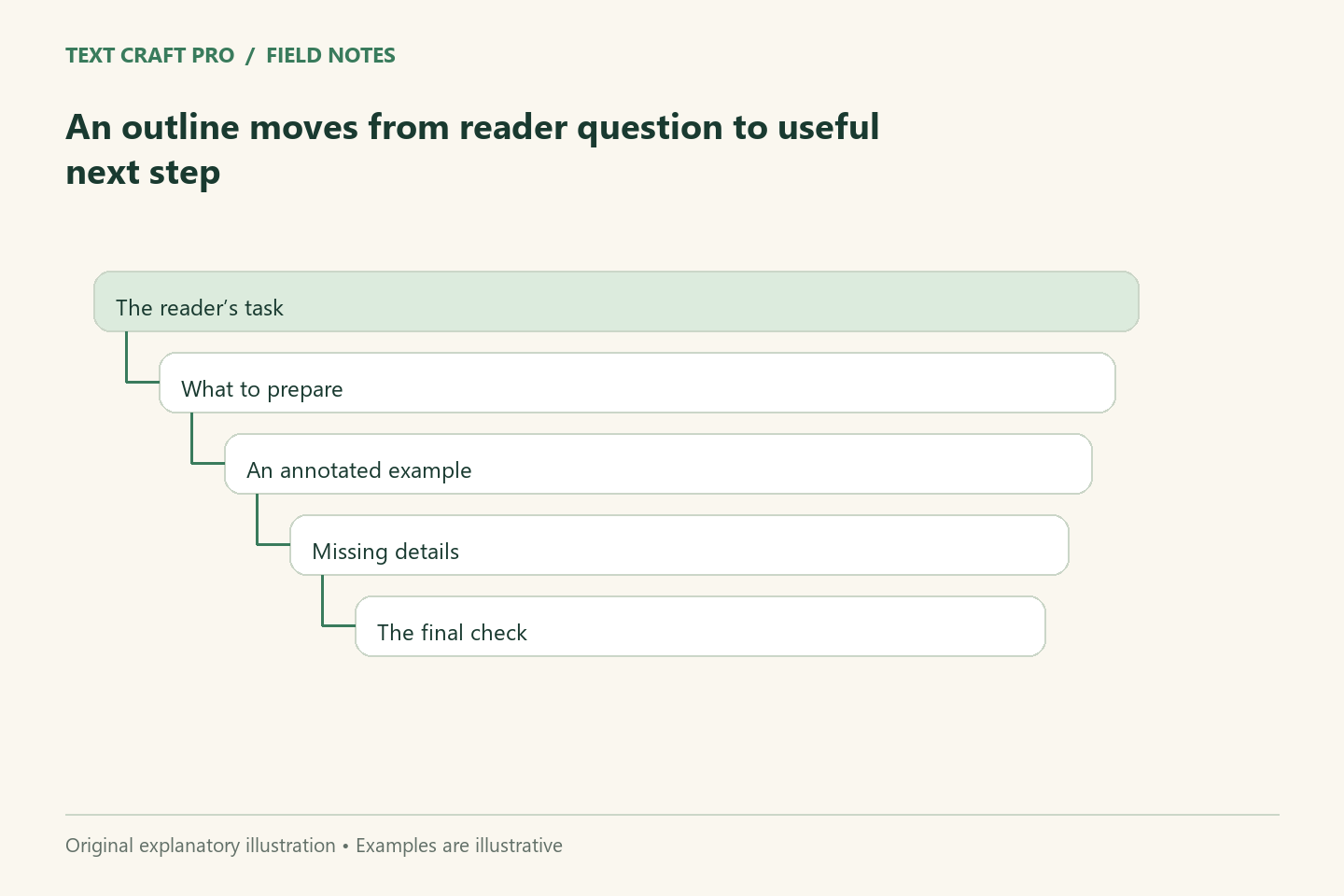
Planning
How to Build an Article Outline Around the Reader’s Questions
Turn a topic into a useful sequence of questions, examples, and next steps before writing the full draft.
Read the guide →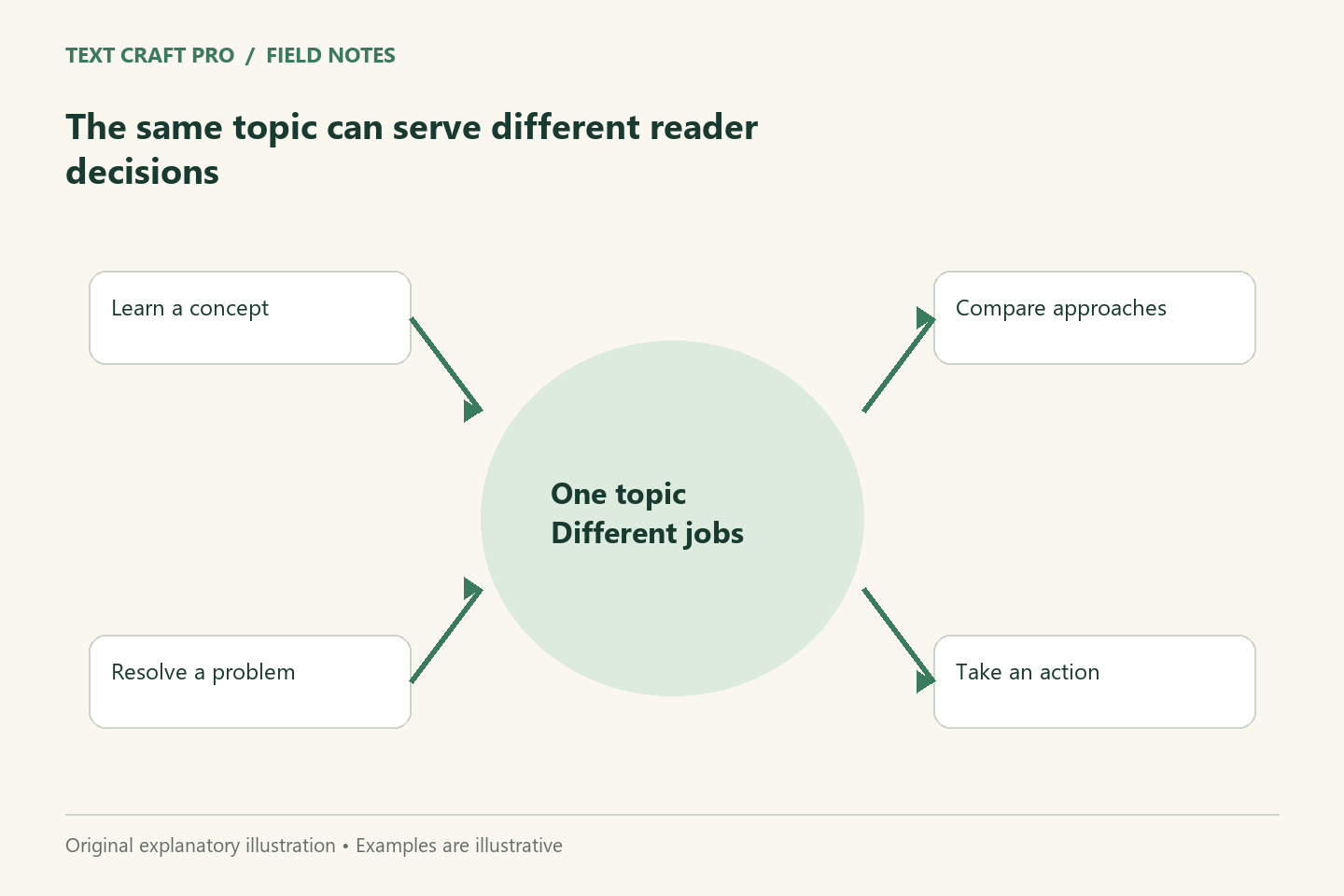
Planning
How to Identify Reader Intent Before Choosing an Article Angle
Separate learning, comparing, troubleshooting, and acting so an article answers the question its reader actually has.
Read the guide →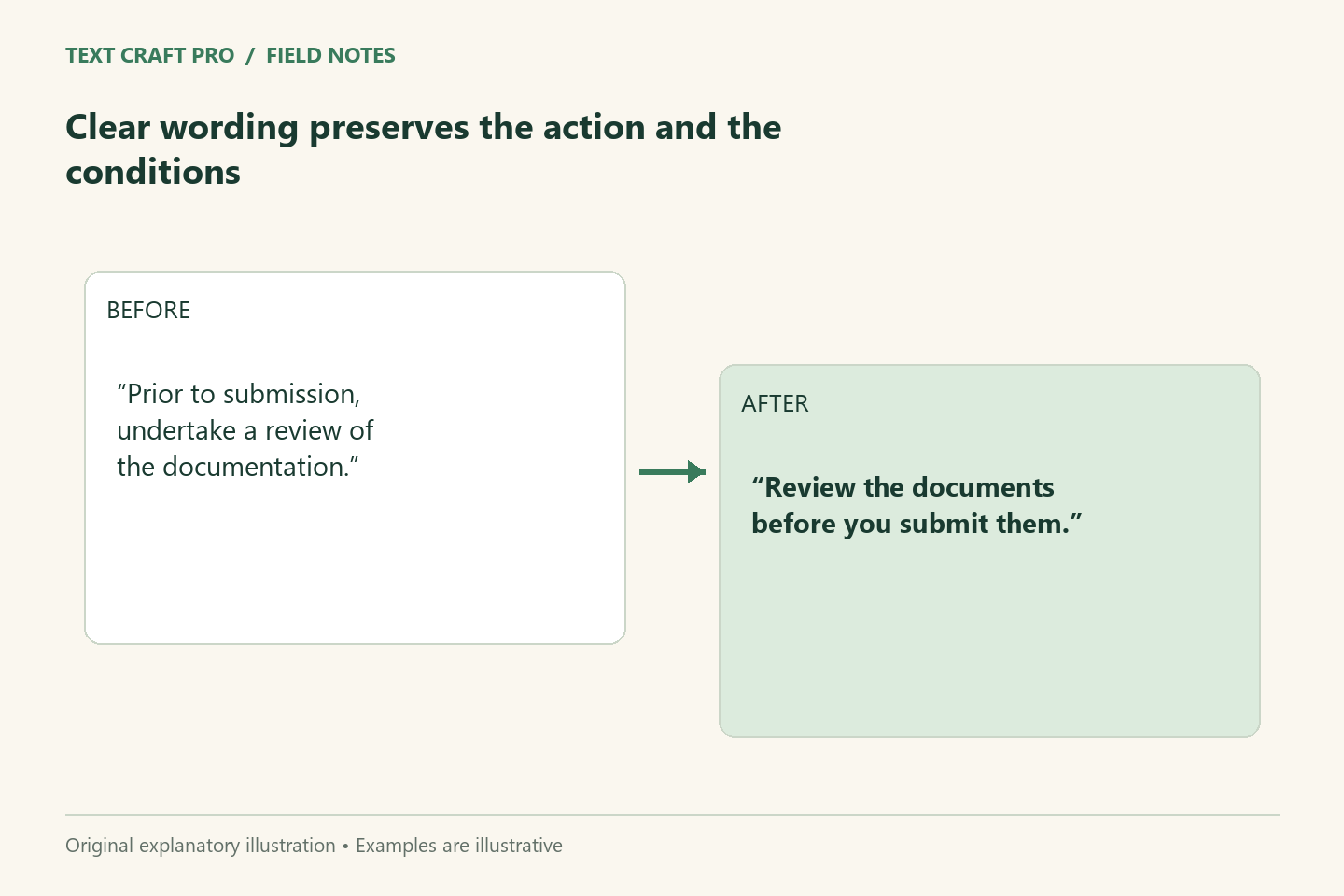
Editing
A Plain-Language Editing Pass That Preserves the Meaning
Replace vague phrases, reveal the action, and explain necessary terms without oversimplifying the message.
Read the guide →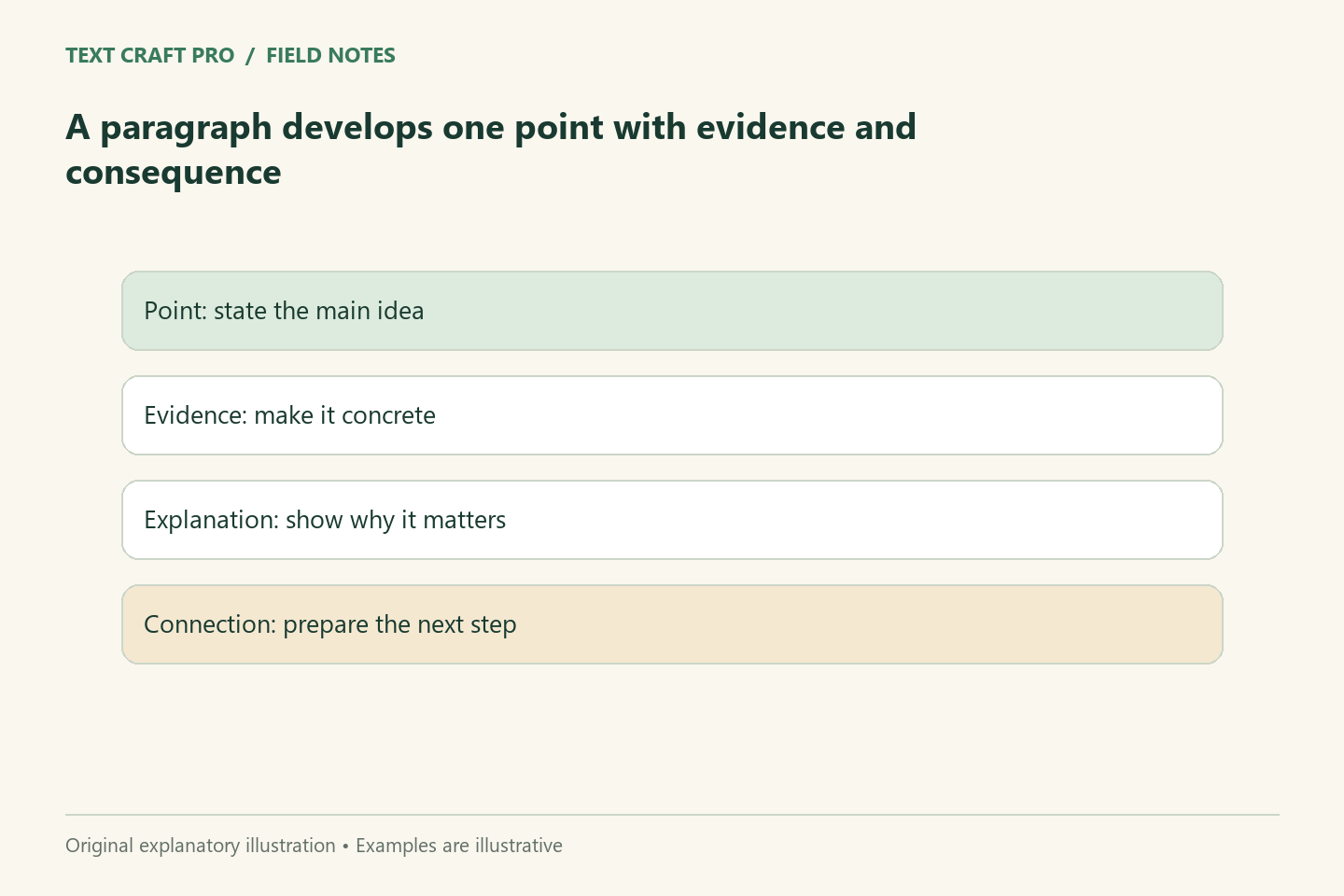
Editing
How to Give Every Paragraph a Clear Job
Use a point, supporting detail, and a meaningful connection to build paragraphs that move the explanation forward.
Read the guide →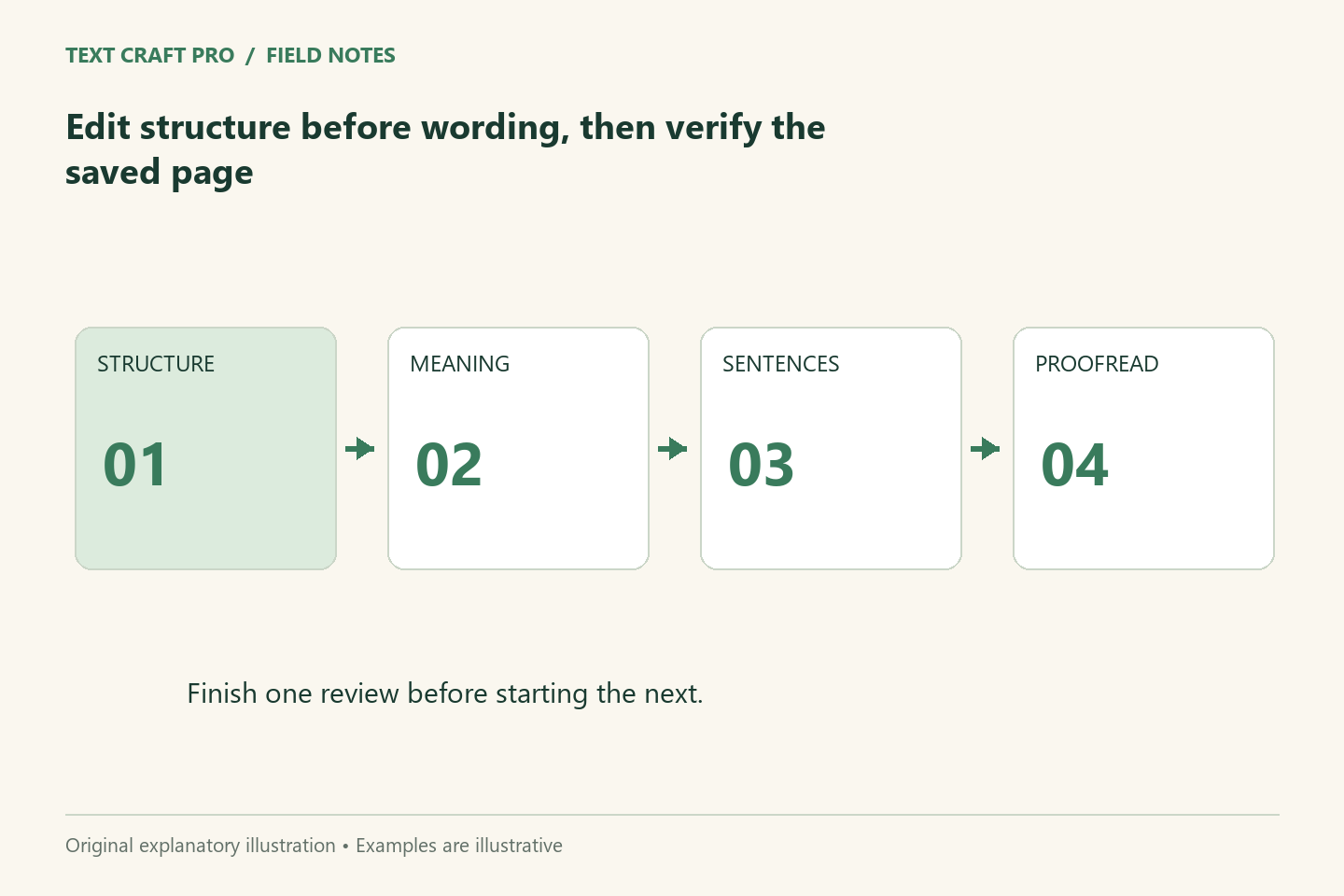
Editing
A Three-Pass Editing Workflow: Structure, Sentences, and Final Checks
Separate big-picture revision from wording and proofreading so polishing does not hide a weak argument.
Read the guide →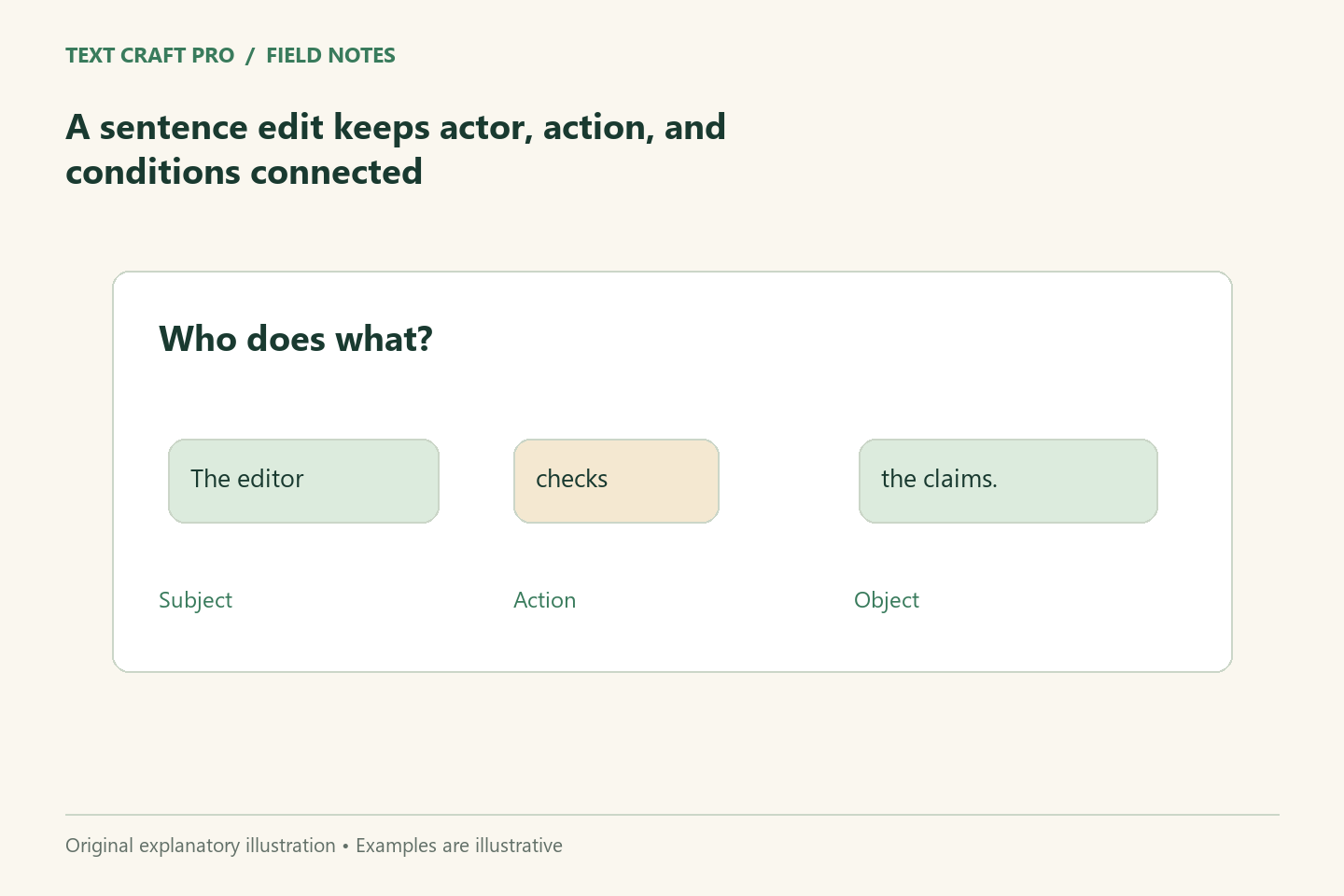
Editing
How to Edit a Sentence Without Changing What It Means
Check actors, actions, conditions, and emphasis before shortening a sentence. Includes an annotated before-and-after example.
Read the guide →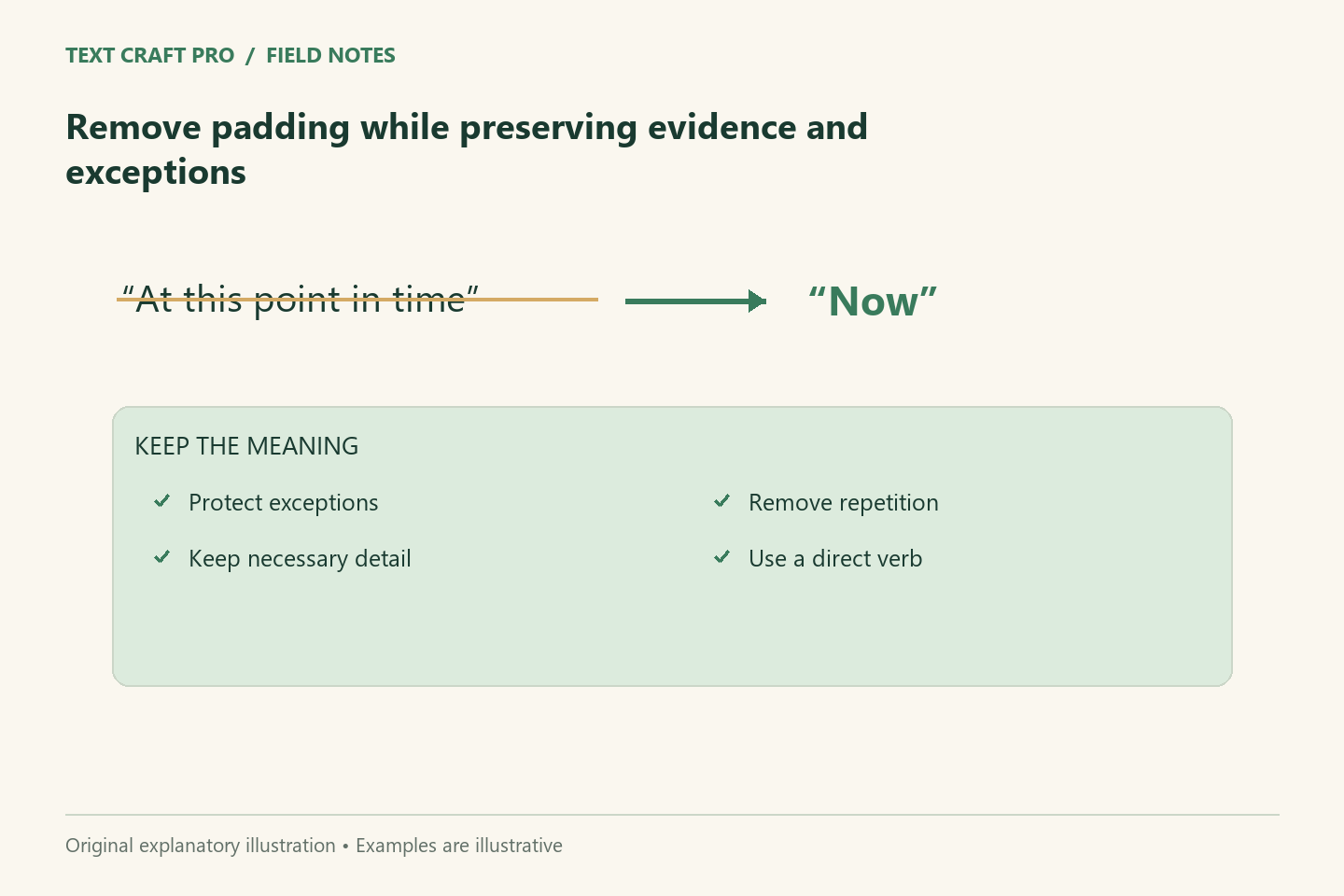
Editing
How to Cut Wordiness While Keeping Useful Detail
Find repeated explanations, empty framing, and unnecessary noun phrases without stripping the draft of evidence and context.
Read the guide →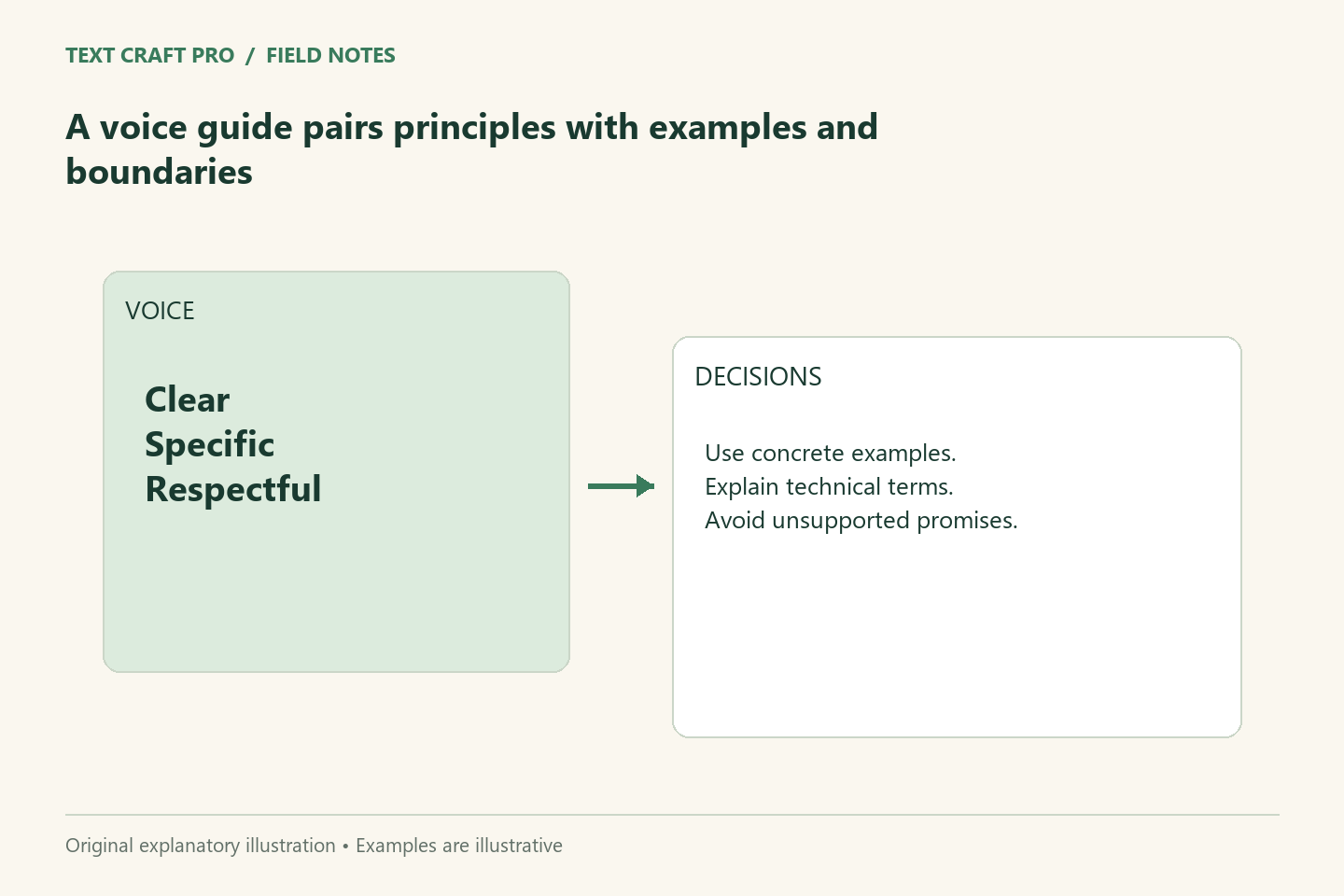
Business Writing
How to Write a Small Brand Voice Guide That People Can Use
Turn abstract tone labels into practical examples, boundaries, and revision choices for a consistent writing voice.
Read the guide →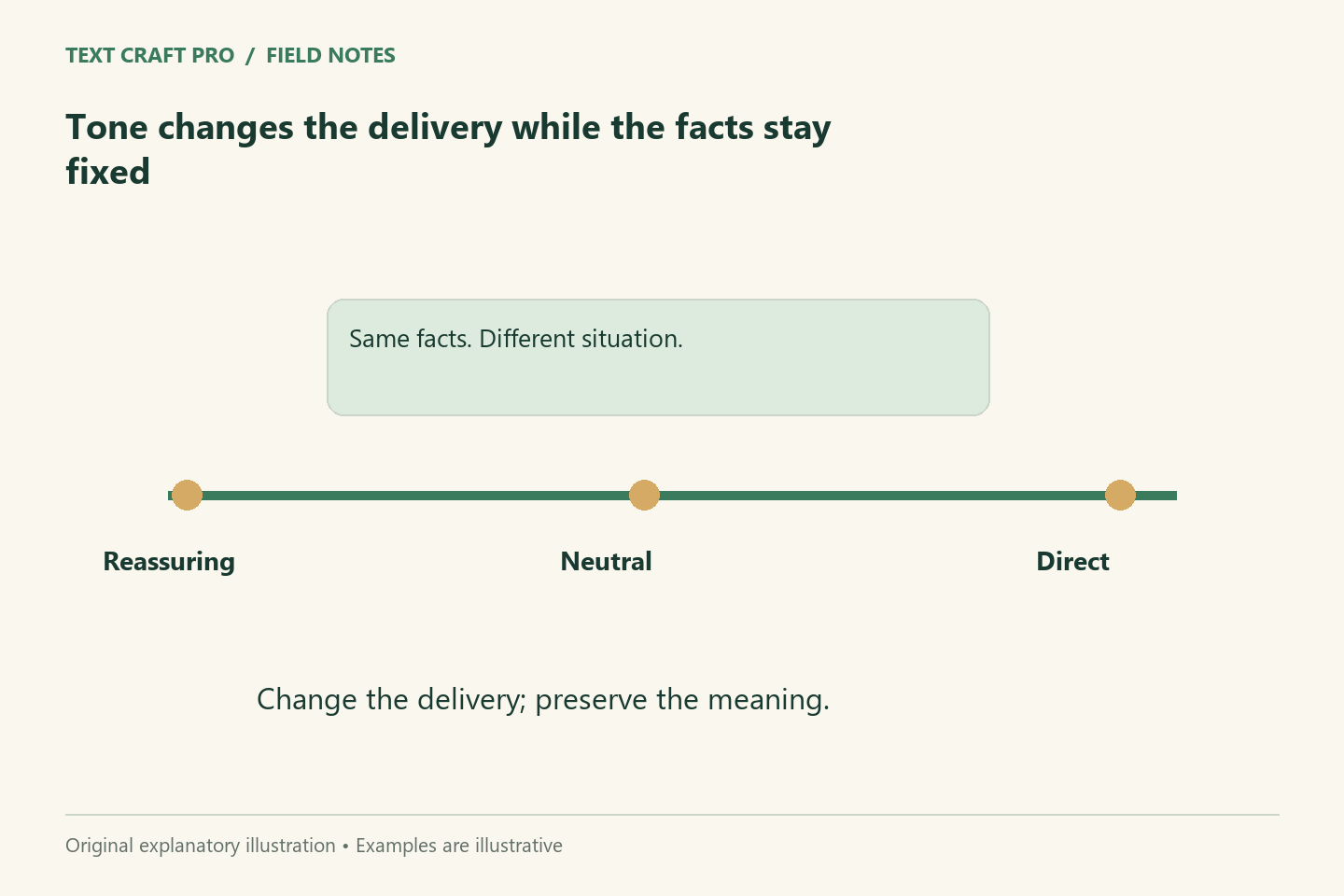
Business Writing
How to Change the Tone of a Message Without Changing Its Facts
Adjust formality, emphasis, and warmth while preserving commitments, conditions, and the reader’s next step.
Read the guide →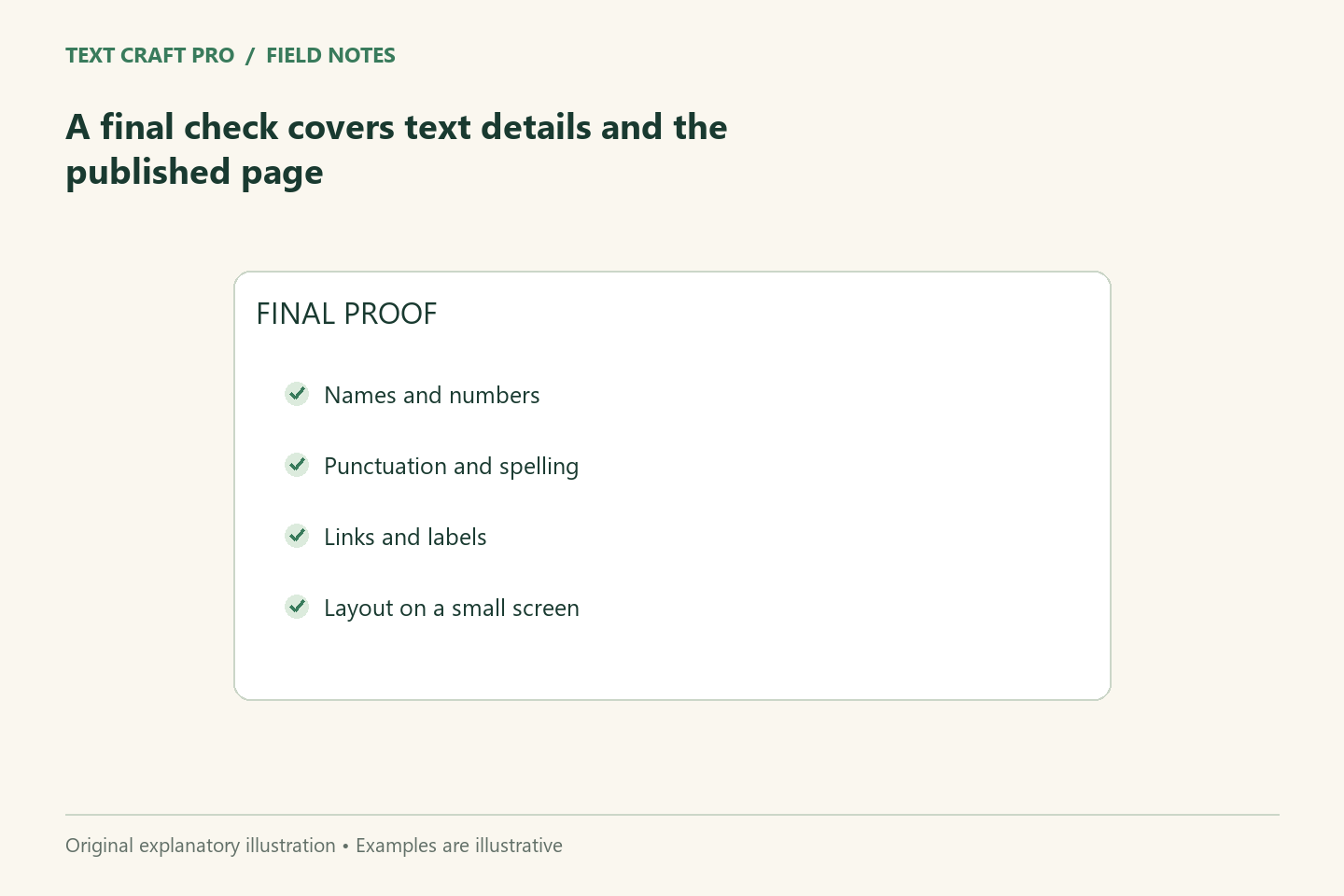
Editing
A Proofreading Checklist for Articles, Emails, and Web Pages
Check names, numbers, punctuation, links, and the saved page after the main editing work is complete.
Read the guide →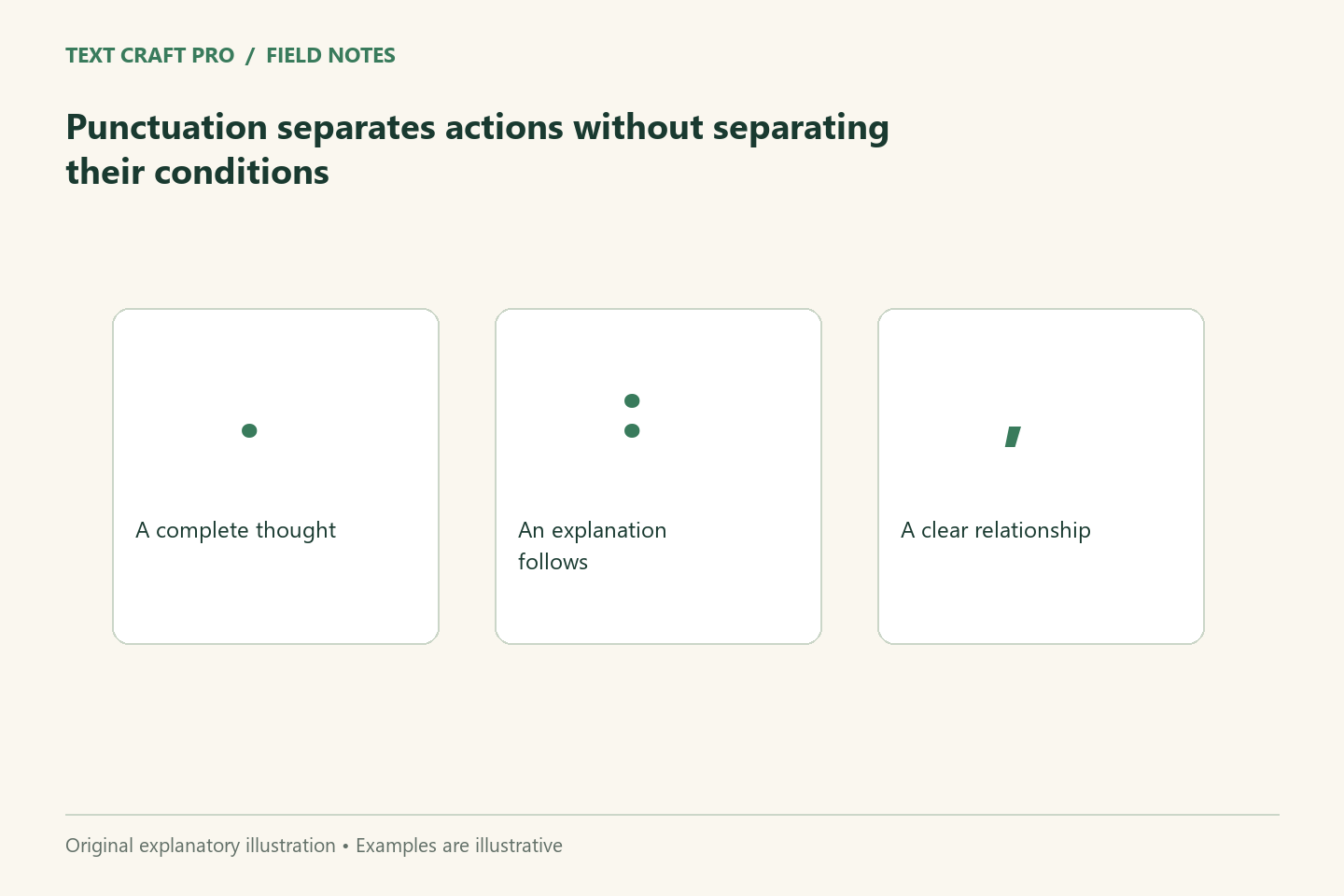
Editing
How to Use Punctuation to Make Instructions Easier to Follow
Use punctuation to reveal relationships between actions, conditions, and examples instead of decorating the sentence.
Read the guide →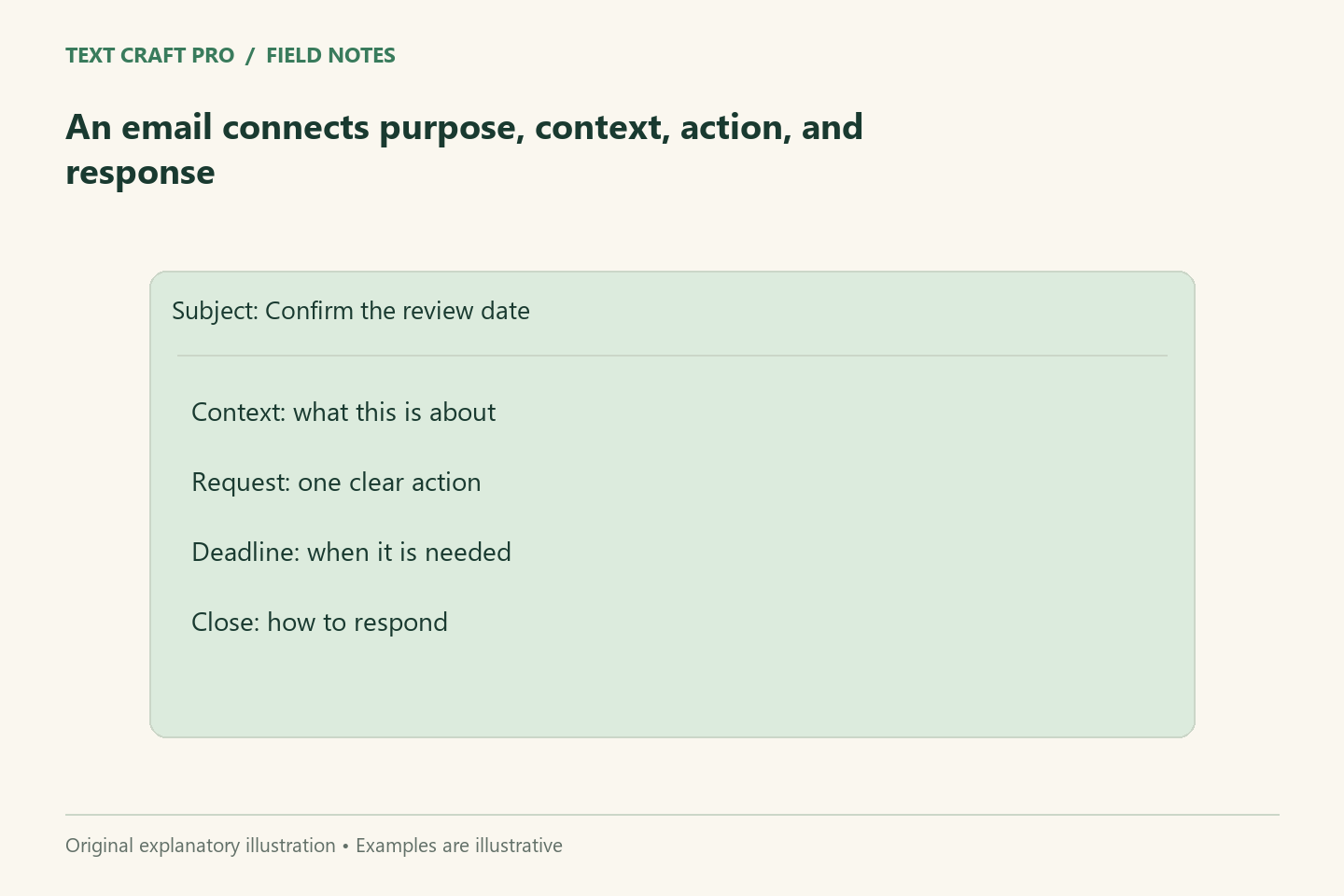
Business Writing
How to Write a Business Email With a Clear Purpose and Next Step
Organize context, action, and an approved deadline so the recipient can respond without guessing.
Read the guide →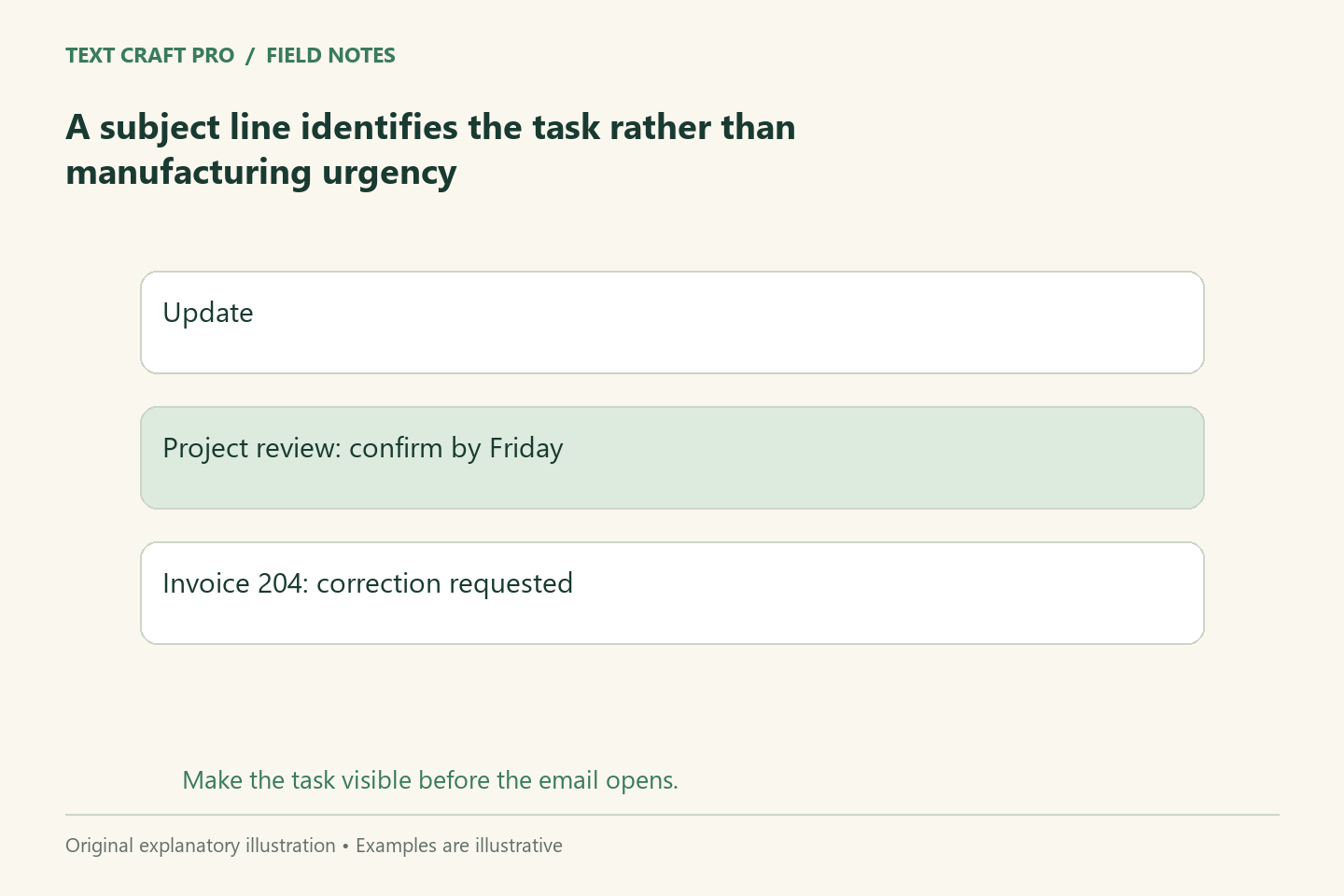
Business Writing
How to Write Email Subject Lines That Describe the Actual Message
Use purpose, topic, and relevant timing to create subject lines that help recipients identify and act on a message.
Read the guide →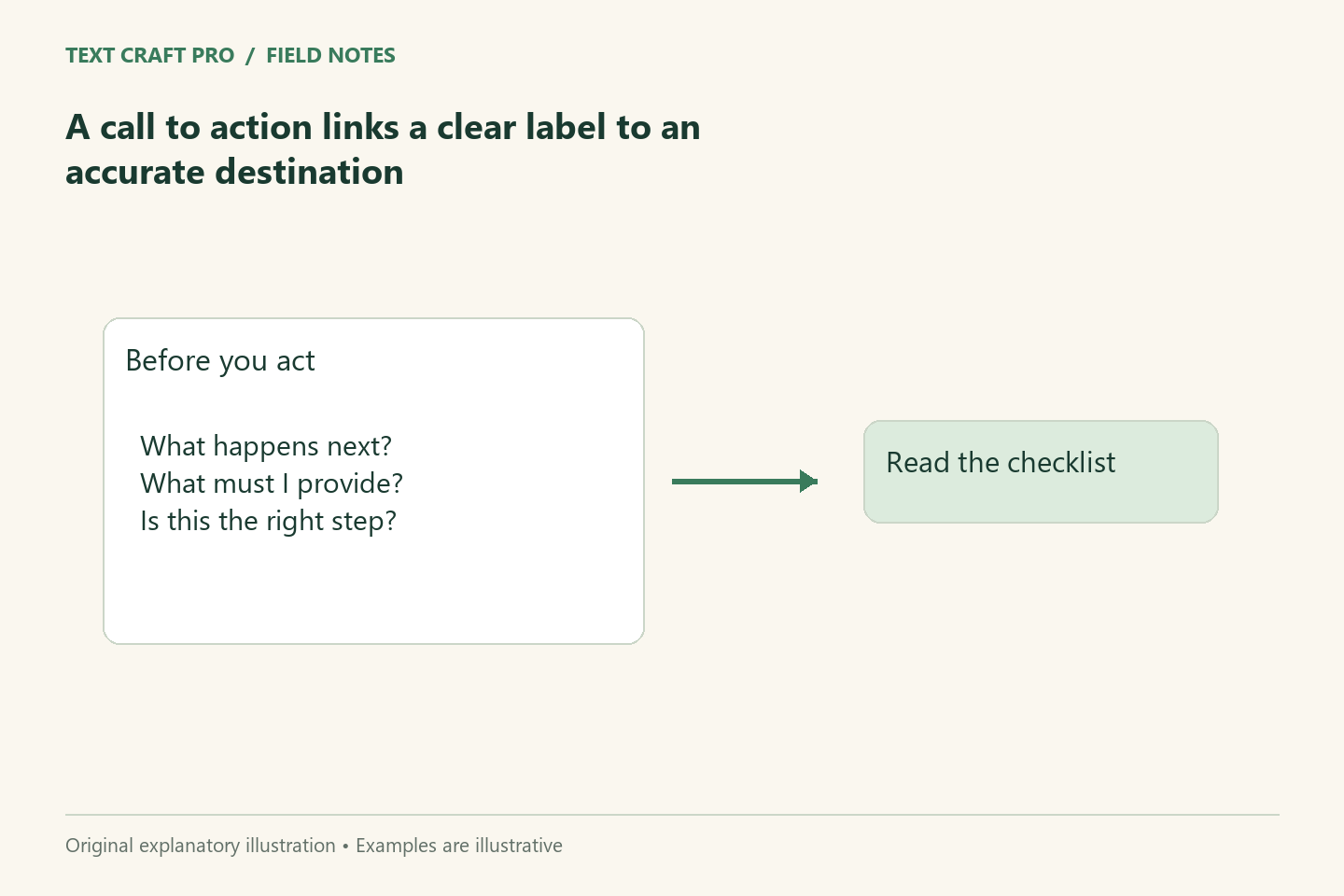
Business Writing
How to Write a Call to Action That Explains the Next Step
Match the wording to the destination, disclose what happens next, and avoid promises that the action cannot deliver.
Read the guide →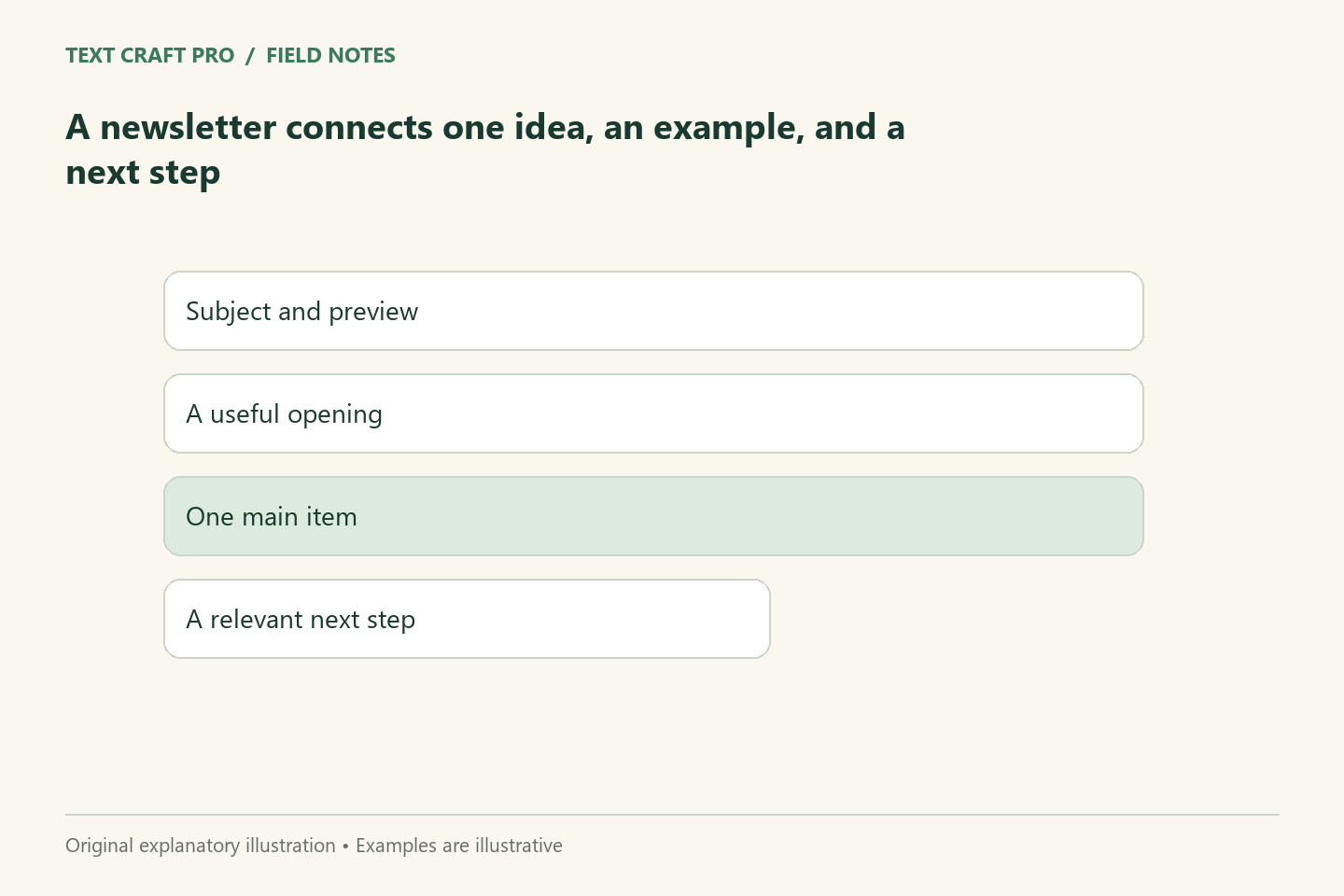
Business Writing
How to Structure a Useful Newsletter Around One Main Idea
Choose a focused promise, develop it with an example, and give readers a relevant next step instead of a collection of unrelated links.
Read the guide →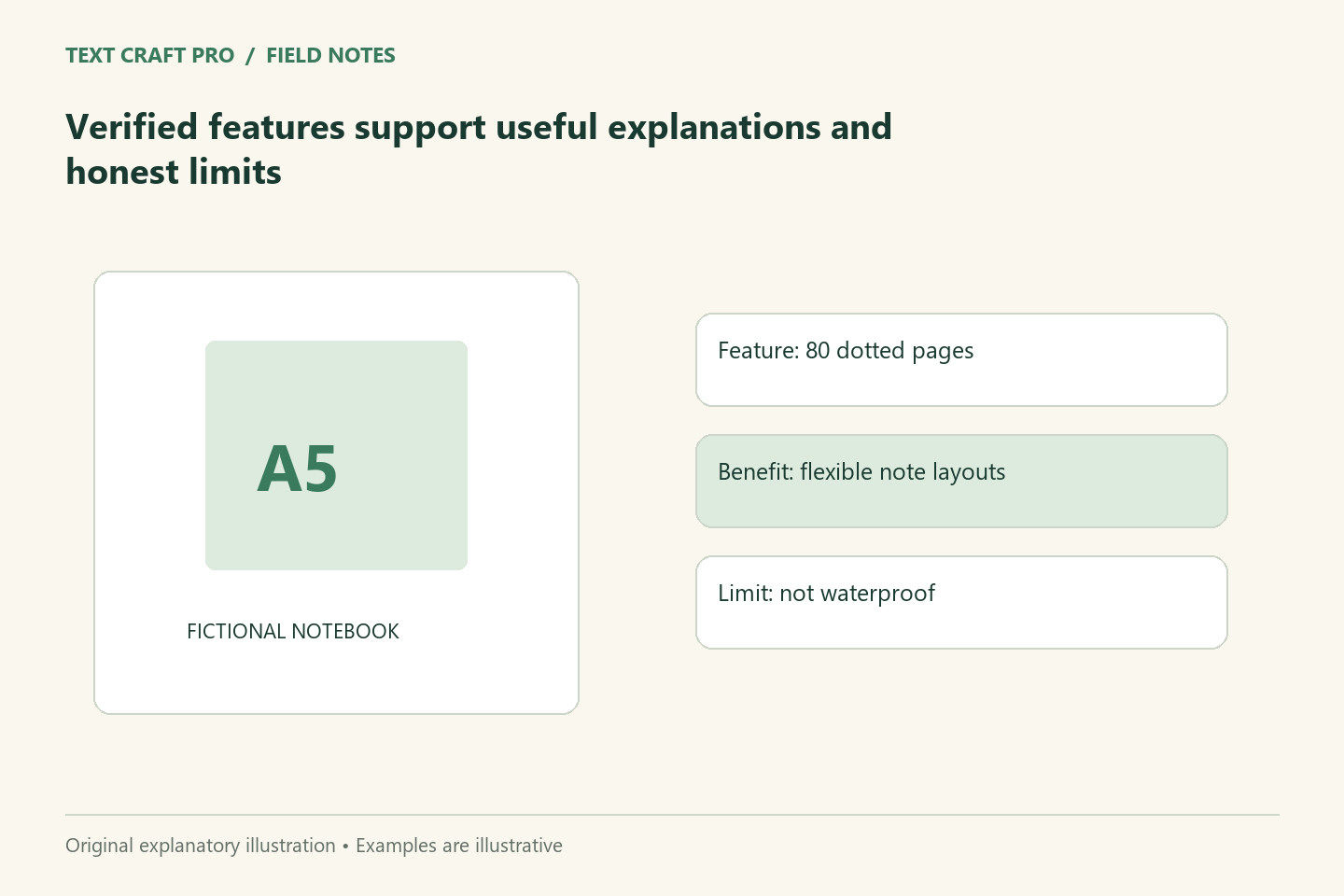
Business Writing
How to Write a Product Description From Verified Features
Connect features to practical use, include relevant limitations, and avoid unsupported claims or invented customer results.
Read the guide →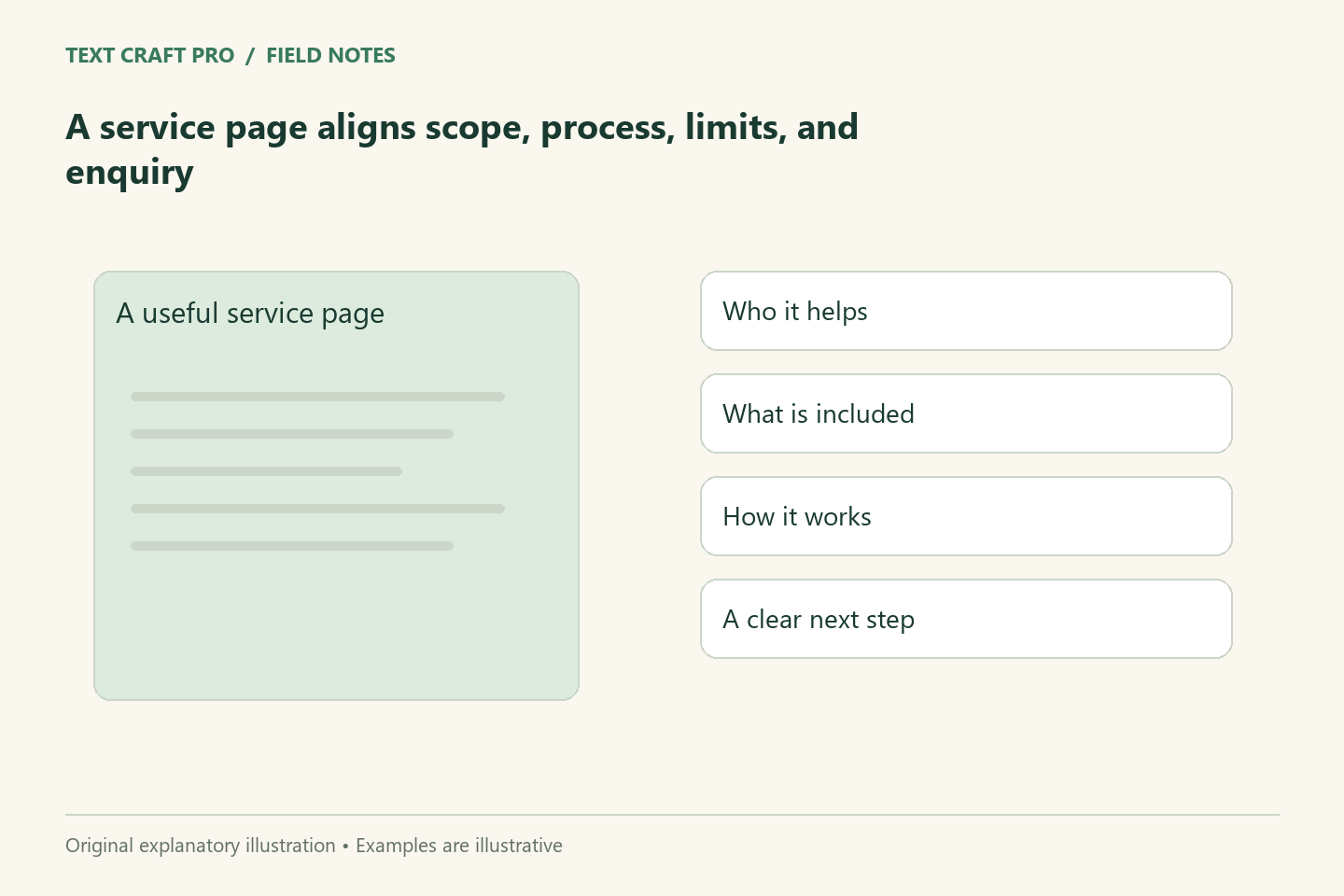
Business Writing
How to Write a Service Page That Explains Scope and Expectations
Describe who the service helps, what is included, how the process works, and which details need an enquiry.
Read the guide →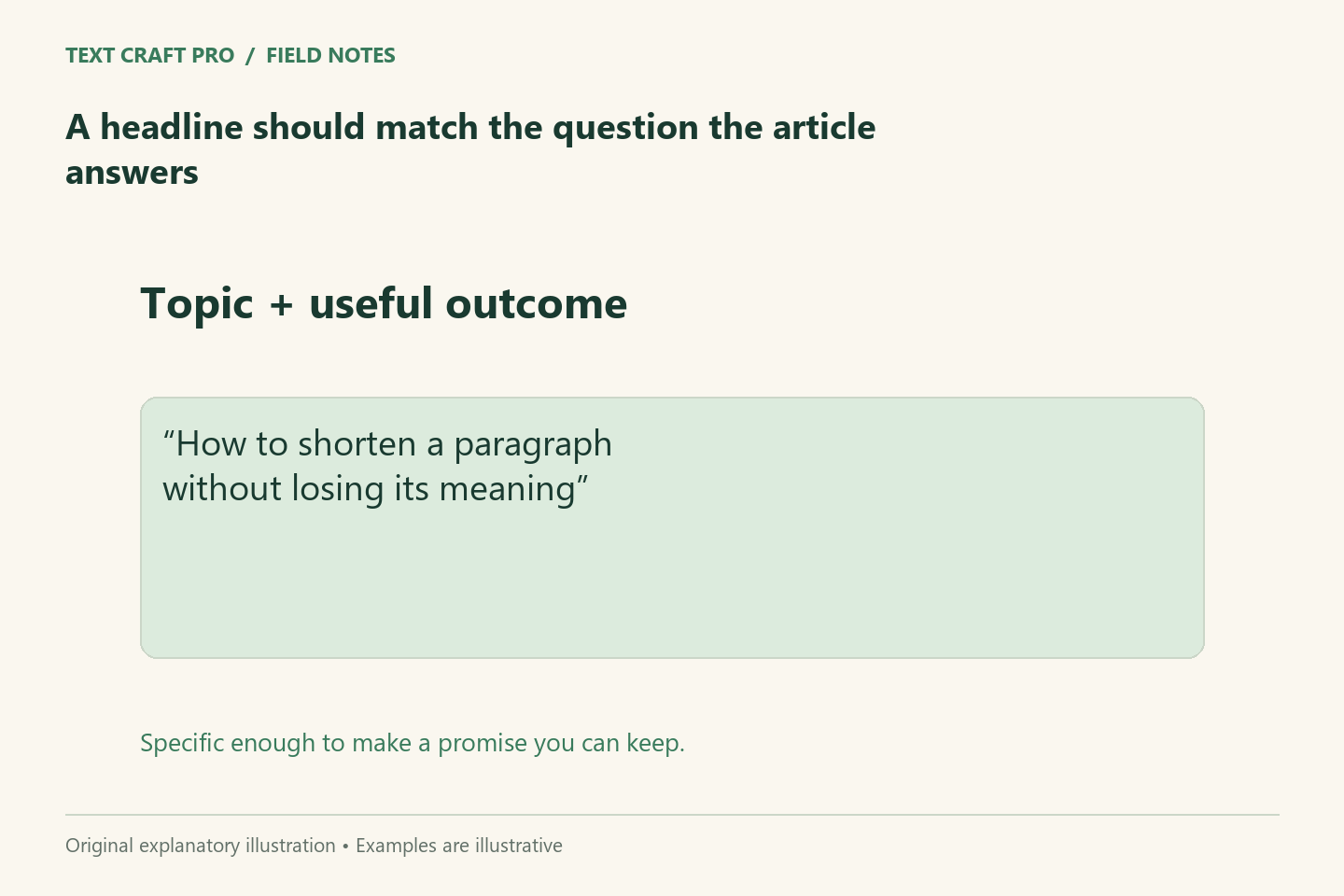
Web Content
How to Write a Headline That Makes an Accurate Promise
Match the headline to the reader’s question, the article’s evidence, and the actual answer rather than relying on exaggerated claims.
Read the guide →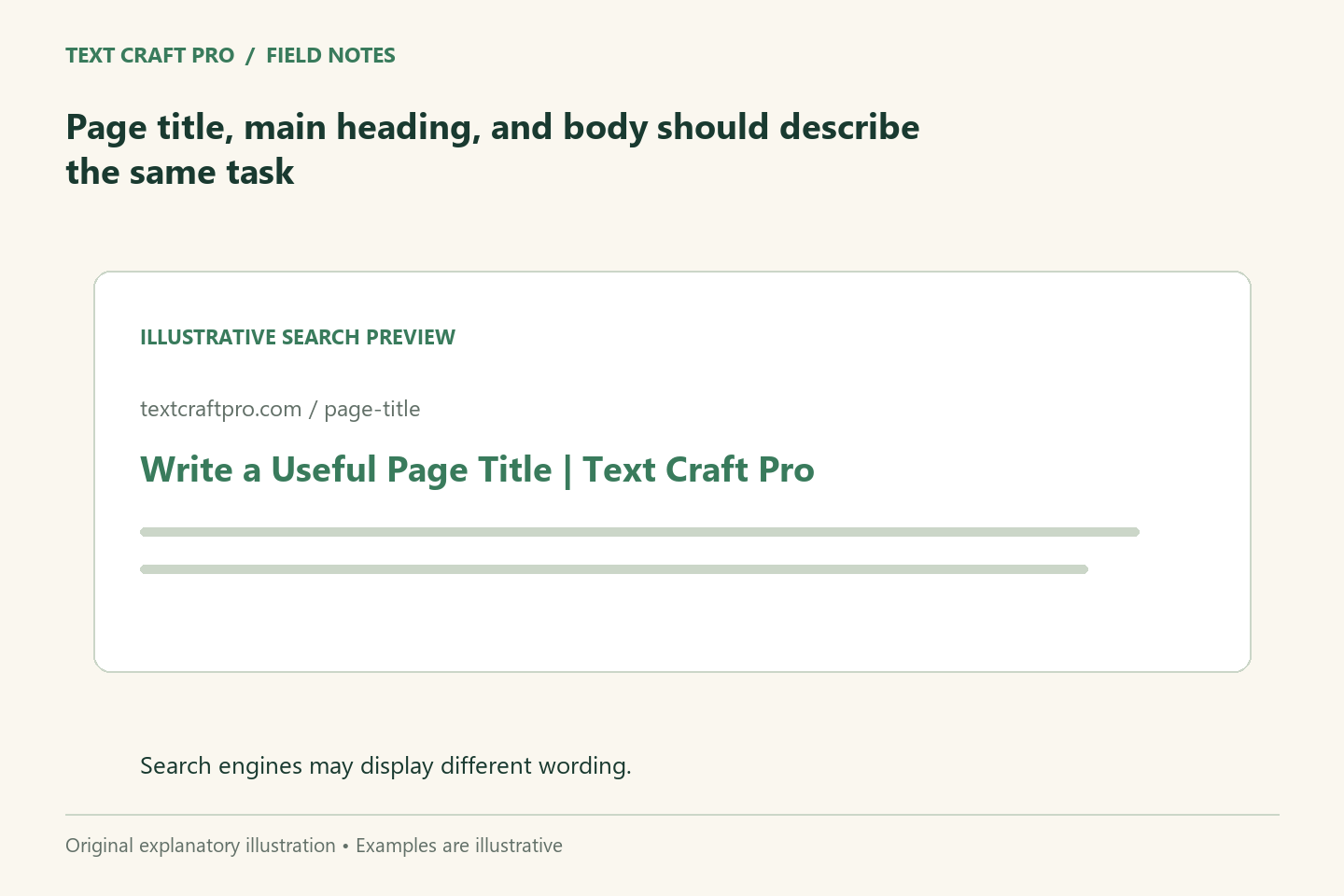
Web Content
How to Write a Page Title That Matches the Page’s Main Heading
Create a unique, descriptive title and keep it aligned with the visible article. Understand why Google may display different wording.
Read the guide →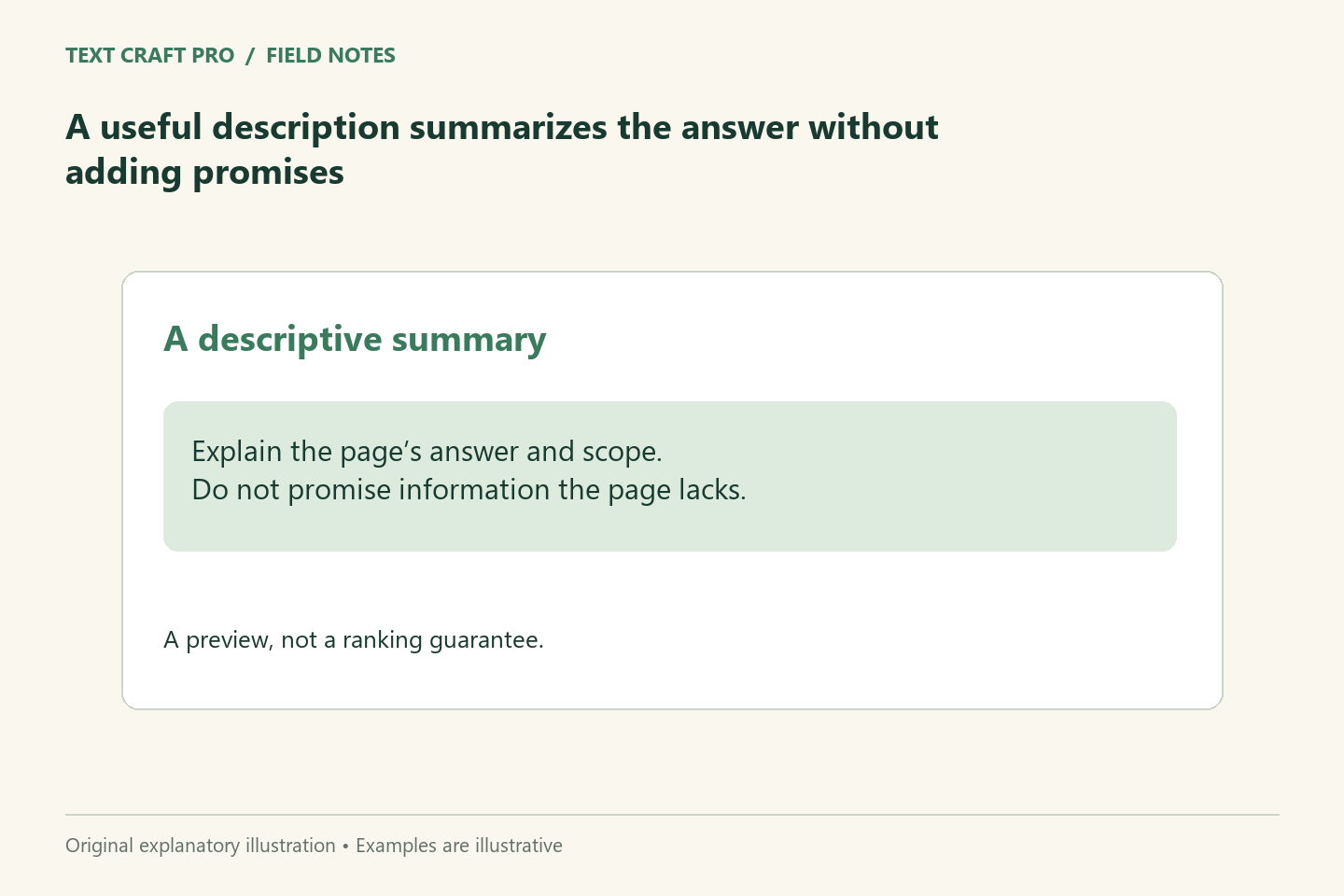
Web Content
How to Write a Meta Description That Summarizes the Page Honestly
Describe the page’s useful answer, avoid duplicated sales claims, and understand why search snippets may differ.
Read the guide →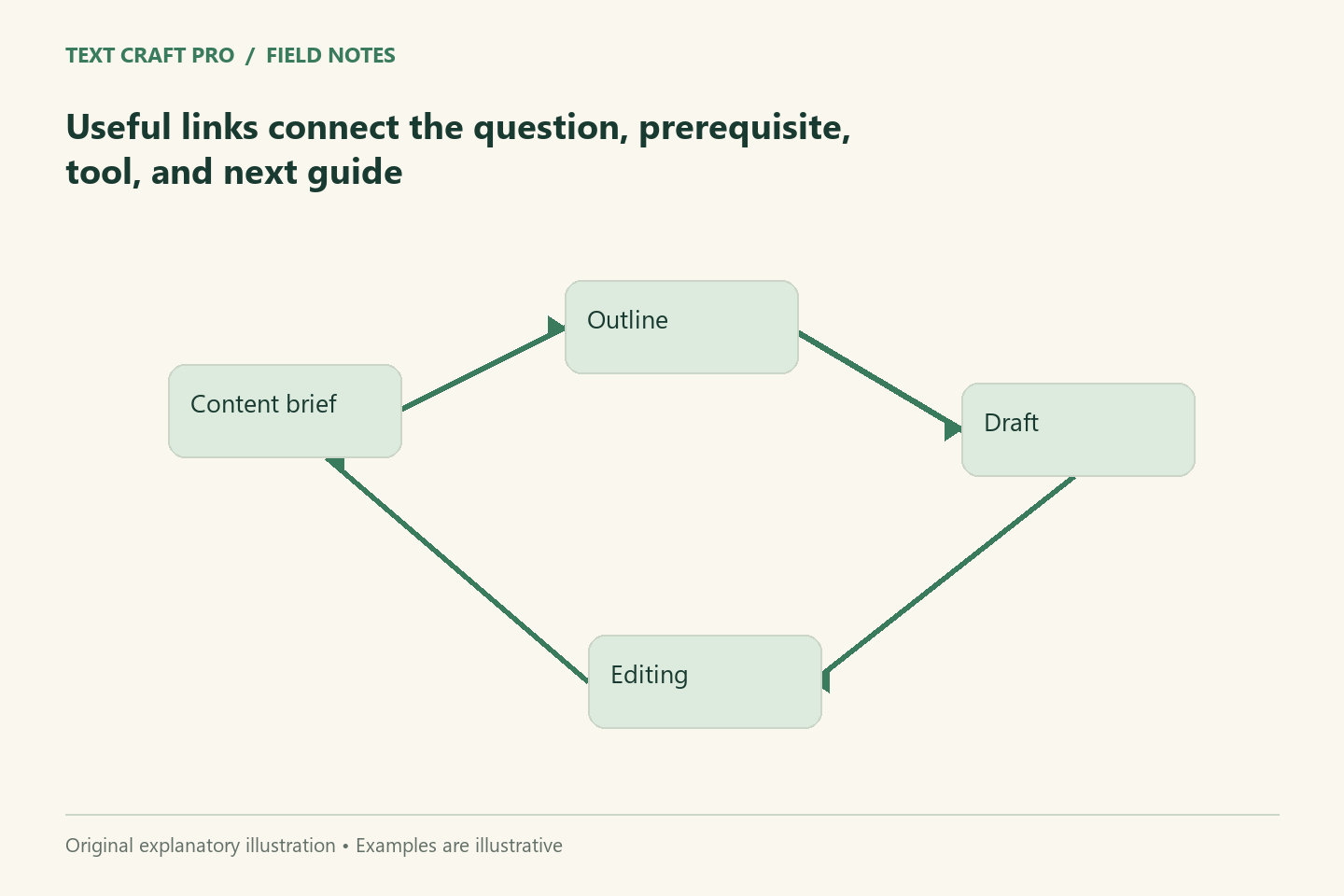
Web Content
How to Add Internal Links That Help Readers Continue
Connect a guide to prerequisites, practical tools, and related questions using descriptive link text and sensible placement.
Read the guide →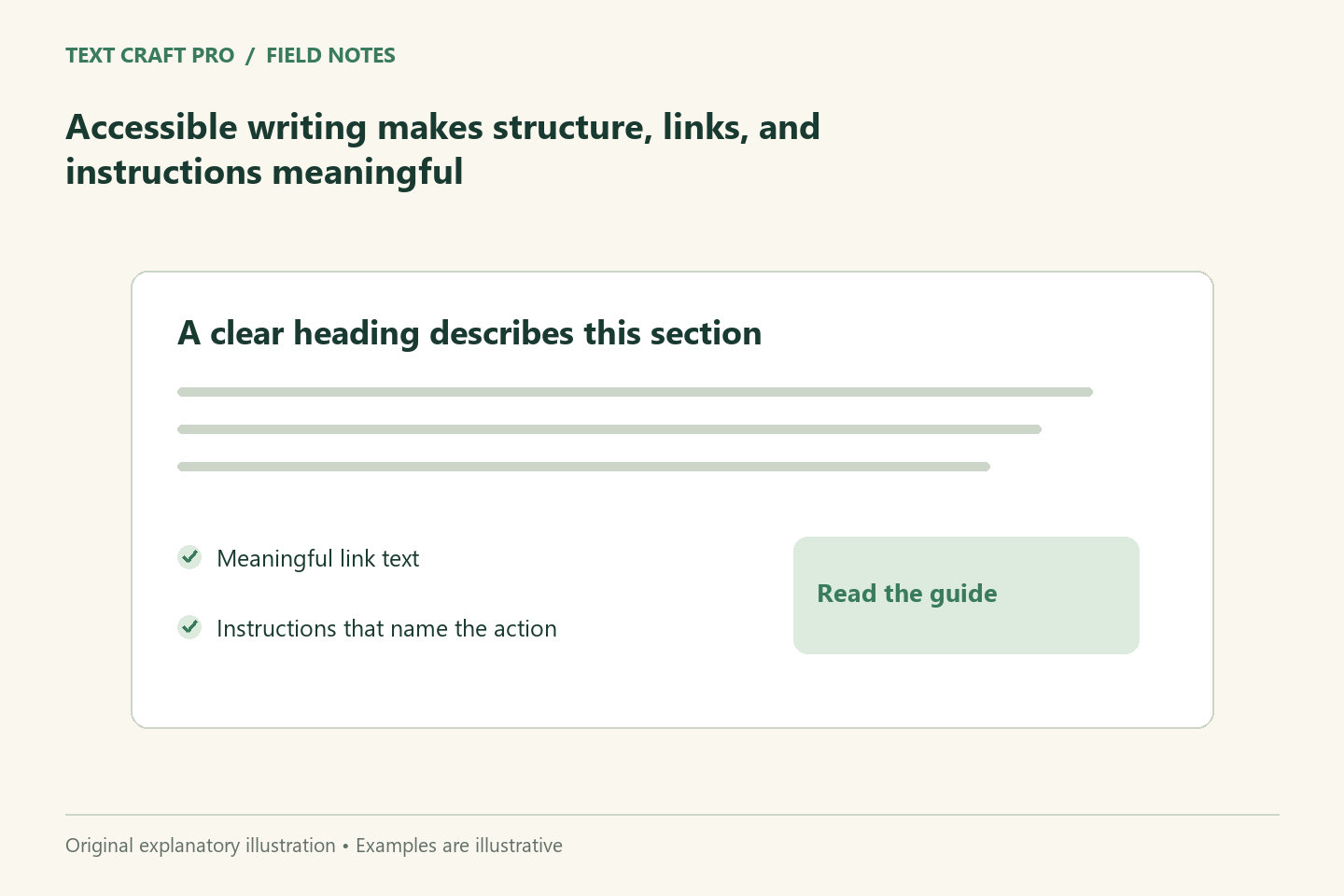
Web Content
A Practical Writing Pass for More Accessible Web Content
Review meaningful headings, link text, instructions, and image alternatives while keeping accessibility claims limited to actual checks.
Read the guide →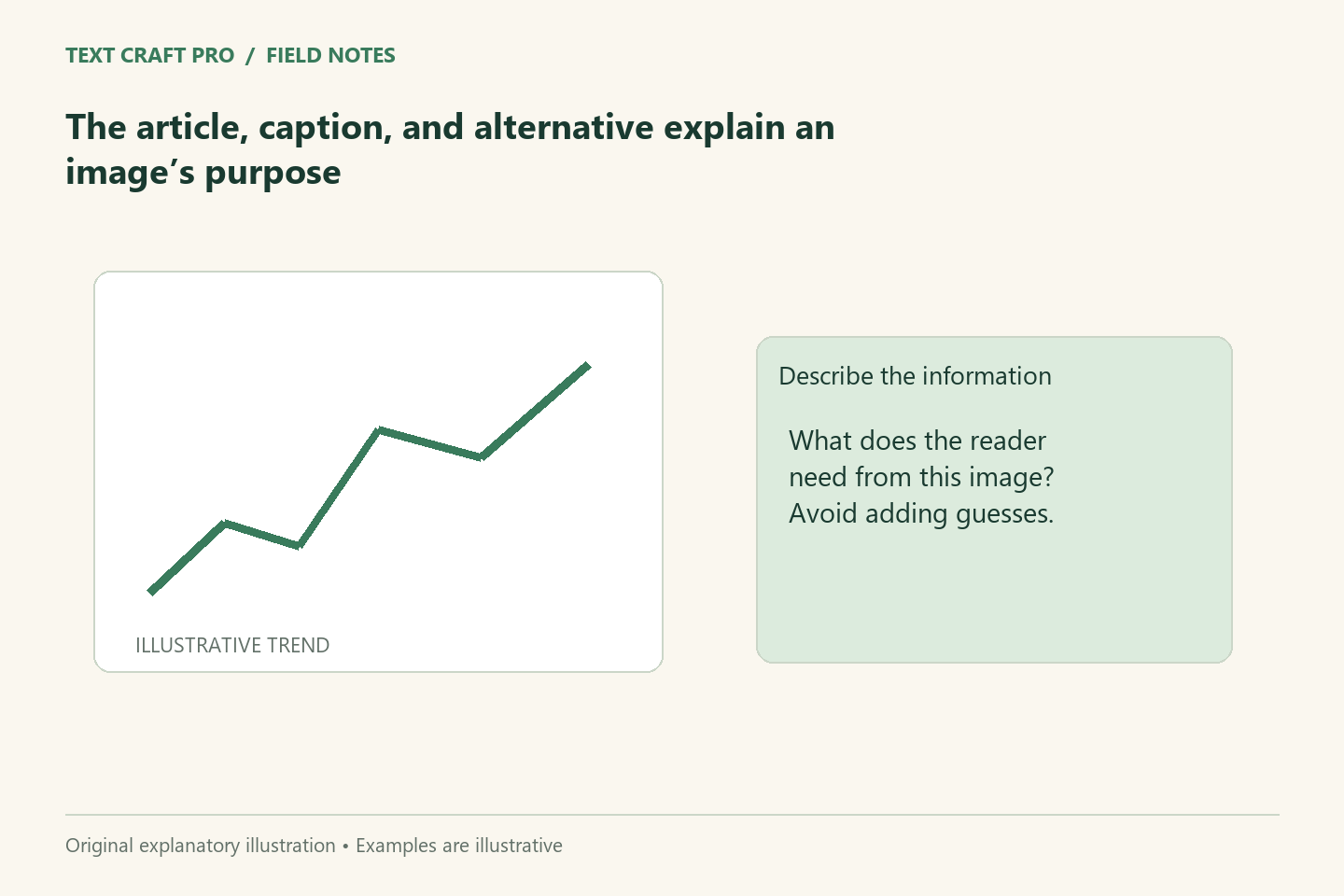
Web Content
How to Write Image Alt Text That Fits the Article
Describe the image’s useful information or function, distinguish diagrams from screenshots, and avoid keyword stuffing.
Read the guide →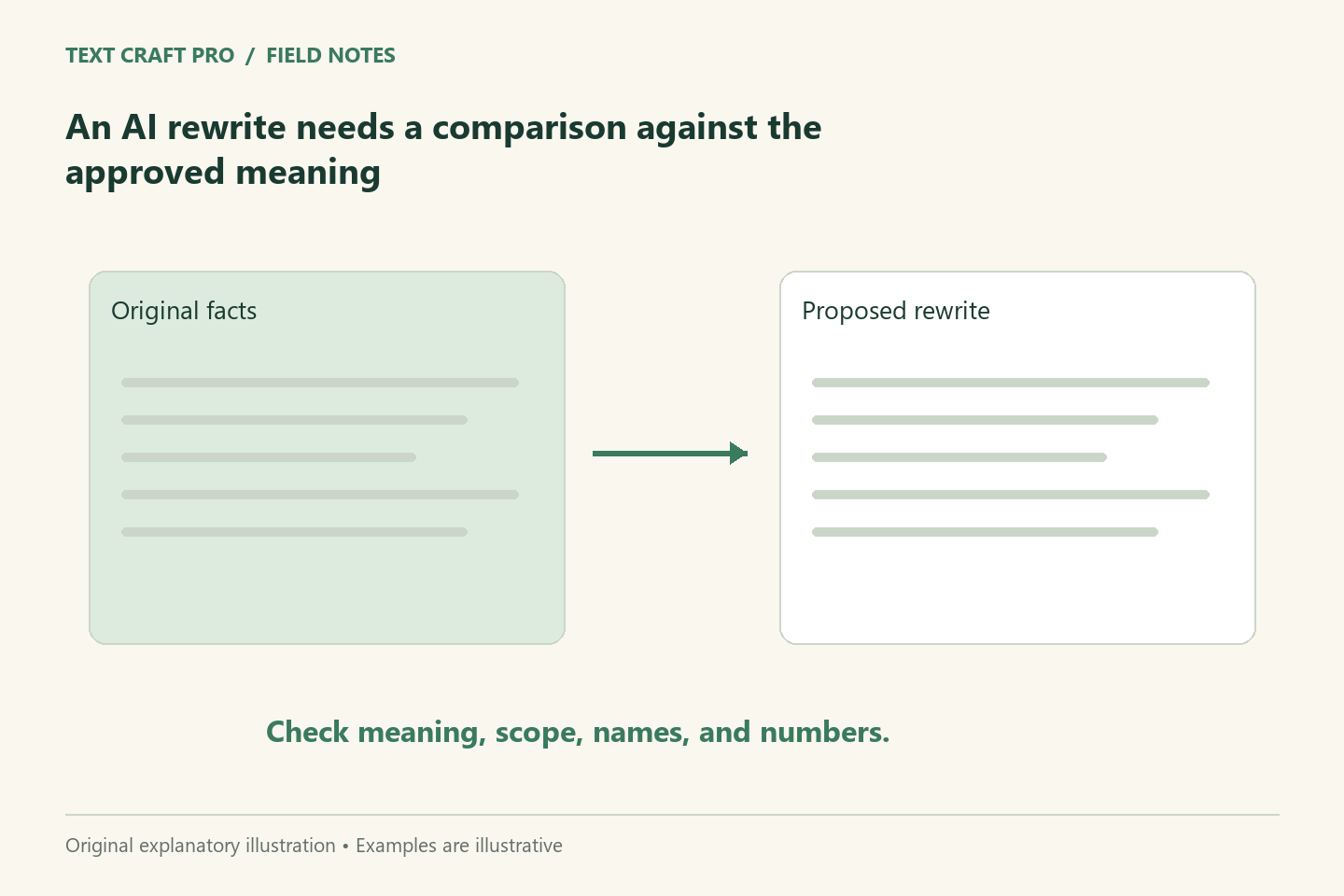
Publishing
How to Review an AI Rewrite Before Using It
Compare facts, scope, tone, and commitments so a fluent rewrite does not silently change the message.
Read the guide →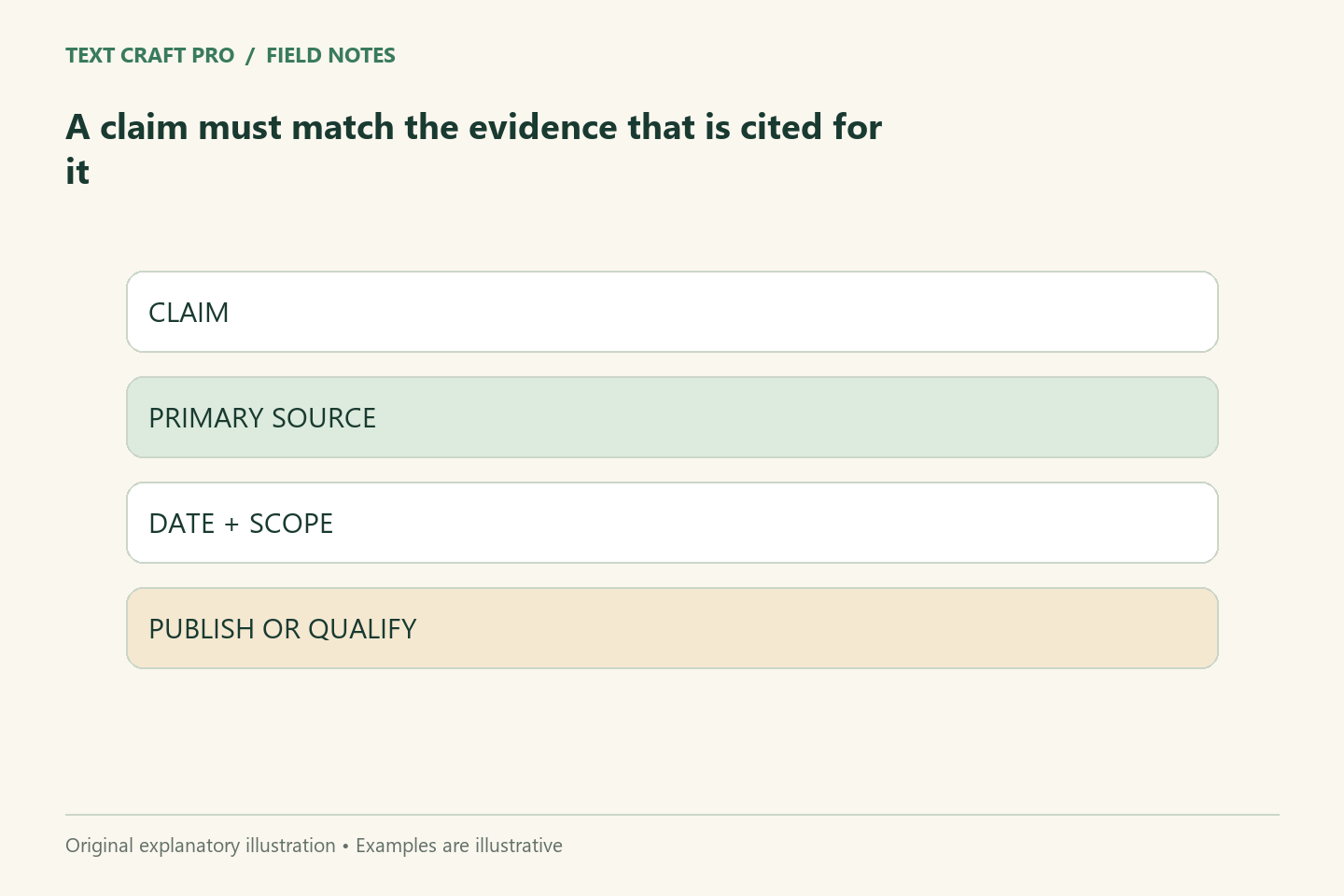
Publishing
How to Check Sources and Claims in a Draft Article
Build a claim list, read the supporting material, and distinguish facts, interpretations, and fictional examples.
Read the guide →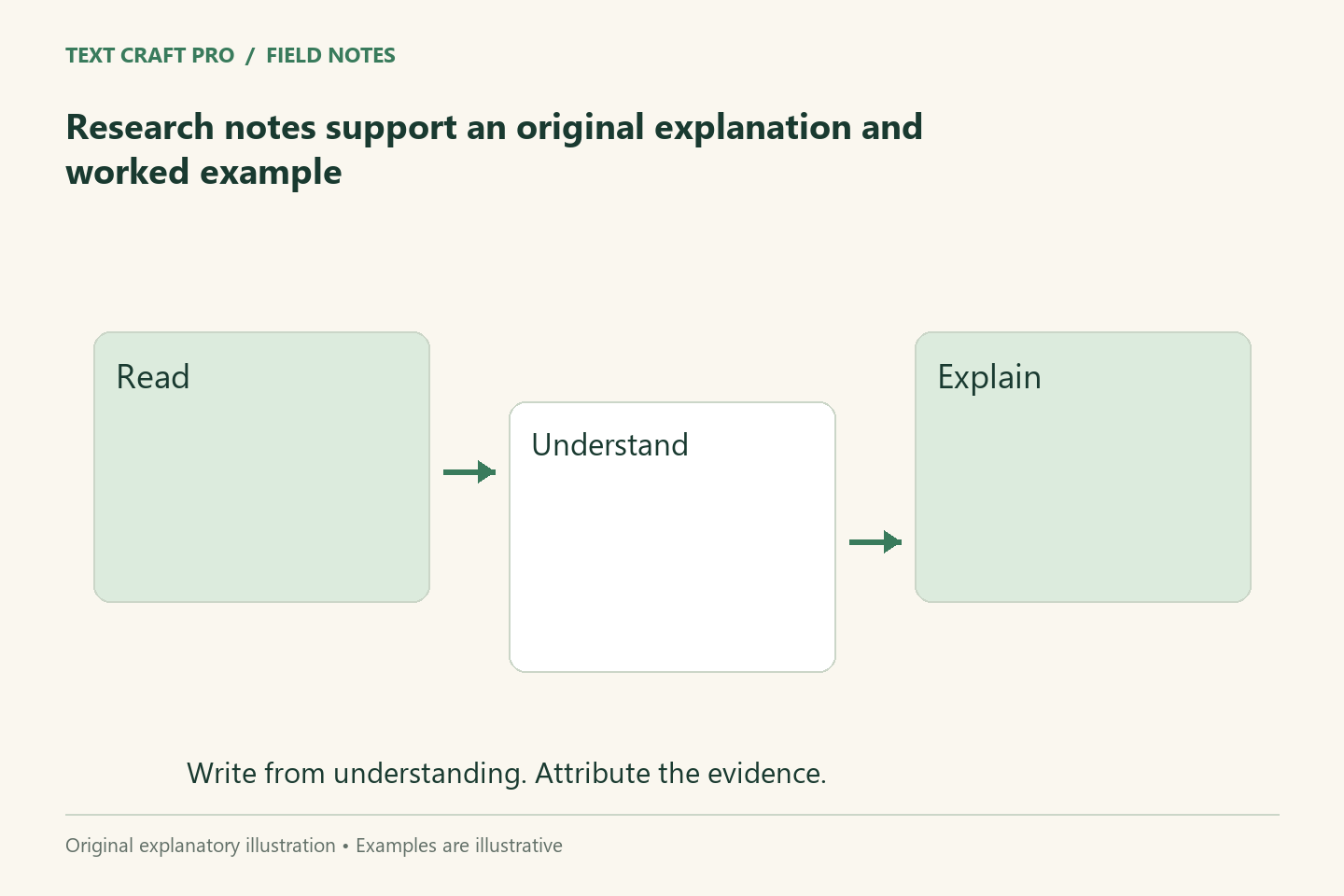
Publishing
How to Build an Original Article From Research Without Copying Its Structure
Use a reader question, source notes, original examples, and attribution to create a distinct explanation rather than a close paraphrase.
Read the guide →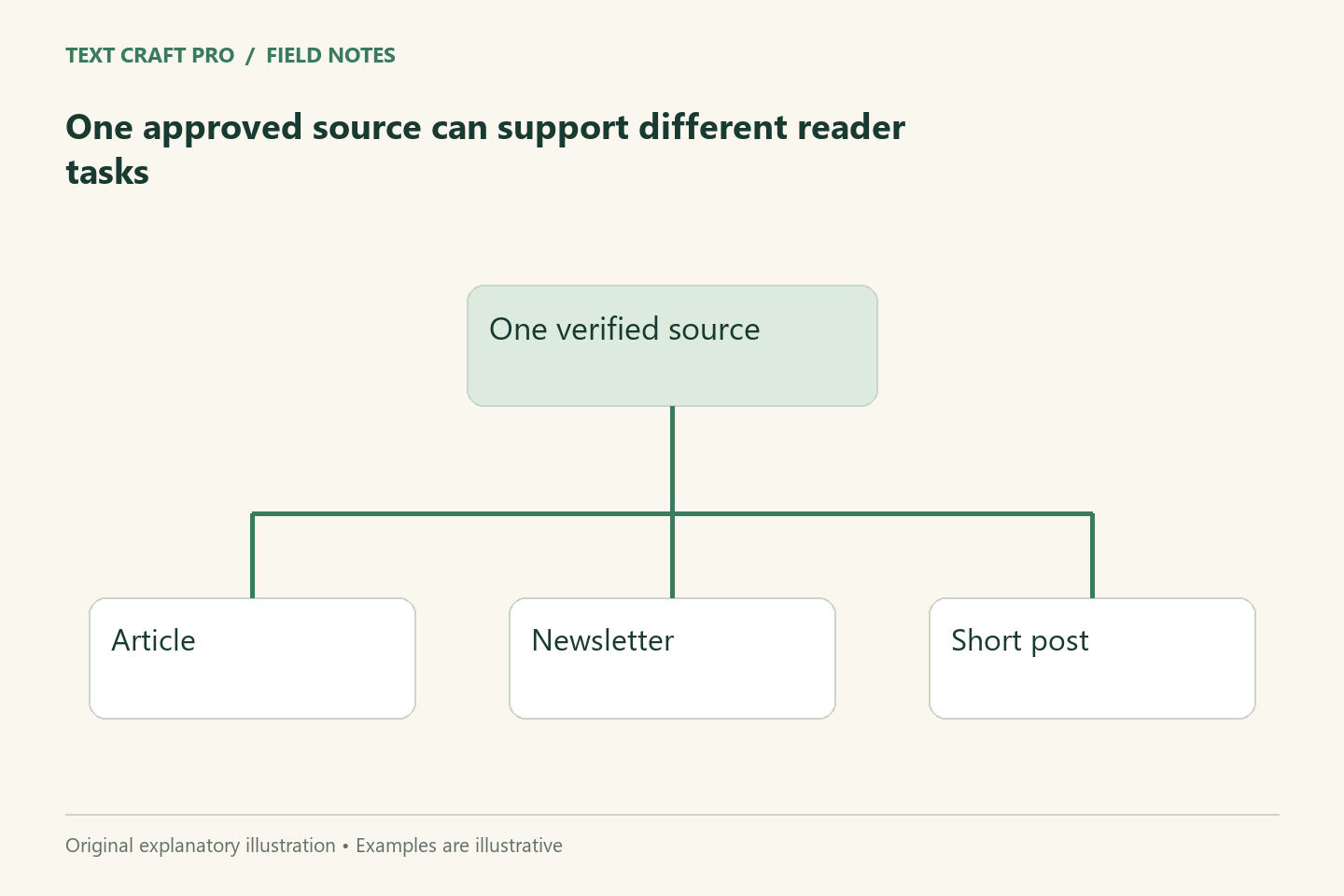
Publishing
How to Adapt an Article Into an Email or Checklist Without Repeating It
Change the format and reader task while preserving the approved facts and giving each version a useful purpose.
Read the guide →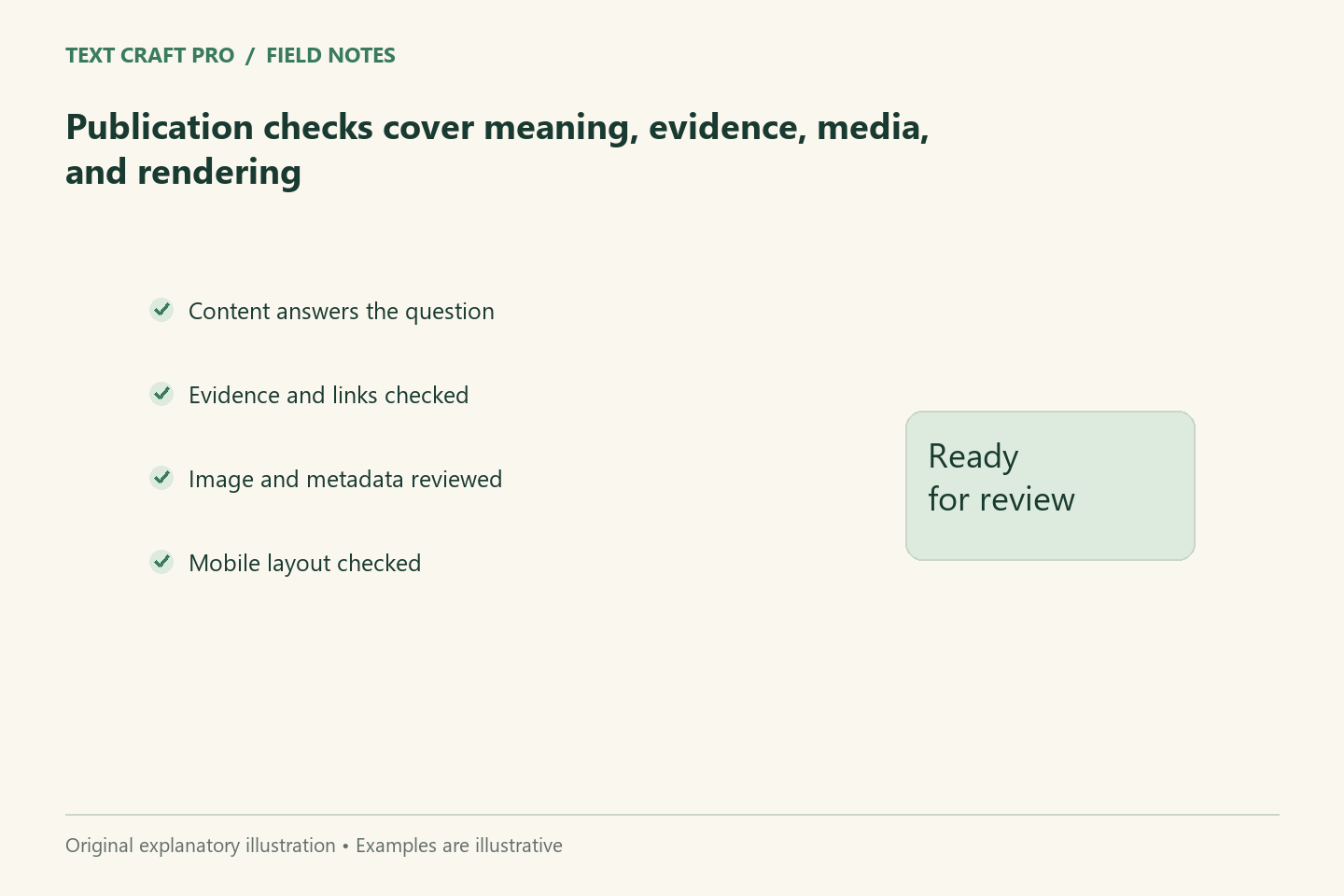
Publishing
A Pre-Publication Checklist for a Useful, Trustworthy Article
Review reader value, facts, original examples, images, links, metadata, and the actual saved page before publishing.
Read the guide →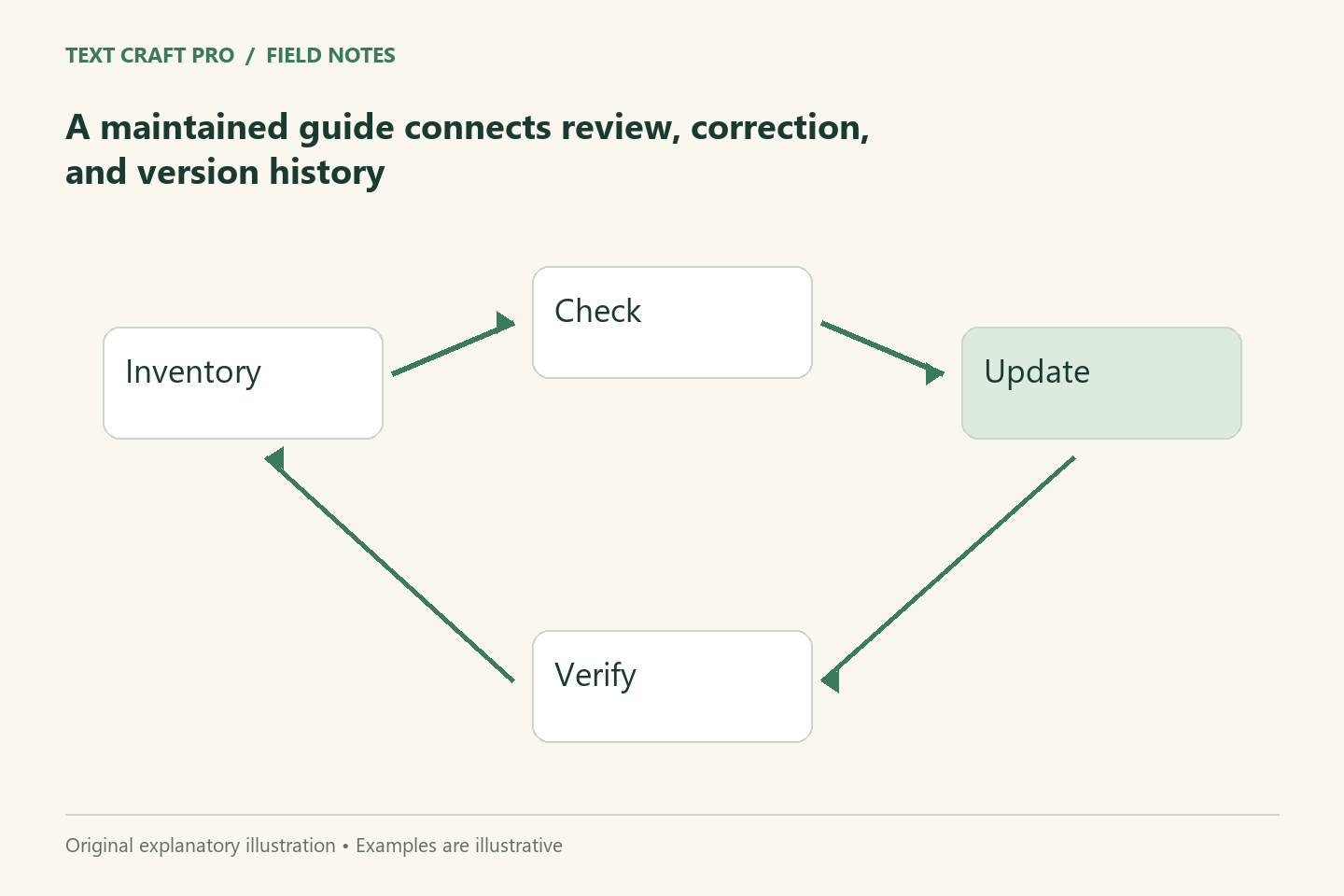
Publishing
How to Maintain a Guide Library After Publication
Review changing sources, repair links, keep tools and policies accurate, and record meaningful updates instead of changing dates alone.
Read the guide →Not sure where to begin? Follow the writing workflow.