Publishing
How to Build an Original Article From Research Without Copying Its Structure
Use a reader question, source notes, original examples, and attribution to create a distinct explanation rather than a close paraphrase.
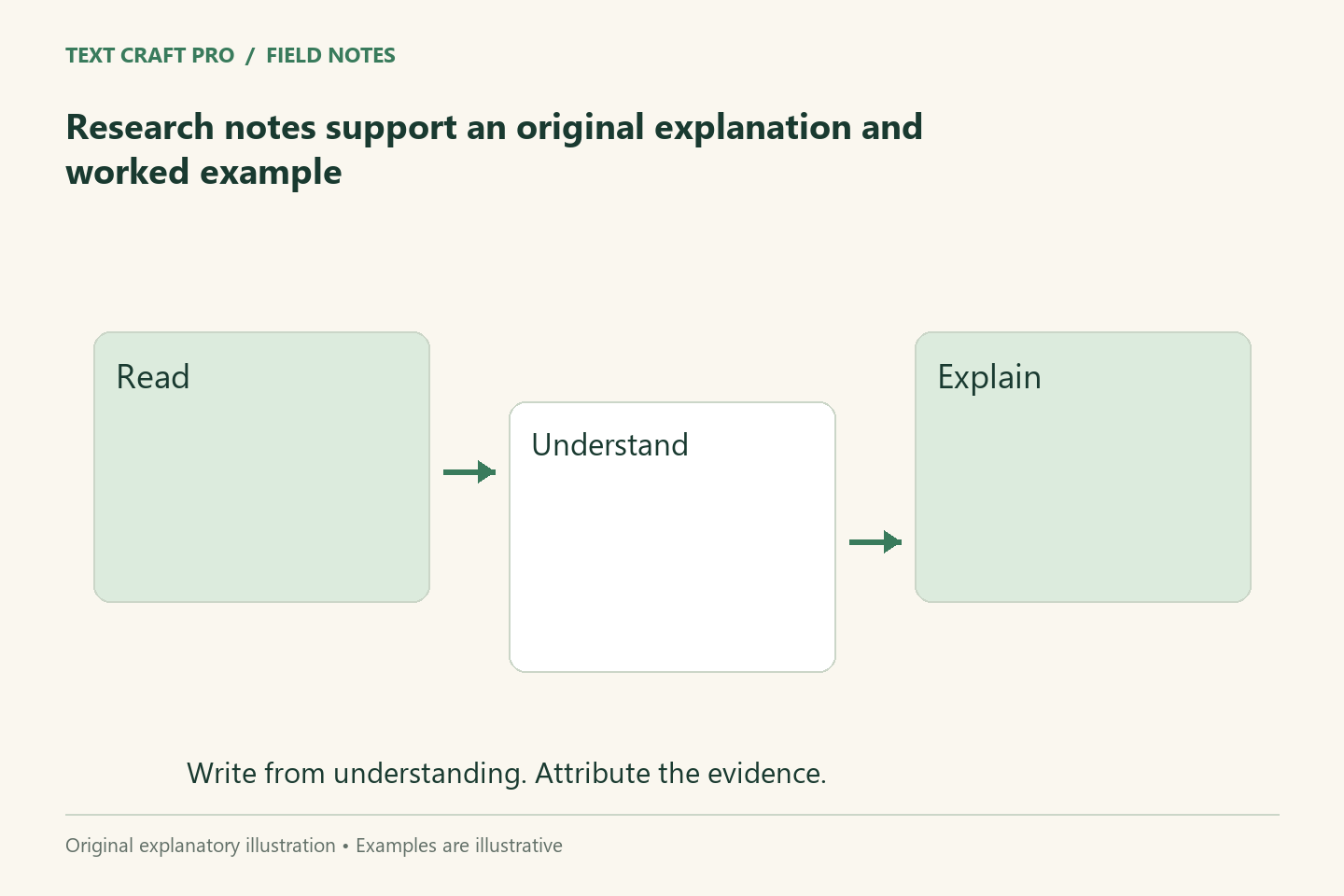
Original writing is more than replacing words in another article. It involves choosing your own question, organizing the explanation around the reader’s task, and contributing useful examples or analysis. Research can inform the piece, but the finished structure should not simply reproduce a source’s argument with different phrasing. This guide describes an editorial process, not a legal clearance procedure.
Define your own question
Start with the reader’s problem and the answer your article can provide. If the assignment begins with a competitor’s article, identify the underlying reader need before drafting. Ask what evidence, examples, or distinctions you can contribute. A narrower, useful question can produce a more original article than trying to cover the same broad topic in the same order as every reference page.
Take source notes by claim
Record facts and their sources separately from copied passages. Mark any exact quotation unmistakably so it cannot accidentally become uncredited prose in the draft. Group notes according to the claims your article needs, not the order of one source. Keep the context and limitations with each fact. This makes it easier to create a new explanation without losing attribution.
Build a task-based outline
Choose the sequence that helps your reader use the answer. A tutorial may need preparation, steps, checks, and exceptions. A comparison may need criteria before examples. Do not inherit a source’s distinctive headings or sequence merely because it is convenient. The outline should reflect your article’s purpose and evidence. If you cannot explain why a section belongs, reconsider it before writing polished paragraphs.
Add your own explanatory work
Use an original fictional example, a transparent calculation, a decision checklist, or a carefully described actual test where available. Label its nature. An example should demonstrate the method rather than fill space. Do not fabricate firsthand experience or customer results to make the article appear distinctive. A clear explanation of a difficult decision can be valuable without pretending to have performed a commercial product test.
Review similarity beyond wording
Compare the draft with major references for close phrasing, repeated distinctive examples, and copied structure. Automated similarity tools can help flag passages, but a score does not prove originality or rights clearance. Review quotations, media sources, and attribution independently. If the article follows another piece too closely, return to the reader question and restructure the explanation rather than using more synonyms.
Keep attribution useful
Cite the source near the factual point it supports, using a meaningful label. Distinguish the source’s documented statement from your interpretation. Keep quotations limited and relevant, and seek appropriate permissions where the intended use requires them. For complex rights questions, obtain suitable professional advice. The publisher remains responsible for the finished text and assets rather than relying on a writing tool’s assurance that they are plagiarism-free.
Frequently asked questions
Does a low similarity score prove originality?
No. It may miss copied structure, examples, or unattributed ideas, and it does not establish permission to use media.
Can two articles cover the same topic?
Yes. A shared topic does not require copied wording or structure. Contribute a distinct reader purpose, explanation, evidence, or example.
Continue your workflow
- How to Check Sources and Claims in a Draft Article
- How to Build an Article Outline Around the Reader’s Questions
Was this guide helpful?
Tell us what needs improving →
Your selection stays on this page. To send feedback to the publication, use our contact form.
Published 4 October 2026 · Text Craft Pro · AI-assisted educational writing. Editorial policy · Suggest a correction