Publishing
How to Adapt an Article Into an Email or Checklist Without Repeating It
Change the format and reader task while preserving the approved facts and giving each version a useful purpose.
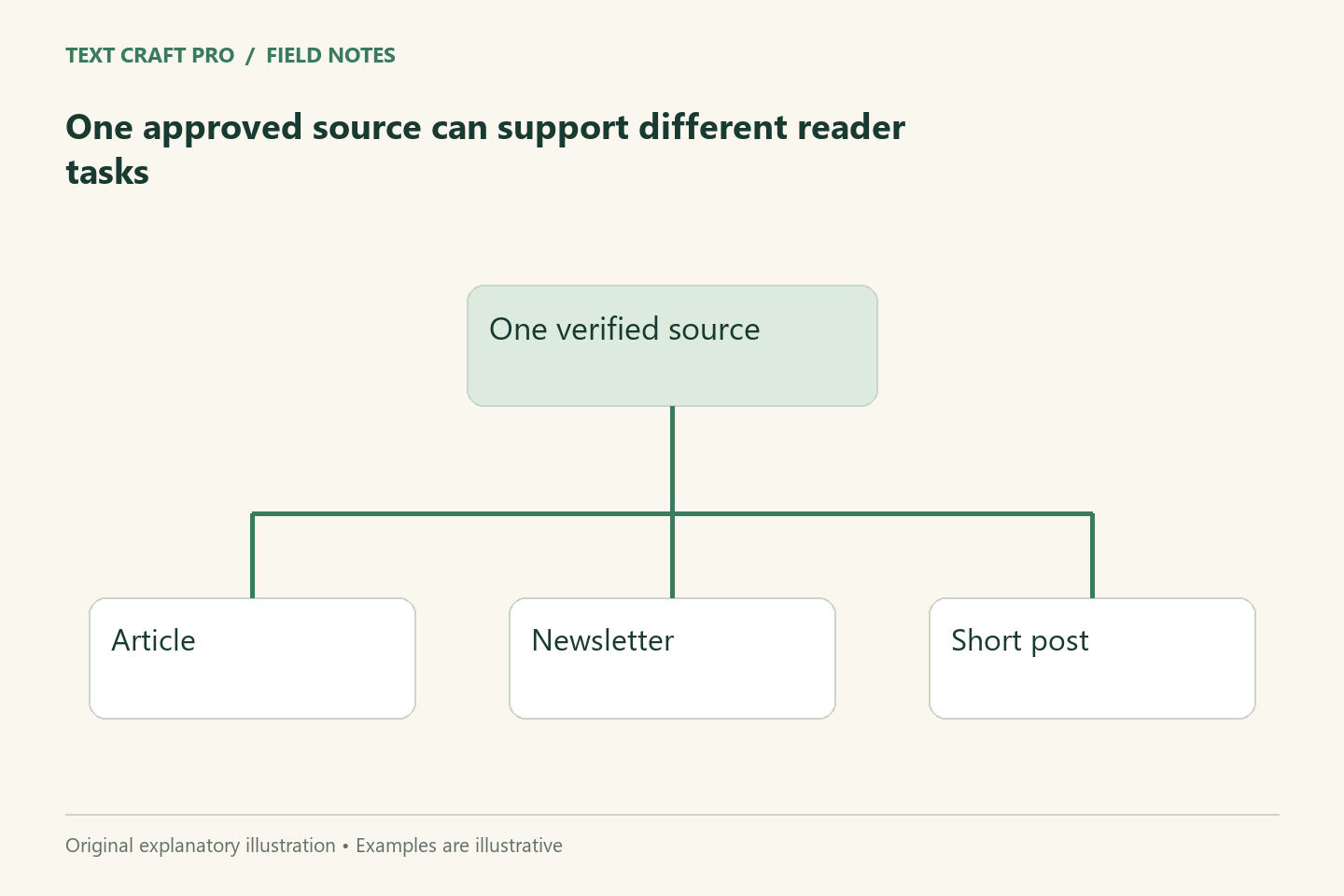
Repurposing adapts approved material to another reader situation or format. It is not simply cutting an article into smaller fragments and publishing each as a new complete piece. A newsletter, checklist, and short email need different structures. Each version should offer a clear use while preserving the original facts and relevant limitations.
Choose the new task
Decide what the reader should do with the adapted version. A checklist helps perform or review a task. A newsletter can explain one practical idea. An email may request a specific response. Write that purpose before shortening the source. This protects the adaptation from becoming a summary that contains many points but gives the reader no reason to use them.
Identify the approved core
Mark the facts, definitions, conditions, and source links that need to remain accurate. Note which examples are fictional and which observations come from actual testing. Do not convert a hypothetical scenario into a customer story during adaptation. If a source has changed since the article was reviewed, check it before distributing the new version. Repurposing is another publication decision, not an exemption from fact review.
Restructure for the format
A checklist should use checkable actions rather than abbreviated paragraphs. A newsletter may need a focused opening and one worked example. An email needs context and a requested next step. Remove details that do not serve the new task, but link to the fuller explanation where it adds value. The new format should work independently enough that the reader understands its central instruction.
Preserve conditions when cutting
A short version can accidentally omit the exception that made the original advice safe or accurate. Keep qualifications beside the action they affect. If the format cannot carry necessary context, narrow the promise and direct the reader to the complete guide. Do not use brevity as a reason to turn a nuanced recommendation into an absolute rule.
Use a fictional adaptation
An article about proofreading can become a newsletter explaining why links need a separate check. Its example compares a correct-looking label with the wrong destination. A checklist can turn that idea into “Open each relevant link and confirm the destination matches the label.” An email to a reviewer can request confirmation of links and captions before publication. The three versions serve different tasks while retaining the same underlying method.
Review each version on its own
Check the title, opening, body, and action for consistency. Verify that references still make sense without the original article’s surrounding paragraphs. Track the adaptations so a future correction can reach every version that repeats the affected fact. A smaller piece may need less detail, but it still needs accurate meaning, useful context, and a clear next step.
Frequently asked questions
Should every adaptation link to the article?
Link when it helps provide depth, evidence, or the full method. The adaptation should still make its immediate purpose understandable.
Can AI create the adapted draft?
It can help propose a version from approved material. Review facts, omissions, conditions, and the new format before publishing.
Continue your workflow
- How to Structure a Useful Newsletter Around One Main Idea
- How to Review an AI Rewrite Before Using It
Was this guide helpful?
Tell us what needs improving →
Your selection stays on this page. To send feedback to the publication, use our contact form.
Published 6 October 2026 · Text Craft Pro · AI-assisted educational writing. Editorial policy · Suggest a correction