Business Writing
How to Structure a Useful Newsletter Around One Main Idea
Choose a focused promise, develop it with an example, and give readers a relevant next step instead of a collection of unrelated links.
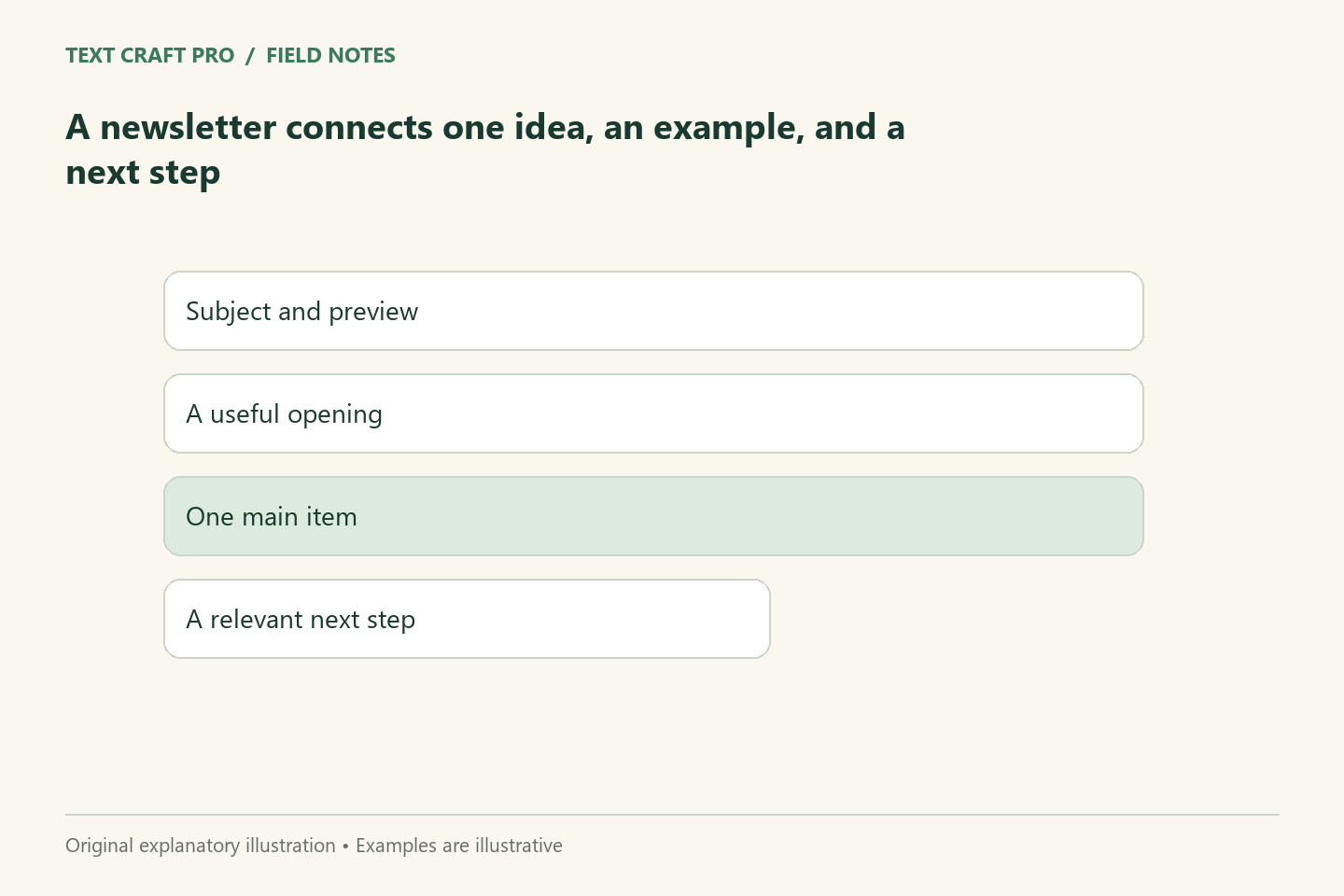
A newsletter can be useful without covering every update from a business. One focused idea, explained well, often creates a clearer reading experience than a long collection of disconnected announcements. The structure should reflect what subscribers expect and why this issue is worth their attention. This guide addresses writing and organization, not delivery performance guarantees.
Define the issue’s promise
Write one sentence describing what this edition helps the reader understand or do. For a writing newsletter, the promise might be improving a vague instruction. Choose a topic your audience has a reason to care about and that you can explain with supported information. If several important updates must appear, group them under clear labels rather than pretending they form one continuous argument.
Use an opening that reaches the point
Begin with the question, problem, or example that makes the issue relevant. Avoid a long introduction about how busy the publisher has been unless that context matters to the reader. The opening should connect to the subject line and quickly show what the reader will receive. A short personal note can fit, but it should not delay the promised practical value.
Develop the idea with a concrete example
Explain the principle and show it working on a fictional or authorized example. For an issue about requests, revise a sentence that hides the action. Then explain why the revision is clearer and what conditions must remain. A useful example gives the reader a method they can reuse. Do not present a made-up example as a customer outcome or a tested conversion improvement.
Separate the primary action from extras
Choose a next step that follows the idea: try a checklist, read a fuller guide, or reply with a relevant question. Place secondary resources in a distinct section. If you include commercial material, disclose the relationship where it affects the recommendation. Do not disguise promotional placement as independent editorial advice. The issue should still provide value even if the reader does not click a link.
Build a fictional issue
Subject: “A clearer way to ask for draft feedback.” Opening: describe the problem of vague requests. Main section: compare “Thoughts?” with a request to check three agreed questions. Example: a short email that identifies the owner and deadline. Next step: link to the business-email guide. Extra resource: the brief builder. Each component supports the same problem rather than pulling the reader into unrelated topics.
Review the complete reading experience
Read the subject, opening, body, and action together. Check links, image alternatives, and mobile formatting. A newsletter sent through a mailing service also needs the consent, identity, and unsubscribe controls appropriate to its actual setup. Do not add a signup form unless the publisher has selected and configured the service and disclosed its data handling. Content planning can happen before those operational choices are complete.
Frequently asked questions
Must every issue have only one topic?
No. Some newsletters are deliberately curated digests. In that case, use a clear organizing principle and concise explanations of why each resource belongs.
Can I reuse an article in a newsletter?
Yes. Adapt it to the newsletter’s reader and format, preserve the facts, and link to the fuller explanation where useful.
Continue your workflow
- How to Write Email Subject Lines That Describe the Actual Message
- How to Adapt an Article Into an Email or Checklist Without Repeating It
Was this guide helpful?
Tell us what needs improving →
Your selection stays on this page. To send feedback to the publication, use our contact form.
Published 12 September 2026 · Text Craft Pro · AI-assisted educational writing. Editorial policy · Suggest a correction