Business Writing
How to Write a Product Description From Verified Features
Connect features to practical use, include relevant limitations, and avoid unsupported claims or invented customer results.
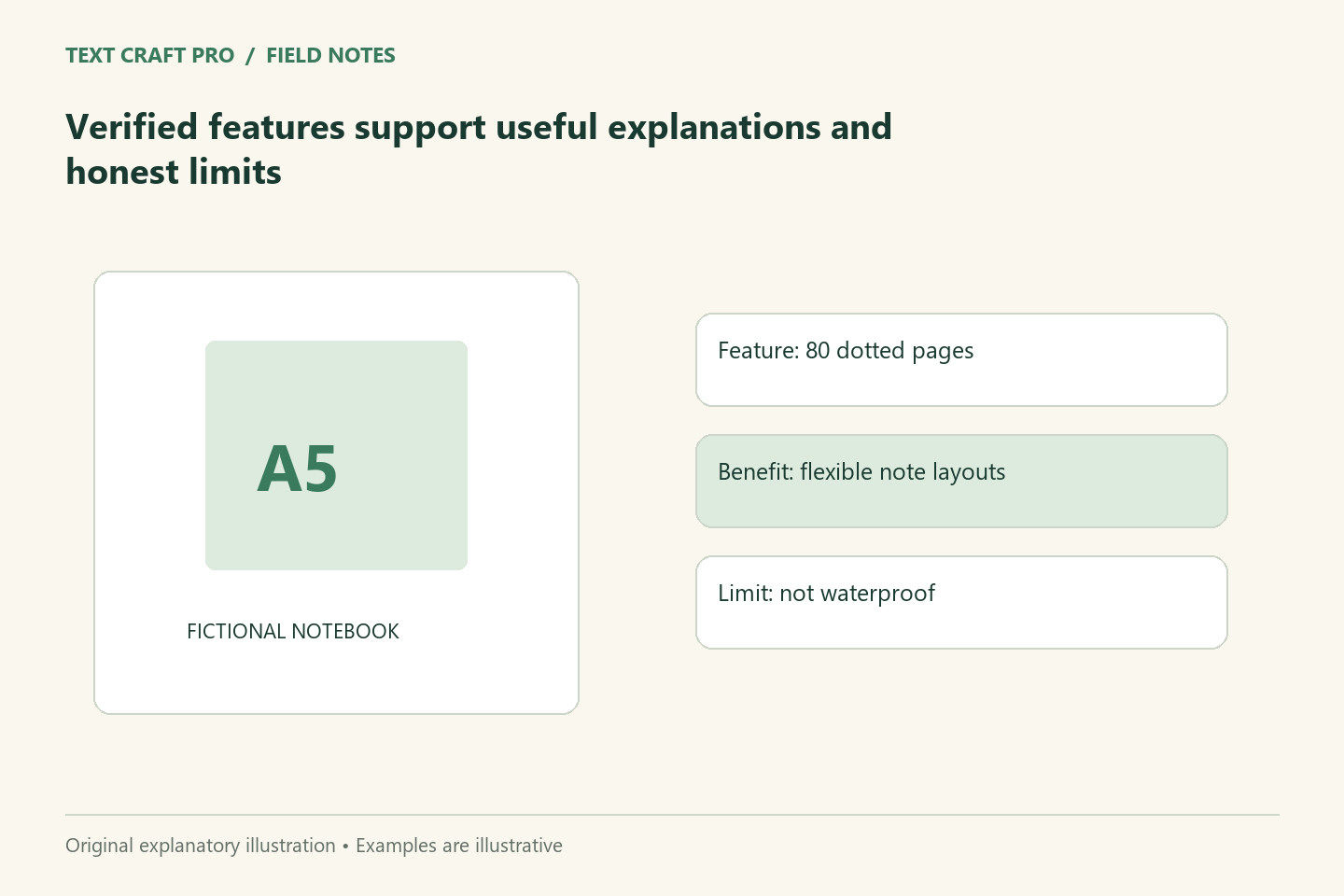
A product description should help a reader decide whether an item fits their needs. It needs accurate features, practical context, and relevant limitations. Persuasive wording cannot replace verified information. This method uses a fictional desk notebook so the writing choices can be demonstrated without implying a real product test or a recommendation to buy.
Build a verified feature sheet
Collect the confirmed dimensions, materials, included items, compatibility, and limitations relevant to the product. Record where each fact came from and who can confirm a missing detail. Do not copy a competitor’s description or invent a feature to make the product sound complete. If the manufacturer changes specifications, the description needs review. Keep proposed wording separate from the factual reference sheet.
Translate features into specific uses
Explain what a feature lets the reader do, while keeping the connection reasonable. A fictional notebook with numbered pages can help a user refer back to an entry. That does not prove it will improve productivity by a particular percentage. Avoid broad benefits such as transforming the reader’s life when the available evidence only supports a narrower use. A modest, concrete explanation is easier to assess.
Identify what a buyer needs to know
Include conditions that affect suitability: size, supported formats, required accessories, or what is not included. Important information should not be hidden in a distant policy page. Explain unfamiliar terms in context. Use a short specification table where it improves comparison, but make sure the surrounding text still answers the reader’s practical question about how the product would be used.
Distinguish facts from subjective impressions
A verified page count is a fact. “Pleasant to write in” is an impression that needs an actual basis and appropriate attribution. If no one has tested the product, do not write a firsthand review voice. Customer quotations need permission and an accurate source. A product description can explain intended use without claiming independent testing, expert endorsement, or a customer outcome that did not happen.
Use a fictional description
“A compact notebook for keeping project notes together. Numbered pages make it easier to reference an earlier entry, and a contents page lets you record where each project starts. Check the listed dimensions before choosing it for a bag or desk setup. The example includes the notebook only; a pen is not included.” The description explains a use and a limitation without inventing materials, guarantees, or ratings.
Check the path to purchase
Confirm that the description agrees with the actual product listing, images, delivery information, and returns terms. Our educational example has no purchase link because it does not describe an actual product. If a publisher later adds commercial recommendations, the page needs accurate disclosures and current facts. Clear copy should support an informed decision rather than manufacture confidence from missing information.
Frequently asked questions
Should I list features or benefits?
Use verified features and explain the practical use they support. Avoid benefits that require evidence you do not have.
Can AI write the description?
It can help draft from an approved feature sheet, but a responsible reviewer must check every claim and limitation.
Continue your workflow
- How to Write a Service Page That Explains Scope and Expectations
- How to Check Sources and Claims in a Draft Article
Was this guide helpful?
Tell us what needs improving →
Your selection stays on this page. To send feedback to the publication, use our contact form.
Published 14 September 2026 · Text Craft Pro · AI-assisted educational writing. Editorial policy · Suggest a correction