Business Writing
How to Change the Tone of a Message Without Changing Its Facts
Adjust formality, emphasis, and warmth while preserving commitments, conditions, and the reader’s next step.
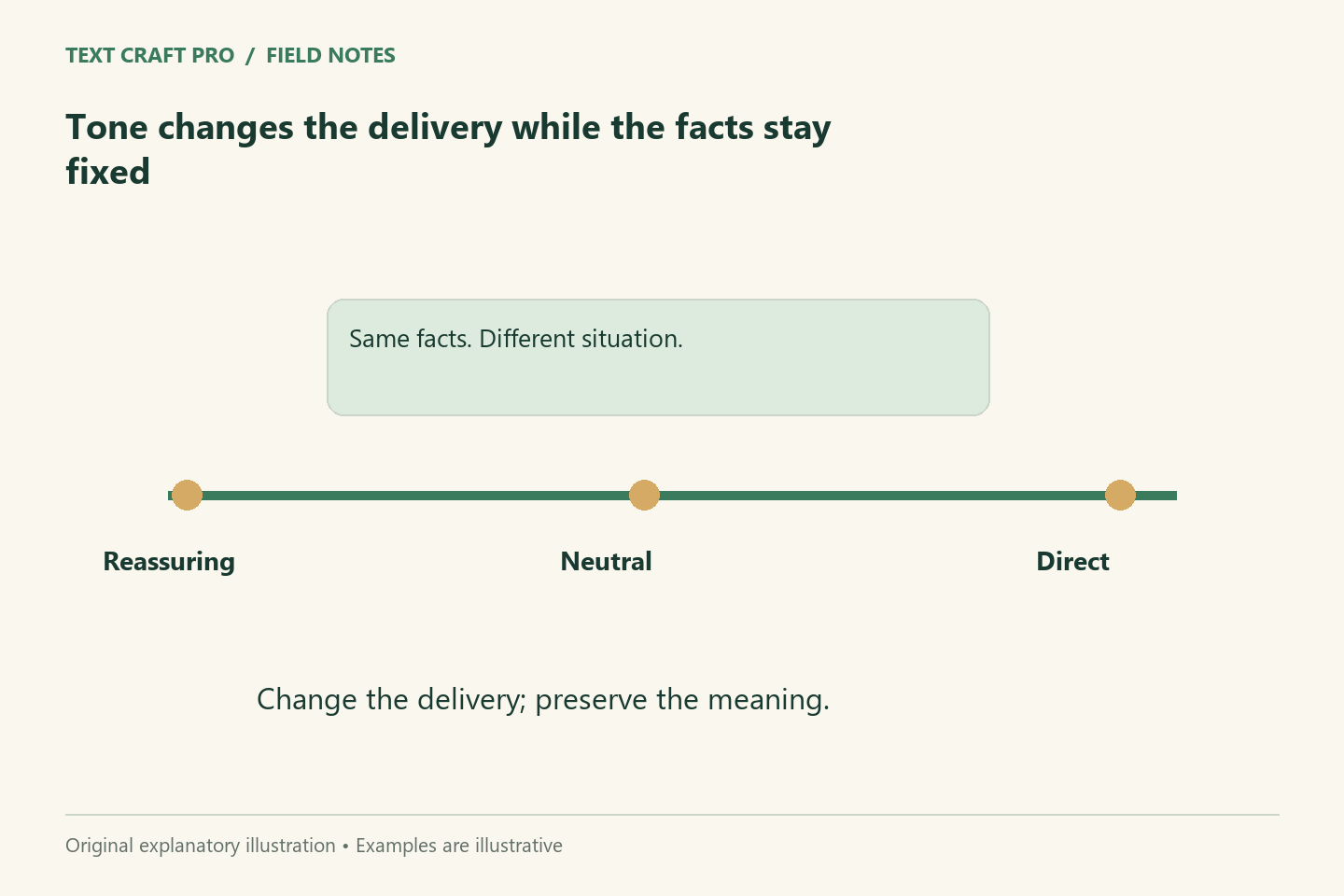
Tone editing changes how a message meets the reader’s situation. It can make an instruction warmer, a request more direct, or a complaint response calmer. It should not add promises, remove important conditions, or turn an uncertain answer into a confident claim. Start by separating the facts that must stay fixed from the presentation choices you can change.
Mark the fixed facts
Before rewriting, list the action, deadline, responsibility, and any limitation. If a delivery date is not confirmed, no version of the message should promise it. If a review is required, a friendlier tone should still explain that requirement. Treat these facts as a small contract for the edit. Ask the owner to resolve uncertainty instead of letting the tone revision make an unauthorized decision.
Describe the reader’s state
A first-time enquiry, a delayed project, and a routine reminder call for different emphasis. Consider what the reader already knows, what they may be worried about, and what they need next. Do not assume an emotion simply to create a dramatic response. Acknowledge a stated problem specifically. “The link did not open” is clearer than a broad apology that does not address the issue reported.
Adjust a few visible choices
Change the greeting, sentence directness, amount of explanation, and closing. A formal request may name the document and deadline immediately. A sensitive response may acknowledge the problem first, then state the next action. Keep necessary terms consistent so a more conversational version does not become less precise. Avoid adding enthusiasm where the situation calls for a neutral update or a clear limitation.
Use a side-by-side example
Fictional neutral message: “Send the revised outline by Thursday for review.” Warmer version: “Please send the revised outline by Thursday so we can review it before drafting.” Both preserve the deadline and review step. A version saying “Send it whenever you can” changes the process. A version promising publication on Friday adds a new commitment. Those are factual changes, even if the writer intended only to soften the tone.
Check for unintended pressure
Urgency, guilt, flattery, and vague threats can creep into requests. Use a real reason for a deadline rather than manufacturing pressure. If the reader has options, state them accurately. A reminder can explain what remains outstanding and how to respond without implying consequences that have not been approved. Clear choices usually serve the reader better than exaggerated insistence.
Review the message as an action
Ask what a reader would believe and do after receiving each version. Compare those answers with the fixed-facts list. If they differ, the edit may have changed more than tone. For an important business message, have the responsible person check commitments before sending. A tone template can help organize the wording, but it cannot know the actual capacity or obligations of the business.
Frequently asked questions
Can a formal message be friendly?
Yes. Courtesy, clear explanations, and a useful next step can make a formal message approachable without casual language.
Should I use an AI rewrite without review?
Review the facts, conditions, and commitments. A fluent rewrite can introduce changes that are easy to overlook.
Continue your workflow
- How to Write a Small Brand Voice Guide That People Can Use
- How to Review an AI Rewrite Before Using It
Was this guide helpful?
Tell us what needs improving →
Your selection stays on this page. To send feedback to the publication, use our contact form.
Published 31 August 2026 · Text Craft Pro · AI-assisted educational writing. Editorial policy · Suggest a correction