Planning
How to Identify Reader Intent Before Choosing an Article Angle
Separate learning, comparing, troubleshooting, and acting so an article answers the question its reader actually has.
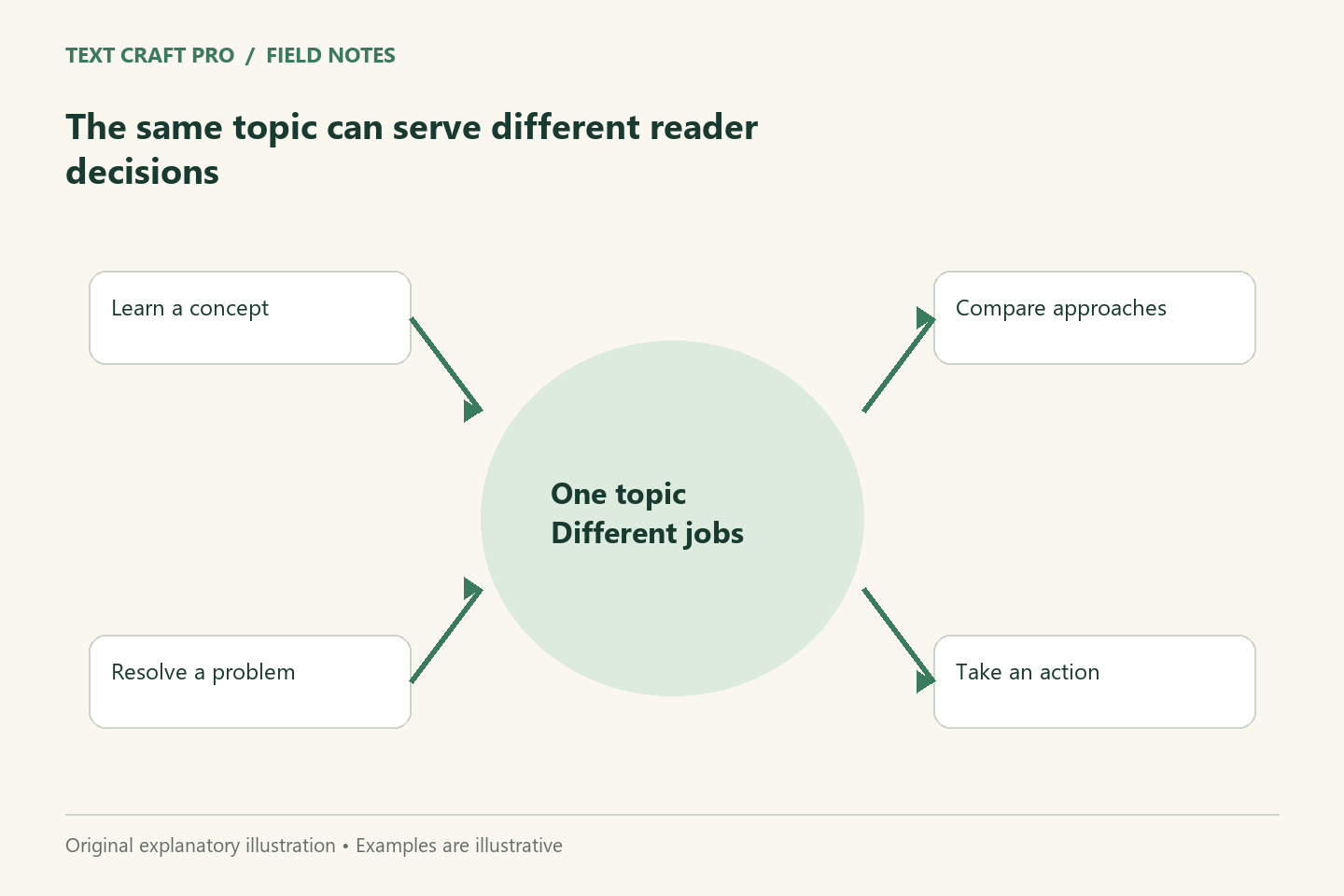
Reader intent describes the job someone wants a piece of content to help them complete. It can be learning a concept, comparing options, resolving a problem, or taking a specific action. The same topic can support all four. Choosing one primary intent helps you decide which details belong in an article and what a useful ending should provide.
Describe the moment behind the question
Imagine the circumstance that made the reader search or open the page. Someone asking how to shorten a paragraph may already have a draft. They need a method and a worked revision, not a history of prose style. Someone asking what editing means needs the distinction between structure, wording, and proofreading first. Write that difference into the brief instead of assuming every visitor starts at the same point.
Separate information from a decision
A definition answers what something is. A comparison helps choose between approaches. A tutorial explains how to complete a task. A troubleshooting guide identifies why an expected result did not happen. Mixed intent is possible, but choose the primary job and make the others support it. An article that promises a practical tutorial should not spend most of its space describing benefits without showing the work.
Use real questions where available
Collect questions from approved customer conversations, feedback, support records, or your own reading experience. Remove private information and preserve the meaning. Group similar questions by the outcome they seek rather than by repeated keywords alone. If you are starting without audience data, record your proposed intent as a hypothesis. Useful content planning can begin with an assumption, provided you do not present that assumption as proven demand.
Match the angle to the evidence you can supply
A comparison angle needs criteria and reliable facts about the options. A firsthand review needs actual use and a described test. A tutorial needs steps that can be demonstrated. Choose an angle your available evidence supports. If you have only a general explanation, call it a guide rather than claiming a hands-on product review. This keeps the article’s promise aligned with what a reader will actually receive.
Work through a topic split
Take the topic “email subject lines.” A learning article could explain what a subject needs to communicate. A tutorial could revise five fictional subjects and explain each choice. A troubleshooting article could examine why a subject hides the requested action. These pieces should have different central questions, examples, and next steps. Changing a few keywords while repeating the same article would not create useful coverage of distinct intentions.
Check the draft against its intended use
Give a reader the draft and ask what they would do next. A mismatch may mean the introduction promised the wrong job or the body omitted a necessary example. Review the title, headings, and conclusion together. They should describe the same task. Search visibility can help people find the page, but the page still needs to satisfy the purpose that brought them there.
Frequently asked questions
Is intent the same as a keyword?
No. A keyword is wording; intent is the task behind it. Similar wording can come from readers with different levels of knowledge.
Can an article serve several intents?
Yes, but a primary task keeps the structure coherent. Use short supporting explanations or links for secondary needs.
Continue your workflow
- How to Build an Article Outline Around the Reader’s Questions
- How to Write a Headline That Makes an Accurate Promise
Was this guide helpful?
Tell us what needs improving →
Your selection stays on this page. To send feedback to the publication, use our contact form.
Published 17 August 2026 · Text Craft Pro · AI-assisted educational writing. Editorial policy · Suggest a correction