Editing
A Three-Pass Editing Workflow: Structure, Sentences, and Final Checks
Separate big-picture revision from wording and proofreading so polishing does not hide a weak argument.
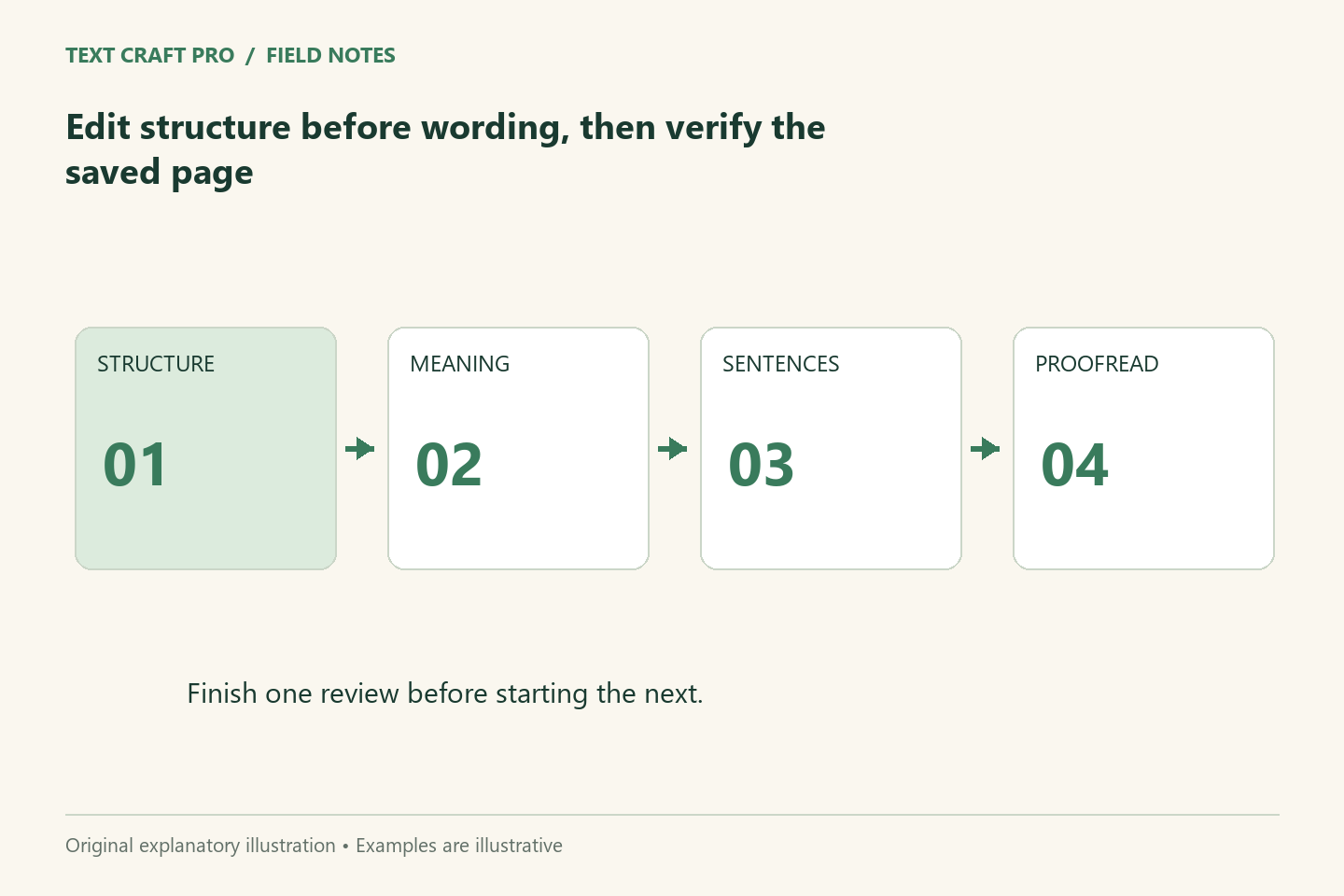
Editing is easier when you separate decisions that require different kinds of attention. A structural pass asks whether the piece answers its promised question. A sentence pass improves wording. A final pass checks details and the published format. This order reduces the chance of polishing a section that should be removed or missing an error while concentrating on the argument.
Prepare a stable draft
Keep a copy of the draft and identify the brief it is meant to satisfy. Gather approved source material and unanswered questions. If several people are editing, agree who owns the current version. Use comments for unresolved facts rather than silently choosing the most convenient answer. A stable draft gives reviewers a common reference and makes later changes easier to explain.
Pass one: test the structure
Write down the article’s main question and compare it with the actual answer. Check whether prerequisites appear before the steps that need them. Remove repeated sections and identify missing examples. At this stage, rewriting an elegant sentence is less useful than deciding whether its entire paragraph belongs. End the pass with a clear outline and a list of facts or decisions that still need a responsible reviewer.
Pass two: improve sentences
Once the structure works, clarify actors, actions, conditions, and terminology. Replace vague claims with supported statements or honest qualifications. Look for repeated openings and unnecessary explanations, while preserving useful repetition of precise terms. Read difficult passages aloud if that helps you notice awkward relationships. The goal is usable meaning, not a draft with the fewest possible words.
Pass three: verify details
Check names, numbers, source links, captions, and formatting. Confirm that examples are labeled and quotations match their sources. Inspect headings, lists, and image alternatives in the saved page. Test a tool using ordinary and invalid inputs rather than assuming a successful screenshot proves all cases work. This pass should happen after major rewriting, because large changes can create new inconsistencies.
Use a simple handoff record
For a fictional article about enquiry emails, the structural reviewer might request an example before the checklist. The wording reviewer might clarify who sends the follow-up. The final reviewer might find a broken internal link. Record each decision with its owner and resolution. The record does not need to preserve every comma change; it should preserve substantive facts, approval, and limitations that matter to the publisher.
Finish by checking the actual result
Preview the saved page on a narrow screen and inspect its links and interactive elements. A correct source document can still render poorly after publishing. Keep the edit date separate from the publication date, and do not describe a piece as fact-checked unless the claimed checks happened. Our publication checklist helps organize this final pass, while the publisher remains responsible for the finished page.
Frequently asked questions
Can I combine the passes for a short email?
Yes. The distinction is about attention, not bureaucracy. Even a short message benefits from checking its purpose before proofreading.
Should proofreading come first?
Fix an obvious typo when convenient, but avoid spending most of your time polishing text that may change during structural revision.
Continue your workflow
- A Proofreading Checklist for Articles, Emails, and Web Pages
- A Pre-Publication Checklist for a Useful, Trustworthy Article
Was this guide helpful?
Tell us what needs improving →
Your selection stays on this page. To send feedback to the publication, use our contact form.
Published 23 August 2026 · Text Craft Pro · AI-assisted educational writing. Editorial policy · Suggest a correction