Editing
When NOT to Use AI for Writing
AI can draft almost anything now — but “can” isn’t “should.” Here are the seven situations where I put the tool down and write it myself.
 Written by Daniel Carter
Daniel Carter writes and edits practical guides on writing, editing, and publishing at Text Craft Pro, based on hands-on testing and documented examples.
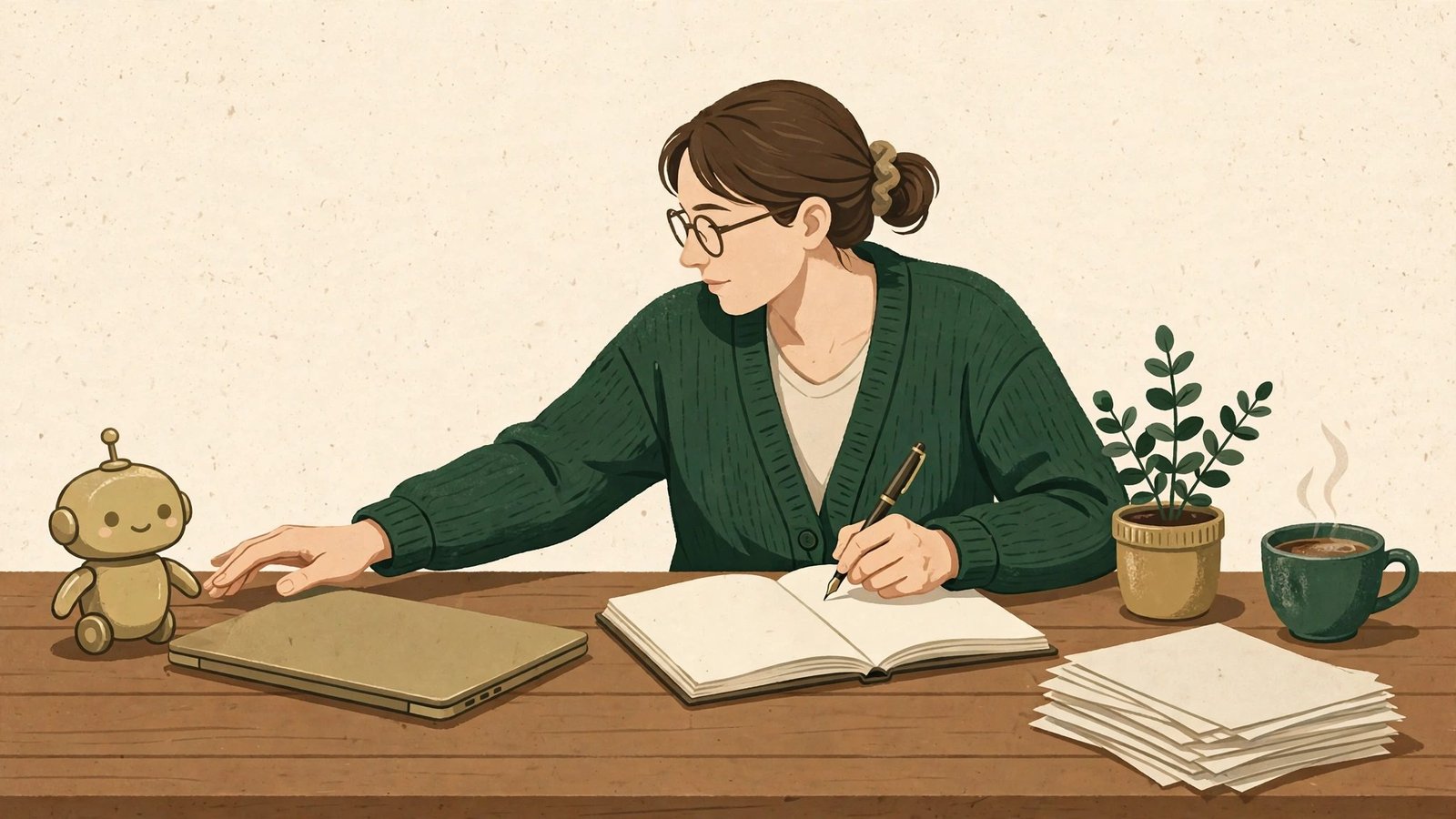
I use AI writing tools every working day. I also put them down several times a day, on purpose. That’s not a contradiction — it’s the whole skill. Knowing when the tool helps and when it quietly makes the writing worse is what separates a good AI-assisted writer from someone who just pastes whatever the model returns.
The rule I use is simple: if the writing is doing a job only a human can do — thinking, feeling, taking responsibility, sounding like me — the AI stays out of it. Here are the seven situations where I write it myself.
1. When the writing IS the thinking
Sometimes you don’t write to record what you think. You write to find out what you think. A strategy memo, a hard decision, a position on something messy — the sentences are the thinking, and outsourcing them means outsourcing the decision.
I’ve watched people ask an AI to “draft my thinking on whether we should kill this product” and then defend the draft as if it were their conclusion. It wasn’t. It was the average of a thousand other people’s product decisions, dressed up as theirs. If you don’t know what you think yet, write badly for twenty minutes and find out. The AI can edit the result once it exists. It can’t have the thought for you.
2. When it’s personal
Apologies. Condolences. Thank-yous that actually mean something. A note to someone who’s leaving the team. The whole point of these is that a real person sat down and chose the words. The moment the recipient suspects a model wrote it, the message is worth less than silence — and people can tell far more often than we admit.
I once received a “personal” thank-you note that opened with “In today’s fast-paced world, your mentorship has been invaluable.” Nobody writes that to a person they actually know. Use AI to check your spelling if you must. But the sentences themselves have to be yours, including the awkward ones. Awkward is honest. Polished and generic is an insult in a card.
3. When accuracy is the whole point and you can’t verify it
AI drafts are confident about things they don’t know. That’s fine when you’re writing a blog intro and you’ll catch the errors. It’s dangerous when the writing IS the fact — a contract clause, a medical explanation, a technical spec, a quote attributed to a real person.
The test I run: if I can’t verify every claim in the piece, I don’t let the model generate the claims. I write them from sources I trust, and let the AI help with structure or phrasing only. The one exception proves the rule — if you have the source material in front of you and the time to check each line, AI drafting is fine. If you’re trusting the model because checking feels like too much work, that’s exactly when to write it yourself.
4. When your voice is the product
Some pieces exist because of who wrote them. A personal essay. An opinion column. The flagship post that defines your brand. The newsletter people open because it’s you. In these, the voice isn’t decoration — it’s the reason anyone reads.
An AI can imitate your surface style well enough to fool a casual reader, and that should worry you, not reassure you. The imitation is smooth, consistent, and faintly hollow — it has your sentence shapes and none of your actual judgments. Readers who like your work can feel the difference even when they can’t name it. They just stop opening the emails. If your name is on it and your name is the reason it gets read, write it yourself.
5. When the audience can tell — and it costs you trust
Cover letters. Pitches to editors who’ve read your work before. Applications where the reader is comparing your writing against everyone else’s AI-polished sameness. In these situations, the audience is actively looking for the human, and the model’s fingerprints are all over the page: the same three-sentence structure, the same “passionate about” openings, the same dutiful enthusiasm.
I read a stack of applications once where six different people all described themselves as “a detail-oriented professional with a passion for excellence.” None of them wrote that. The model did. Use AI to brainstorm what to say, if you like. But the final version has to carry something only you could write — a specific project, a real number, an opinion with edges. Otherwise you’re competing with every other applicant’s identical draft, and losing to the one person who sounded like themselves.
6. When the task is smaller than the prompt
This one is pure arithmetic. A two-sentence reply to a colleague. A quick Slack message. A short caption. By the time you’ve written a careful prompt, waited for the output, read it, fixed its tone, and pasted it back, you’ve spent five minutes on a thirty-second job — and the result reads like it was written by a committee.
I keep a mental threshold: if the writing takes less than a minute, just write it. The AI’s real value is on work that takes an hour or more, where drafting speed matters. Below that line, the tool is slower than your fingers and worse than your judgment. Reaching for it anyway is a habit, not a shortcut.
7. When it flattens something that needs friction
Jokes. Poetry. A story with a twist. A metaphor that shouldn’t quite work but does. Creative writing runs on friction — the odd word, the wrong rhythm, the sentence that breaks the pattern on purpose. AI writing is trained to smooth friction away. It will give you a competent joke with the punchline in the expected place and a poem that rhymes correctly and says nothing.
That’s not a flaw in the tool. It’s what the tool is for: the most probable next word, every time. But the most probable next word is, by definition, the least interesting one. If the piece needs surprise — a turn of phrase, a laugh, a line someone quotes back to you — the model can’t supply it, because surprise is exactly what it was trained to remove. Write those lines yourself. They’re the ones people remember.
The honest truth
None of this is about purity. I have no problem with AI assistance — this site is built on it, and so is most of my working day. The question is never “did a machine touch this?” It’s “did a human decide what it says?” For drafts, structure, and first passes, the machine is brilliant. For thinking, feeling, promising, and sounding like yourself, it isn’t — and pretending otherwise doesn’t make you efficient. It makes you replaceable.
Keep the tool for the work it’s good at. Keep the rest for yourself. That’s not holding back progress. That’s knowing what the work is.
Frequently Asked Questions
Can I use AI for personal messages if I edit them heavily?
Yes — heavy editing changes the equation. If you rewrite the draft until every sentence is one you’d actually say, the tool was just a starting point, like a blank page with a nudge. The test is the recipient: would they recognise your voice in it? If the answer is yes, you’re fine. If the answer is “it sounds professional but not like me,” rewrite it again.
Is it ever okay to let AI write something I sign my name to?
It is, when you’ve verified every fact, made the real decisions, and edited the language until it sounds like you. That’s what editing is. What isn’t okay is publishing a draft you haven’t read closely, on a topic where you’re the authority. Your name is a promise that you stand behind the words. Read them first.
How do I know if a task is too small for AI?
Time it. If writing it yourself takes less than a minute and prompting takes longer, write it yourself. If the message is two sentences and the prompt would be three, the tool is adding work, not removing it. Save the AI for pieces where drafting genuinely takes an hour or more.
Does using AI make my writing worse over time?
Only if you let it do the thinking. Writers who use AI for first drafts and edit hard stay sharp — the editing is the practice. Writers who paste the output untouched get rusty, because they stop making decisions. The muscle that matters isn’t typing. It’s choosing. Keep choosing, and the tool can’t hurt you.
Continue your workflow
Was this guide helpful?
Tell us what needs improving →
Your selection stays on this page. To send feedback to the publication, use our contact form.
Published 6 November 2026 · Text Craft Pro · AI-assisted educational writing. Editorial policy · Suggest a correction