Business Writing
Writing Case Studies with AI Assistance
A case study is proof, not opinion. AI can build its structure and tighten its sentences — but only you and your client can supply the evidence that makes it convincing.
 Written by Daniel Carter
Daniel Carter writes and edits practical guides on writing, editing, and publishing at Text Craft Pro, based on hands-on testing and documented examples.
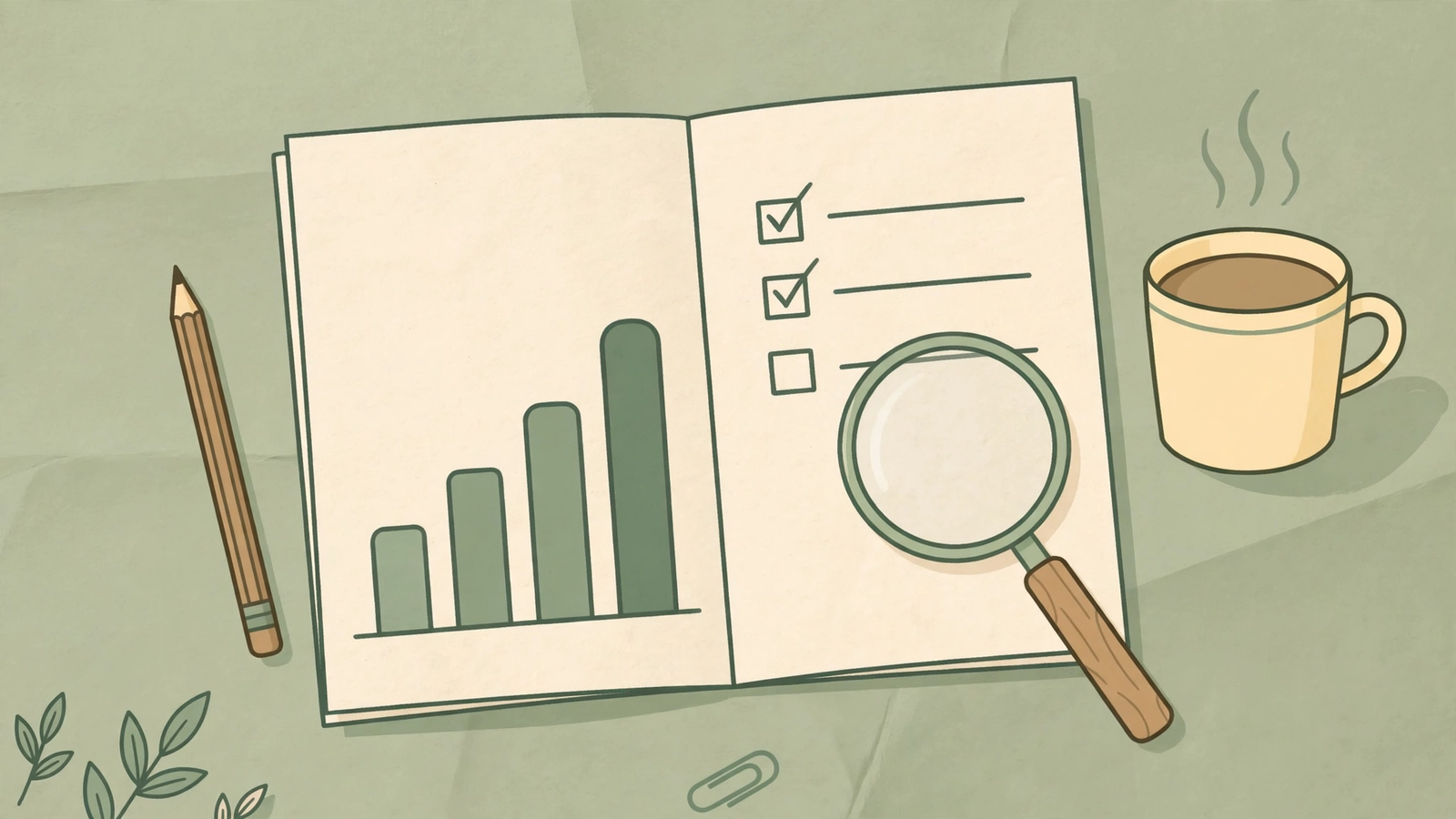
A case study is the one piece of writing where nobody wants your opinion. They want proof. A client picked you, something changed, and there are numbers to show for it. That is exactly why case studies are so hard to write — and exactly why AI assistance helps, as long as you keep it in the right job.
I have written case studies both ways: from a blank page, which took forever, and from an AI draft, which took half the time and read twice as slick. The slick ones were the problem. They sounded impressive and said almost nothing. Every result was “significant,” every client was “thrilled,” and no reader could tell what actually happened.
Here is the workflow I use now. AI does the scaffolding, the structuring, and the first-pass tightening. I supply the facts, the quotes, and the judgement about what matters. The result reads like a human wrote it, because a human did — with a fast assistant, not a ghostwriter.
1. Gather the evidence before you open the AI tool
This is the step everyone skips, and it is the whole game. A case study without evidence is just a testimonial with delusions of grandeur, and no AI tool can invent evidence you do not have.
Before I touch a draft, I collect four things: the starting point (the client’s situation in one sentence, with a number if possible), the work actually done (three to five concrete actions, not “we leveraged synergies”), the outcome (the best two or three measurable results), and one quote from a real person at the client. If I cannot get the quote, I use a paraphrased approval — “the client confirmed the result in writing” — and I never invent a quote to fill the gap.
I keep this in a single note, usually under 200 words. That note is the brief. Everything the AI produces afterwards is judged against it: if a sentence is not supported by something in the note, it gets cut, no matter how good it sounds.
2. Let AI build the structure, not the story
Give the AI your evidence note and ask for a structure, not a finished article. The shape that works for almost every case study is simple: the situation, the problem, what you did, what changed, and what the client says. Five sections, in that order. Readers skim case studies looking for the result, so the result also needs a one-line summary up top — the headline version of the outcome, before the detail.
What I never do is hand the AI a vague prompt like “write a case study about a marketing client” and accept whatever comes back. That is how you get the generic version: a fictional-sounding client, round-number results, and adjectives doing the work that facts should do. The AI is excellent at turning your evidence into a clean structure. It is terrible at knowing which of your facts matter, and it will happily invent the missing ones if you let it.
One practical trick: ask for the structure with placeholders for the numbers, then fill the figures in yourself. It sounds fussy, but it stops the most common case-study failure — a plausible-looking number that nobody can defend.
3. Write the messy middle yourself, then let AI tighten it
The middle of a case study — what you actually did — is where generic writing goes to hide. “We implemented a comprehensive strategy” tells the reader nothing. “We rewrote the onboarding emails, cut the sequence from seven messages to three, and moved the pricing page above the fold” tells them everything.
I write this section myself, fast and ugly, straight from my notes. Then I hand that rough paragraph to the AI with one instruction: tighten it without adding anything. No new claims, no new adjectives, no smoothing over gaps. Just shorter sentences and clearer order. The difference is striking. My rough version has the facts; the tightened version has the facts in an order a busy reader can follow.
This division of labour is the whole method in miniature. Humans supply the specific; AI supplies the polish. Reverse it — AI supplies the specific, human polishes the polish — and you get a beautiful article about a project that never quite happened.
4. Treat every number like it will be checked
Because it might be. A case study lives or dies on its numbers, and AI drafts are notorious for softening them into meaninglessness: “increased significantly,” “boosted engagement dramatically,” “saw impressive growth.” Every one of those phrases is a number that got scared and ran away.
My rule is simple: every result in a case study gets a number, a timeframe, and a baseline, or it gets cut. Not “sales grew” but “sales rose 34% in the three months after launch, from a baseline of 120 orders a month.” If the client will not share exact figures, say so honestly and use ranges they approved — “roughly a third” with the client’s sign-off beats a precise-looking number you made up.
When I edit an AI draft, I search for every adjective of scale — significant, dramatic, impressive, huge — and replace each one with the figure it is hiding, or delete the sentence. It is a short search and it catches almost every hallucination in the draft.
5. Use AI to catch what you are too close to see
Here is where AI genuinely earns its keep on a case study: as a second reader. Once the draft is written, I ask it to do three checks. First, flag any claim that is not supported by my evidence note. Second, flag any sentence a competitor could copy-paste into their own case study unchanged — that is the test for generic writing. Third, flag jargon and replace it with plain language a non-specialist client would understand.
This pass routinely catches things I miss: a sentence implying a result the client never claimed, a paragraph that reads like it belongs to a different industry, a “solution” section describing what we sold rather than what we did. I do not accept the AI’s fixes blindly — about a third are wrong or tone-deaf — but as a checklist of places to look, it beats re-reading my own draft for the fifth time and seeing only what I meant to write.
6. Get the client’s eyes on it before you publish
This step is not optional, and AI cannot do it for you. Send the draft to the client, with the numbers highlighted, and ask two questions: is this accurate, and are you comfortable with it being public? Most clients will correct one figure, soften one quote, and approve the rest. That round of corrections is worth more than any editing pass, because it is the difference between a case study and a claim.
I also ask whether they want their name used or prefer anonymity — “a mid-sized retailer” rather than a named company. An anonymous case study with real numbers still convinces. A named one with disputed numbers convinces nobody and costs you a relationship. And keep the approved version on file, with the date of approval; six months later, when someone asks where a figure came from, you will be glad you did.
The honest truth
AI will not write you a good case study, because a good case study is evidence, and evidence is something only you and your client have. What AI will do, used properly, is take the evidence you gathered and turn it into a structure a busy reader can follow in three minutes — and then check your draft for the generic sentences and soft numbers that would have undermined it.
That is a real saving. My case studies used to take a full day; now they take an afternoon, and they are more specific than they were before. But the saving comes from the workflow, not from the tool. Gather the evidence first, write the messy middle yourself, let AI tighten and check, and get the client’s approval before anything goes live. Skip any of those steps and the AI is not assisting your case study — it is replacing it, and readers can tell.
Frequently Asked Questions
Can AI write a case study from scratch?
It can produce a case study-shaped document from scratch, but it will be generic: invented-sounding clients, round numbers, and adjectives instead of evidence. A publishable case study needs real evidence — the starting point, the work done, the measured outcome, and ideally a client quote — and only you can supply those. Use AI to structure and tighten, not to invent.
What should I do if the client will not share exact numbers?
Ask for approved ranges instead: “roughly a third” or “between 20% and 30%” with the client’s sign-off. A range the client approved is far stronger than a precise figure you guessed. If the client will not share anything measurable, the piece is a testimonial, not a case study — publish it as one, honestly labelled.
How long should a case study be?
Aim for 600 to 1,000 words: a one-line result summary up top, then situation, problem, work done, results, and a client quote. That is long enough to be convincing and short enough that a busy prospect actually finishes it. Anything longer usually means you have not decided which result matters most.
Should I name the client in the case study?
Only with clear permission, and only after they have seen the final draft with the numbers highlighted. If they prefer anonymity, use a generic description — “a mid-sized retailer” — and keep the real numbers. An anonymous case study with verified figures convinces; a named one with disputed figures costs you a client.
Continue your workflow
Was this guide helpful?
Tell us what needs improving →
Your selection stays on this page. To send feedback to the publication, use our contact form.
Published 1 November 2026 · Text Craft Pro · AI-assisted educational writing. Editorial policy · Suggest a correction