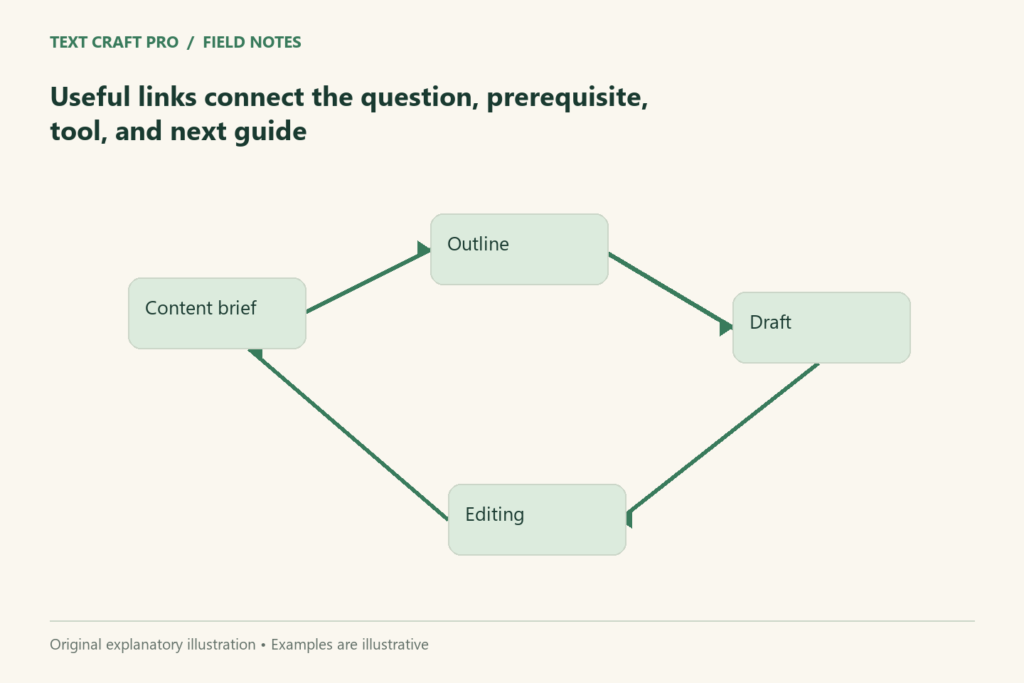
How to Add Internal Links That Help Readers Continue
Connect a guide to prerequisites, practical tools, and related questions using descriptive link text and sensible placement.

Connect a guide to prerequisites, practical tools, and related questions using descriptive link text and sensible placement.
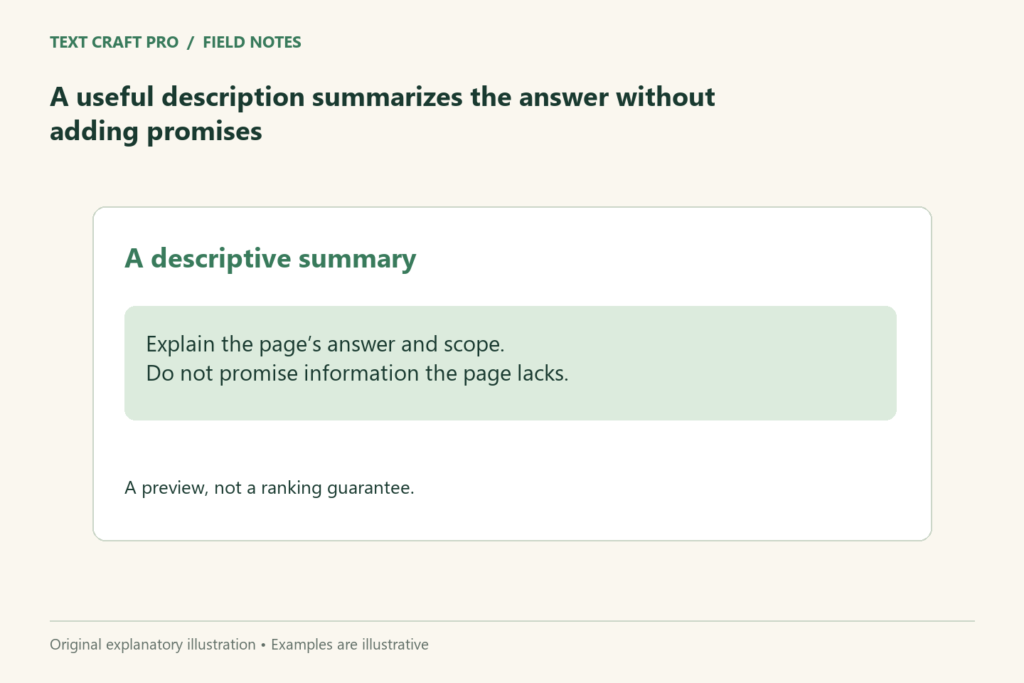
Describe the page’s useful answer, avoid duplicated sales claims, and understand why search snippets may differ.
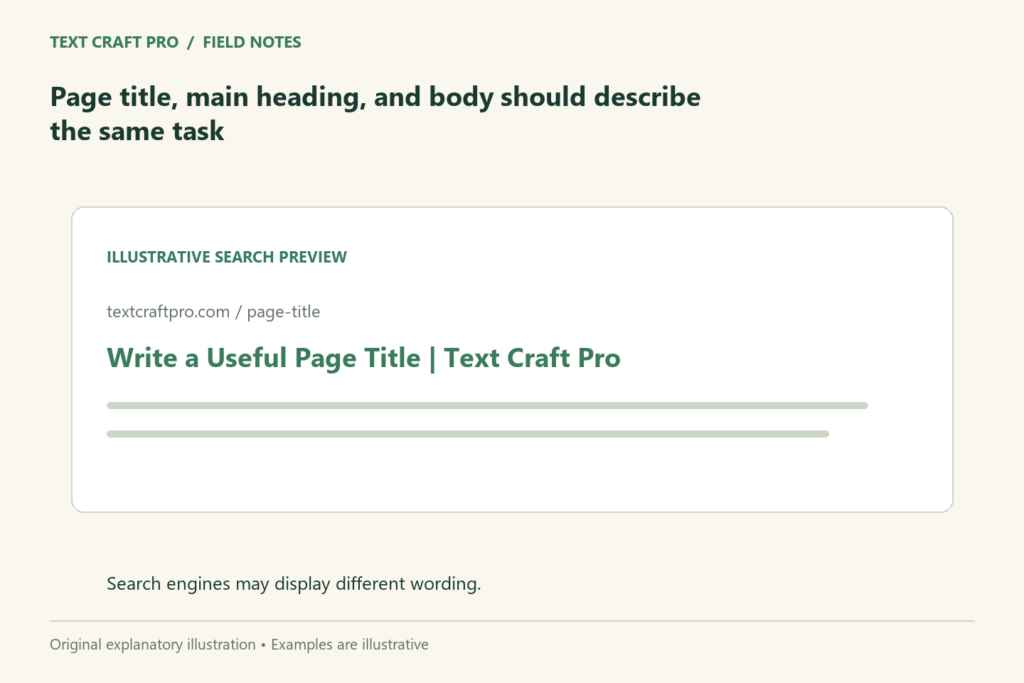
Create a unique, descriptive title and keep it aligned with the visible article. Understand why Google may display different wording.
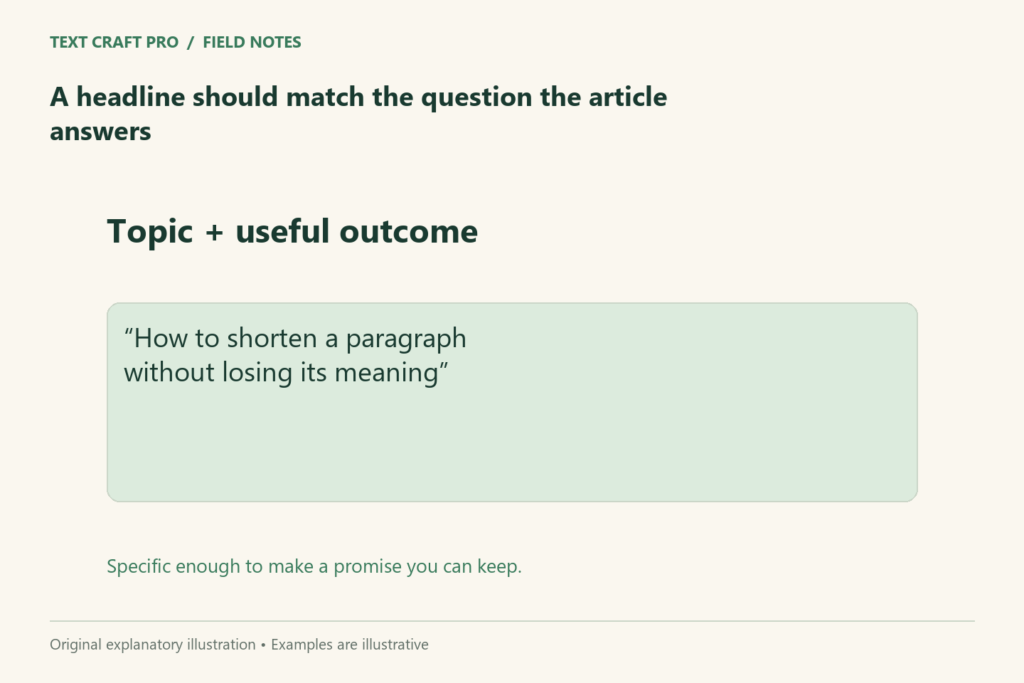
Match the headline to the reader’s question, the article’s evidence, and the actual answer rather than relying on exaggerated claims.
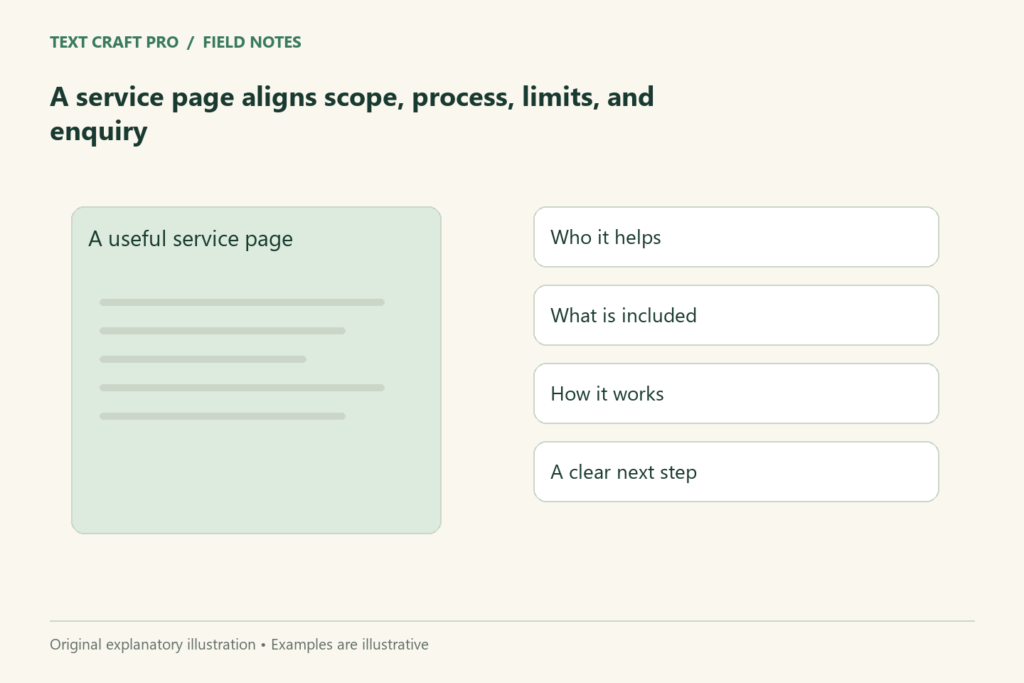
Describe who the service helps, what is included, how the process works, and which details need an enquiry.
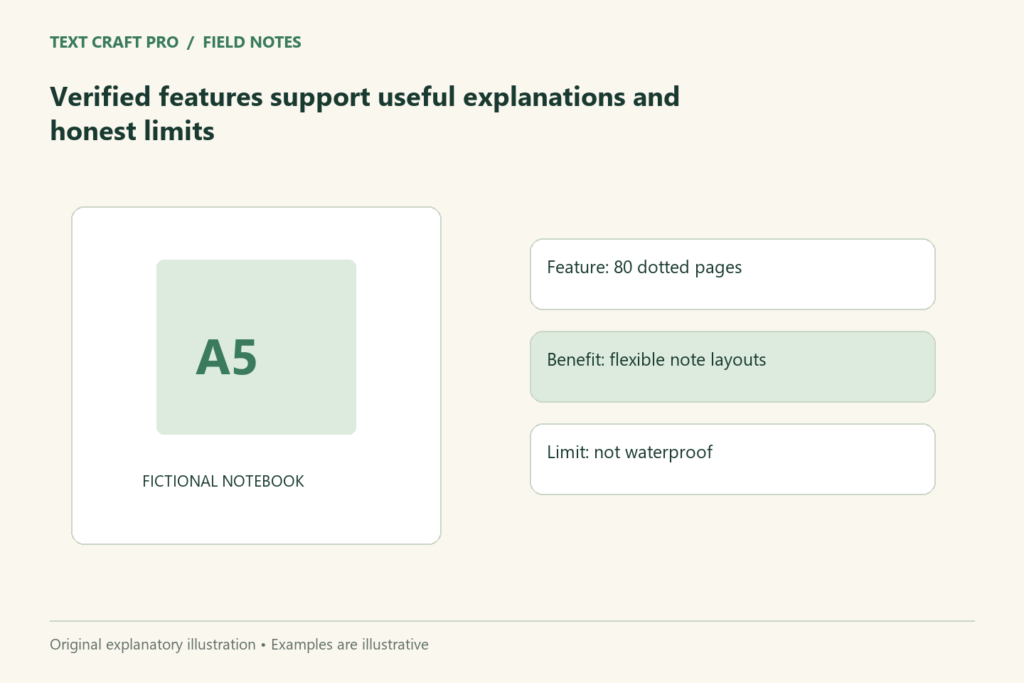
Connect features to practical use, include relevant limitations, and avoid unsupported claims or invented customer results.
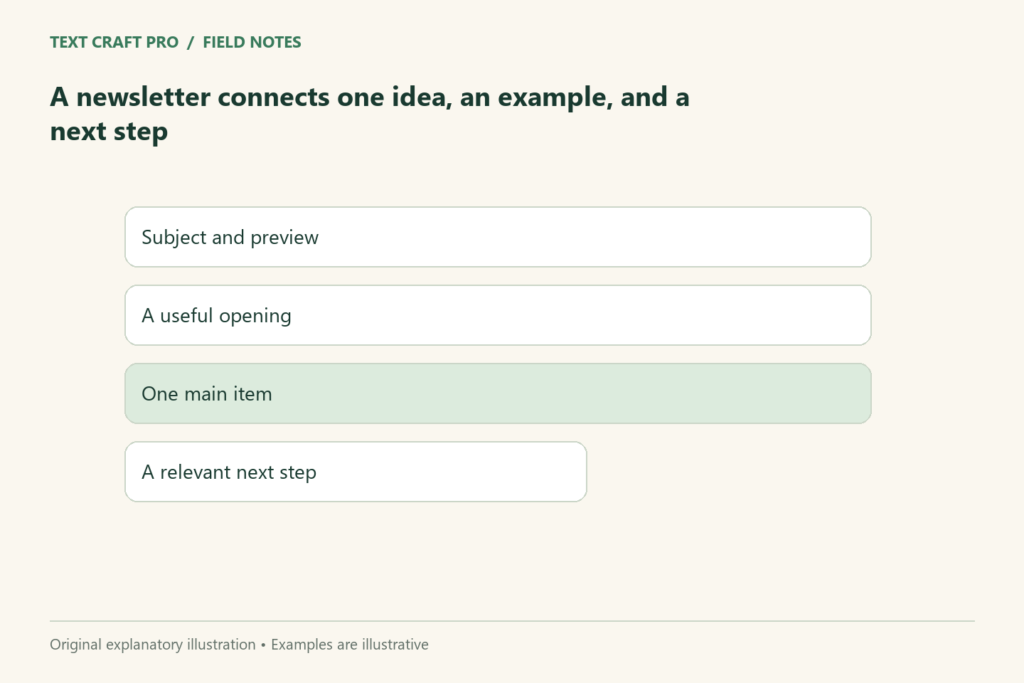
Choose a focused promise, develop it with an example, and give readers a relevant next step instead of a collection of unrelated links.
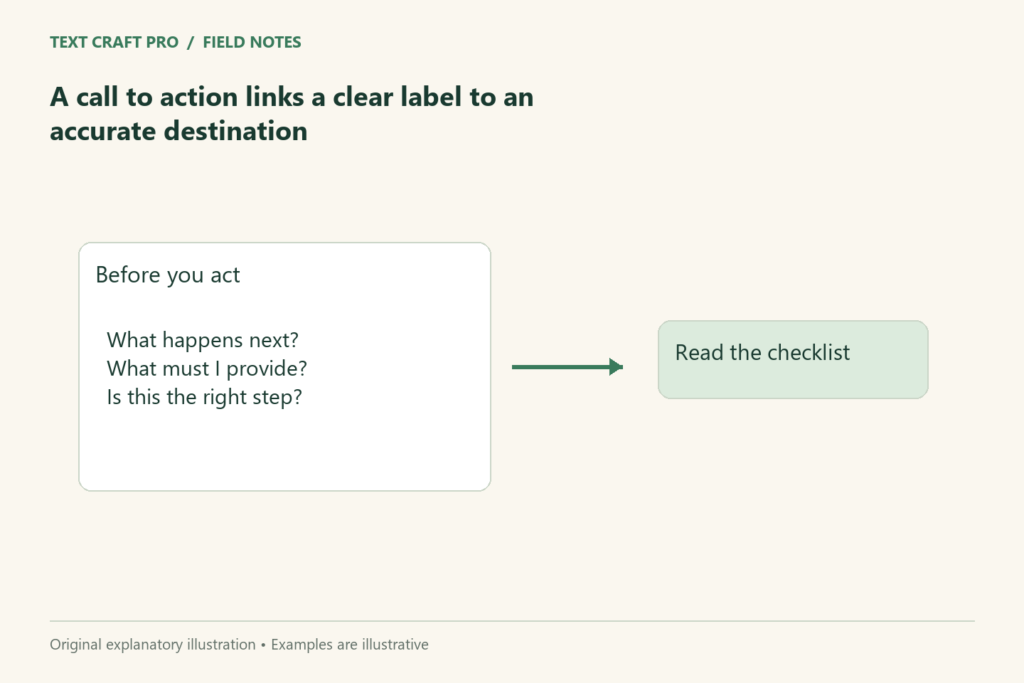
Match the wording to the destination, disclose what happens next, and avoid promises that the action cannot deliver.
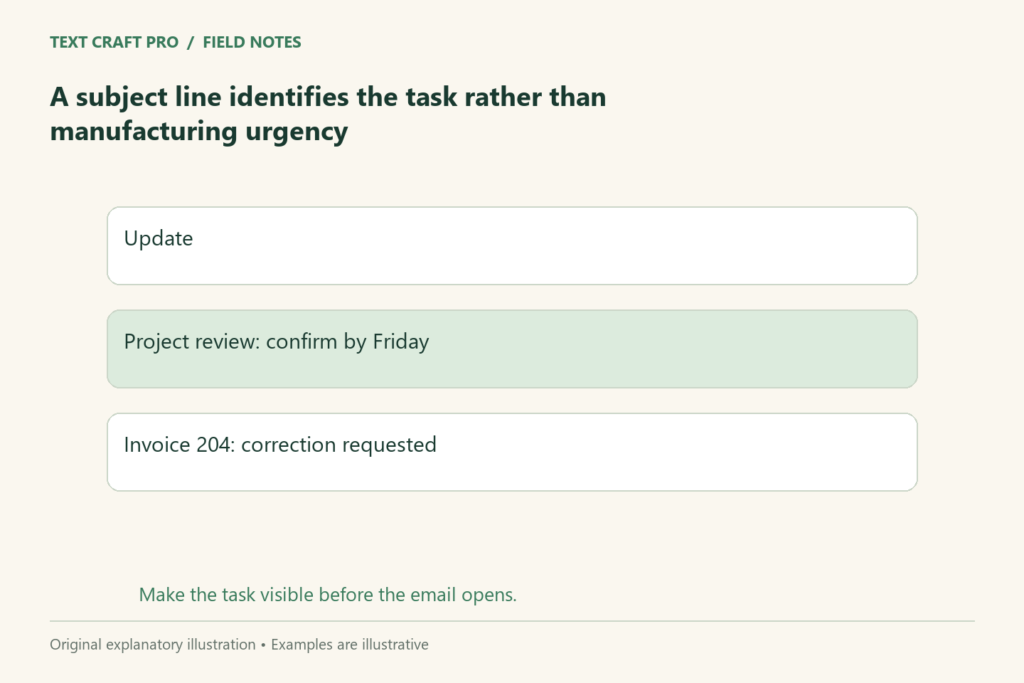
Use purpose, topic, and relevant timing to create subject lines that help recipients identify and act on a message.