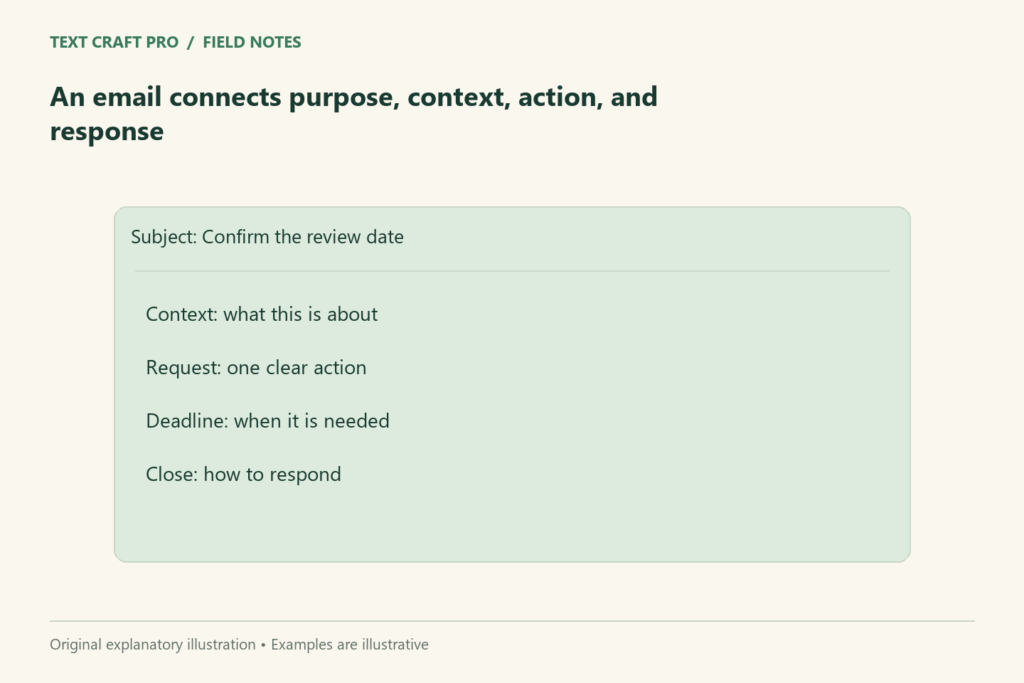
How to Write a Business Email With a Clear Purpose and Next Step
Organize context, action, and an approved deadline so the recipient can respond without guessing.

Organize context, action, and an approved deadline so the recipient can respond without guessing.
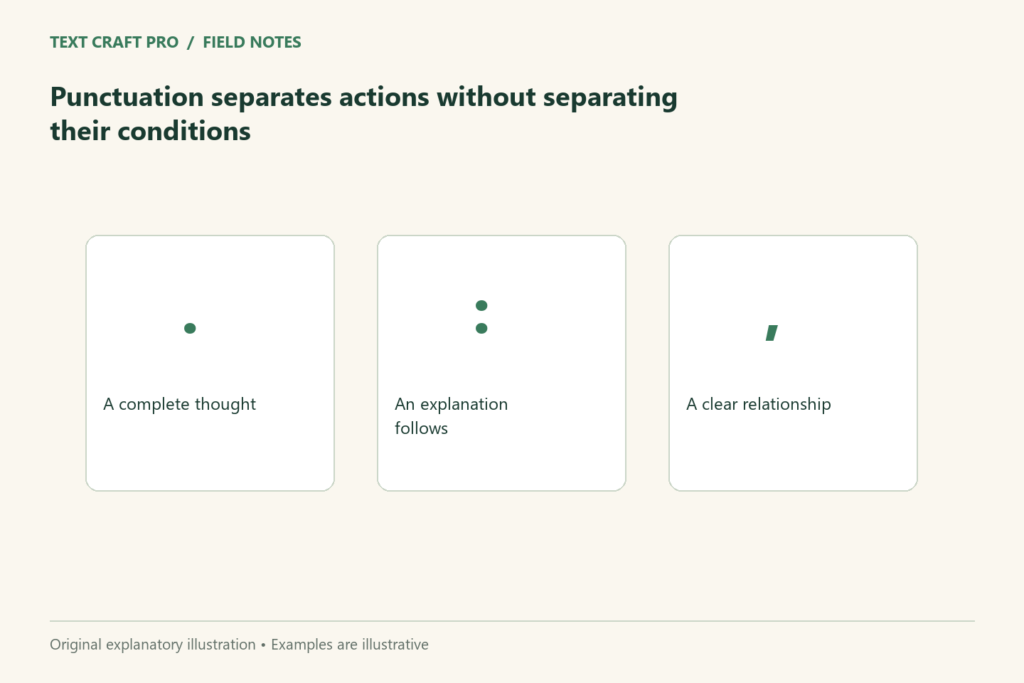
Use punctuation to reveal relationships between actions, conditions, and examples instead of decorating the sentence.
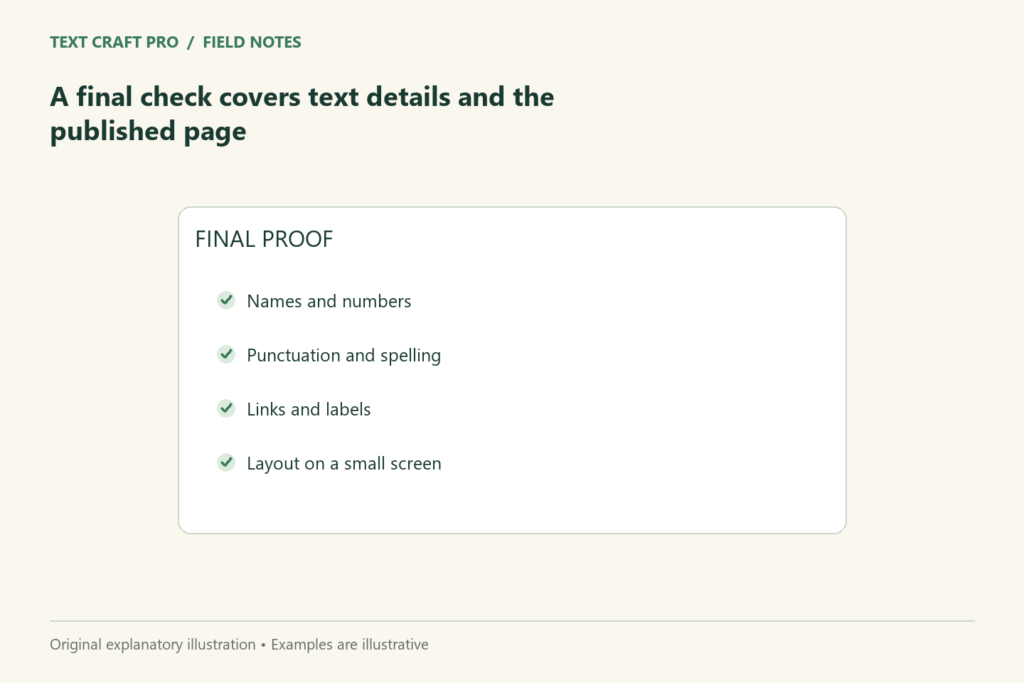
Check names, numbers, punctuation, links, and the saved page after the main editing work is complete.
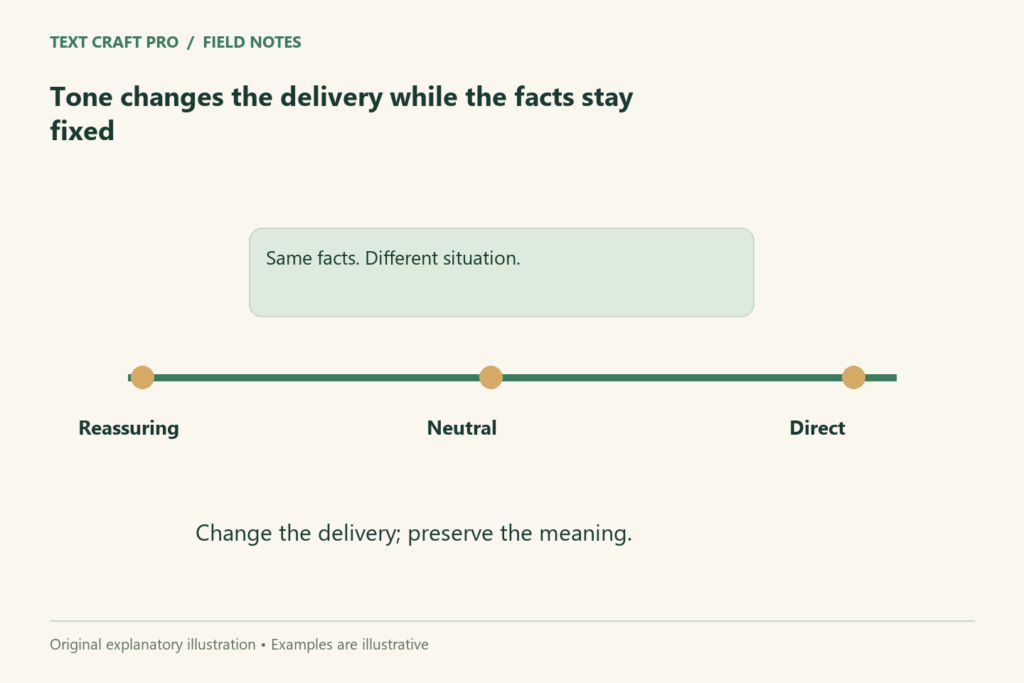
Adjust formality, emphasis, and warmth while preserving commitments, conditions, and the reader’s next step.
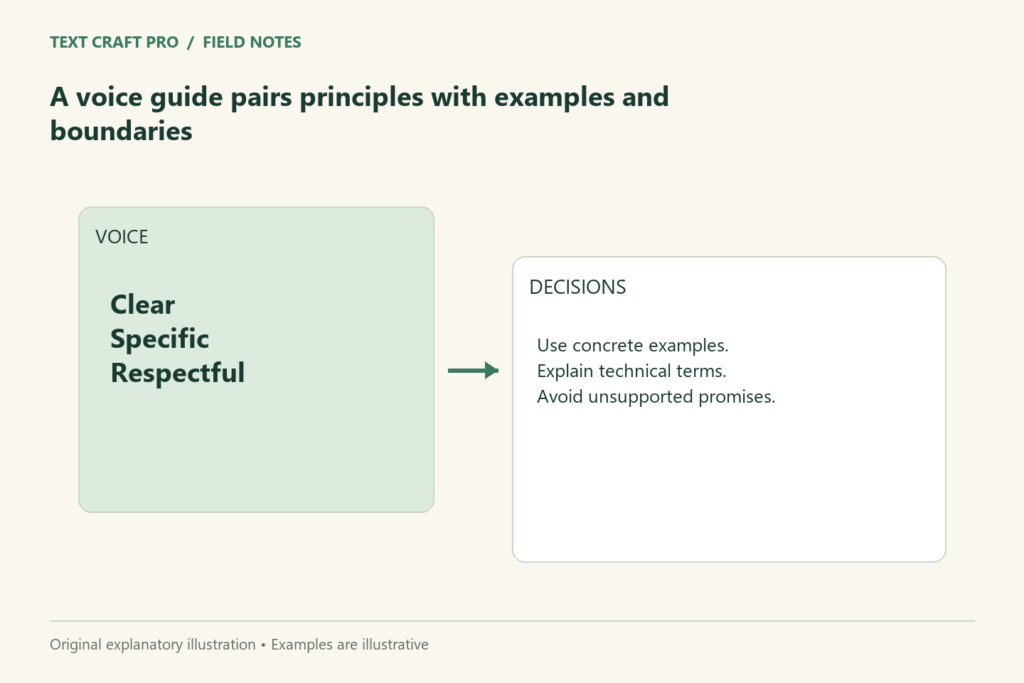
Turn abstract tone labels into practical examples, boundaries, and revision choices for a consistent writing voice.
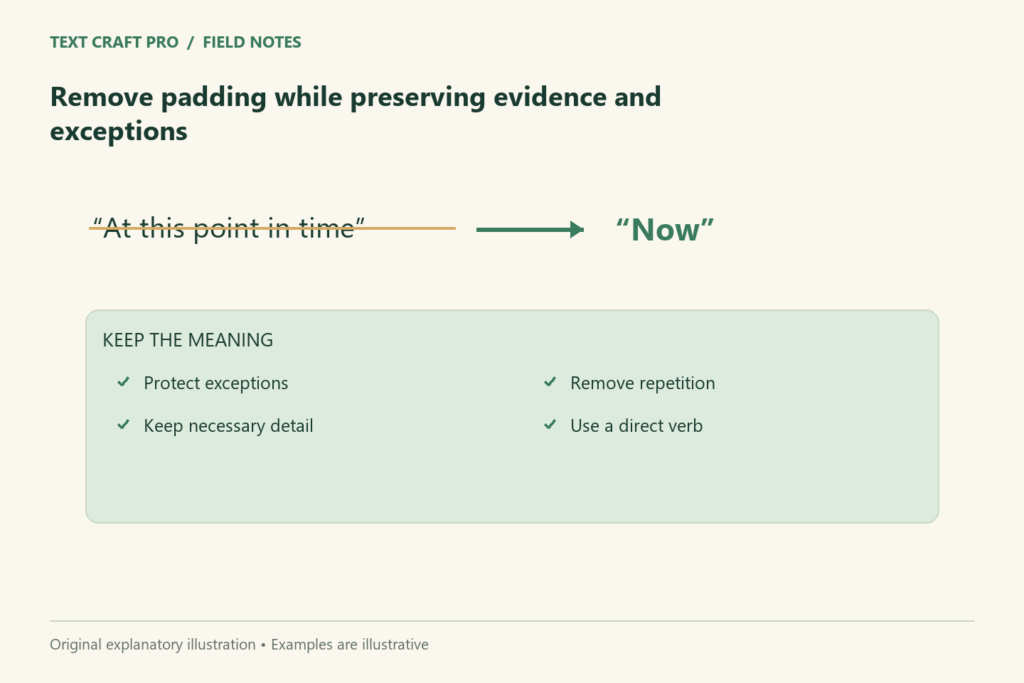
Find repeated explanations, empty framing, and unnecessary noun phrases without stripping the draft of evidence and context.
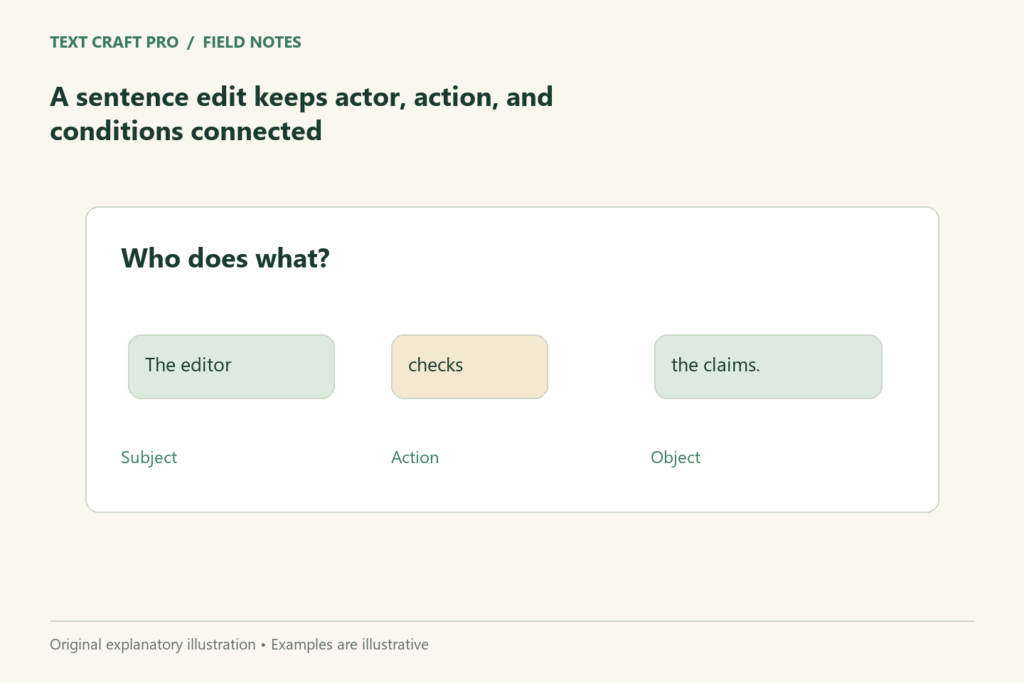
Check actors, actions, conditions, and emphasis before shortening a sentence. Includes an annotated before-and-after example.
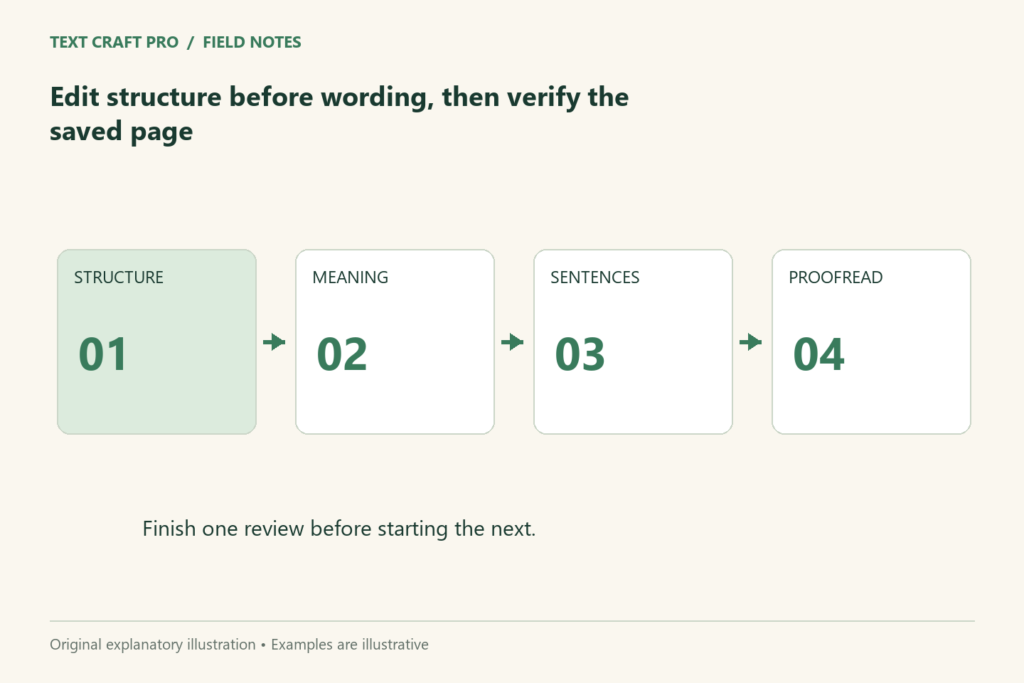
Separate big-picture revision from wording and proofreading so polishing does not hide a weak argument.
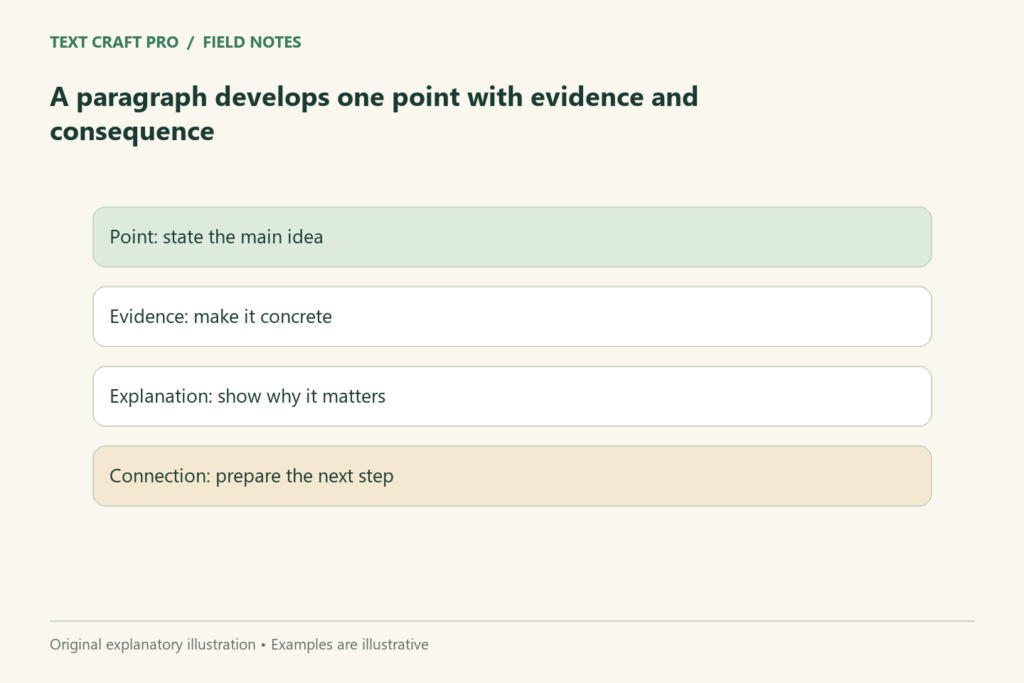
Use a point, supporting detail, and a meaningful connection to build paragraphs that move the explanation forward.